Showing posts with label Ghost. Show all posts

Tuesday, November 8, 2011

Grave's End by Elaine Mercado


Maaaaaan, I hate these conversations.

So you tell people you're a horror writer and they're all like, "Do you believe in ghosts?" and internally you're all like "Do you ask fantasy fans if they believe in elves?" (but then you catch yourself in a contradiction because you've met some fantasy people who really really really believe in elves and you just want to ask them if high school was really that bad) but you're all polite and deferential and you say "well, I don't actually believe in ghosts but they make good stories" and then someone who's been waiting to pounce on the conversation the way Hobbes pounces on Calvin when he comes home from school butts in and says "Well I saw a thing one time and felt a presence one time and my dad died but I knew he was there and we lived in a haunted house as a kid and I lost my virginity to an Inuit spirit named Pridefoot" and they look at you with a hint of defiance and challenge in their eyes because if you say you don't believe them then you're calling them a liar or crazy to their face and you're challenging something special they experienced that has subtext of mortality, which is the biggest scariest thing of all beyond turning out like your parents and you say something evasive and inadvertently but unavoidably condescending like "Well, I believe YOU believe that you saw something" and there's a rift in the conversation because they're saying something completely fantastic and they can't back it up and you just can't buy it so you go back to safer conversation topics like why the Tea Party are a bunch of uneducated old fart hypocrites for raising cain about the Occupy Wall Street crowd and why the Catholic Church no longer has any right to claim any sort of moral authority because of of institutionalized practices stretching over decades covering up the abuse of children in their care and you know you're a) not getting laid that night, b) no one is going to invite you back, c) you're not allowed to have any more G&Ts and you're stuck drinking from the Miller High Life like you're a 15 year old and d) you are somehow the dickhead because people, even snotty rational atheists like you, need something irrational to believe in and all you've done is piss in everyone's Ovaltine at the party by pointing out the obvious, which is that you're making some damn fantastic claims and that witness testimony is super subjective and people who have certain personality types are more likely to see fantastical explanations to things and confirmation bias is a thing and our minds release chemicals when we confirm our suppositions and that has a narcotic effect and blah blah blah.

Good for you.


I believe that Elaine Mercado believes something was inhabiting her home in Grave's End.

I believe that Elaine Mercado admits in her book that she's prone to panic attacks and night terrors and things like that. I believe her when she reports that her husband and children report very different views on what she experiences, specifically that they are either skeptical at points or believe that the presence in her home is benevolent which makes me wonder about whether or not her tendency to feeling anxiety might be more fine tuned than the people around her. I believe that she discussed her failing marriage and her children maturing in a way that would lead me to believe that there was a lot of turmoil in her life and that might influence her perception of events. I believe that she has religious beliefs that are not necessarily at odds with belief in spirits haunting her home and one thing can feed the other. I believe that she chronicled what appeared to me to be a series of minor events over the course of ten-plus years that could easily be interpreted in a variety of ways over that time. And, not to kick too hard, I believe that a woman who appears on paranormal shows and pursues work as a clinical hypnotherapist, which is a heavily debunked field, might have a variety of reasons to tell this story this way.

And, given that paranormal expert Hans Holzer is the one who pushed the bullshit Indian burial ground story in the Amityville haunting forward, I have to say my skeptic's alarm kept going off.

But, if I were to meet her in a party or meet someone who held her beliefs, I would probably say "I believe YOU believe it's true."

And then I'd change the subject. Man, I'm a firm believer in gay rights. How about you, fundie weirdo?


As far as paranormal things go, it's a pretty good story. Mercado is a good writer. I felt a lot of sympathy for what she was going through. The whole thing doesn't reek of opportunistic profiteering that The Amityville Horror did, and it's a pretty damned good story of a middle aged woman trying to start over. Little balls of light and trapped miners don't mean much to me, but this woman getting out of a bad marriage, beginning a new career, and raising kids meant a lot more. I kinda barreled over her perception of experiences in my previous little tirade but I was totally on her side through the challenges in her life. She seems like a smart, sensitive, caring woman. She and I share different belief systems, but she seems like a cool woman.

In fact, I will say this about the book. When she's talking about ghosts, I kinda blinked out. When she talks about herself, I was completely engaged. I rocketed through it in a couple days of erratic reading.

It was a good story.


Gentle reader, you can probably assume that this is another assigned reading for my ghost story class. It is.

I know you're reading this, Professor Scott.

When I read the syllabus and saw we were doing "true haunting" books, my alarm bells went off. I know you're a paranormal investigator and I've seen you tell a mean true-life ghost story. I was worried that my opinionated dickhead skepticism was going to flare up and you were going to flunk me or go all kajukenbo on my ass. In the back of my head, I was all "man, we're a literature class, what are we doing reading a bunch of pseudoscience?"

I did learn a lot from it. I learned how believers expect these stories to be structured, how belief reflects what we see, and how our funny little minds work when we're frightened in our homes, how much chaos rests in the center of our spirits. It was an interesting read.

Now, if you'll excuse me, I'm taking Pridefoot out on a date tonight. She called me last week on a ouija board and I think it could work this time. We're gonna see Paranormal Activity. Please don't kick my ass at the next residency.

Sunday, October 23, 2011

The Lovely Bones


There's an argument that The Lovely Bones is a gimmicky book. It's a tale of the disintegration of a grieving family told from the point of view of their murdered daughter. As she watches her family up from heaven with a sort of passive Buddha-like idiot benevolence, we become a sort of voyeur into one family's turmoil. It's pain porn, it's grand guignol melodrama. The story is mostly formless, a series of vignettes dipping in and out of the family's life over the course of several years. The reader doesn't even get to experience a good vicarious sense of vengeance when the murderer gets got. There's no violent death at the hands of a righteous family member or apprehension at the hands of dogged police pursuit. Instead, you get a tale of love and loss, intimacy and regret, growing up and growing old.

I enjoyed the hell out of it.


As I was reading the book, I started to realize that the framing device of the heavenly narrator wasn't actually necessary. She's dead when we meet her, she doesn't seem particularly angry at her murderer (which makes later declarations of outrage hit an oddly false note) and she sort of loves everything and everyone without hesitation. Yes, there is a scene where she inhabits the body of a friend to share a first kiss with her high school sweetheart, but I started to realize that that I had become emotionally invested in the family enough that I didn't need a serene POV walking me through the story.

Still it's unique and dreamy. It feels like the voice of a teenage girl; at once emotionally raw, completely honest, and self-mythologizing. I get harped on a lot in my writing (legitimately so) for injecting too much of an omniscient narrator into my book, and it hit me that author Alice Sebold figured out the perfect way to do this. Susie has a very intimate view of her family, but is distant enough to comment on their behavior as a narrator.


I can't help but feel like I'm going to get in trouble for this, but did anyone else think that Susie's mother was being a self-indulgent asshole for running away from her family?

I mean, okay, her father was entirely too fixated and sloppy about how he went about gathering information on the creep who killed his daughter. And families do fall apart after tragedies like this. But it also seems to me that screwing around behind your husband's back and running away in the manner she did was just straight messed up.

I was at a wedding the other day and, after a few trips to the open bar, me and my fellow bachelors who'd managed to avoid the garter belt were standing around and discussing the wonders of dating women. Someone...okay, me...said that the tricky thing about dating women was that there's a part of them that's always locked away, that always stares at you from across from a great distance. You can try as hard as you like but you can never quite get all the way close to them.

Sexist? Maybe. But when people talk about the mysteries of women, I sometimes think this is what they're talking about.


I tried watching the movie, which was a horrible idea. Aside from the murder and the beatdown in the cornfield and the break in at the murderer's house, not much happens in the story. When Petey Jay directed the flick, he really jazzed up the scenes in Heaven, but the book doesn't focus too much on Susie's afterlife, so tremendous amounts of quality character stuff gets lost in the razzle dazzle world of the movie.

A shame. This is really good stuff. I recommend this book for anyone with a taste for melodrama and a love of strong characterization. I'm going to take a lot away from this book. I hope you do, too.

Friday, October 21, 2011

The Others


SPOILER BITCHES, THEY'RE ALL DEAD!

Everyone's dead. The heroine? Dead. The weird kids? Dead. The help? Dead. The missing father? Dead. About the only people who aren't dead are the people we're supposed to be afraid of.

That's the shit I remember from watching this movie from the first time I saw it. I remember the dreary British estate, perpetually shrouded in fog. I remember Nicole Kidman all sexified in her uptight little Victorian coats. I remembered it being slow and subtle and kinda gimmicky. The problem with movies featuring Big Tweest Endings is that any future viewings of the movie always being about watching the twist being set up and the narrative turns into one big puzzle to be solved.

I was not looking forward to rewatching the movie. My first experience was pleasant but mild, like eating New York Mexican food (yeah, eat a dick NYC. You don't do everything the best. WEST COAST BITCHES!!!!) and the thought of being locked up in my house watching a bunch of uptight religious Brits dealing with unnamed dread sounded wiggidy wack.

Well shit. Now it's one of my favorite ghost movies of all time.


First off, you HAVE to see this film in the proper environment. You need to see it in a theater or, barring that, on the biggest TV you can find. This film needs your full attention. Unlike something like the Dawn of the Dead remake, which you can half-pay attention to while giving sex advice to Steve Carell, you need to enter into the atmosphere completely. The movie creates a very fragile, ephemeral air that would get ripped apart like a spider web spun on a speaker that starts playing Pitbull's "Get Me Everything."

Strained simile, I know, but I got a word count to hit and I just bought the album like 20 minutes ago.

Anyway, the reason this movie works much better than I expected it to on the second viewing is that it's absolutely lactating with gothic dread. The house is a silent, dark place, lorded over by an uptight religious matriarch of questionable sanity who never quite loses our sympathies. The kids are equally engaging; one a rebellious little firebrand you can't help but root for and the other a little scaredy cat we just want to take to our ponderous man-bosom and rock back and forth, gently reassuring him that everything will be okay. It's an atmosphere of secrets and sickness and understated malevolence. The patriarch is gone, only to come back in a shell shocked daze once his TARDIS malfunctions and drops him off at Drearydown Manors. The children have some weird vampire skin disease that renders them mortally vulnerable to sunlight. The mother coldly orders the new domestic staff around in a manner one would expect of a member of the aristocracy, laying out draconian rules and regulations for them to follow.

Then the weird sounds start echoing through the house. And the kids start making very close friends with imaginary people. You know the rest of the tune, do I really have to call it out?


The mystery is actually brilliantly constructed. The filmmakers play fair and all the reveals work in the context of the narrative. The twist doesn't come out of left field but it does a great job of coming from what had been previously established in the movie. Combine that with the old dark house and eerie, oppressive sense of dread and you have a solid Henry James-style ghost story. The bit where Kidman's character finds the book of posed photographs of dead bodies is absolutely chilling, as was the scene of the ghostly help speaking to the family from outside the door.

Even after you know the twist, when you go back and revisit the characters, you discover how well they are written and performed. For example, I really should have hated Gracie Stewart. She's deeply religious, controlling, and prone to smothering her kids with pillows. Yet for some reason she never fully lost my sympathies, even if there were some moments where she needed a whack upside the head. She had a pair of sick children, three weird caretakers, and a missing husband to worry about. She was a deeply sick woman, but also very loving. The scene where she recounts their murder and her suicide was deeply touching. Even the creepy caretakers were fantastic. They could easily have been stock characters, but Bertha Mills and her lot were a very odd combination of compassionate and menacing.


The Others is one of my favorite ghost stories of all time. I don't know if it's something I can watch more than a handful of times. The effect it creates is slow going and fragile, so it has to be experienced in the right settings, but it's still a helluva film. I'd recommend it to anyone who likes subtle eerie horror, old world ghost stories, and audiences who have a taste for sumptuous melancholy visuals.

Also, I want to give a bump to Childish Gambino, who's rich, lyrically complex music was blaring as I wrote this review. His whole album is available free here.

Tuesday, September 20, 2011

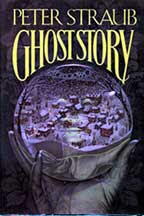
Ghost Story by Peter Straub


Because I am a little shit, and because I have a tendency to soak up and project hyperliberal dogmas of oppression and subjugation, my first thought after completing Peter Straub's seminal Ghost Story was "another goddamned horror novel about poor helpless men besieged by an eeeeevil woman."

On a very surface level, it's an accurate observation. The only two women to get any real screen time are the shapeshifter antagonist in her various guises and the wife of one of the protagonists, who is a cheatin' ice queen with a heart like shards of cold broken glass. The shapeshifter is a seductress kinda monster who uses her wiles to send men to their destruction. Her acolytes speak of her in reverent tones. She's eeeeevil because she makes men love her too much, but refuses to be subjugated by that love.

This is ultimately a boy's story about the one that got away, about impotent men cowering in the face of a female power. It's also pretty damned good.


I fully intend to be in the Chowder Society when I grow old.

One of the most popular tweets I ever...uh...tweeted (JoeAverageSF, if you're interested) was "I can't wait to be old. I want to be an old theatrically morbid man like Vincent Price." Well, I want to be like the Chowder Society, the four old men who get together and tell ghost stories, starting each one with the same eerie introduction, "What's the worst thing you've ever done?," followed by the response, "I won't tell you that, but I'll tell you the worst thing that ever happened to me...the most dreadful thing..."

Eeeeeee! Creepy!

The old men in the story are really likable and engaging, the setting is genteel, and the tales they tell are genuinely eerie. This book plays toward my taste in quiet, evocative horror and the evil that descends on the gentle old professionals is slow and spooky and delightful.


As much as I enjoyed the book, and I really did, there are a couple things that bug me. It has the feeling of being improvised as the author went along. Antagonists that start out as distant and ghostly suddenly become little chatterboxes as they're encountered later. Behavior, motivations, and patterns shift, and people get a case of the stupids later in the book. There's also a certain aimless passivity to the heroes. They spend most of the book waiting to get got, rather than being proactive in any meaningful sense. The most dynamic step they take is to bring in the nephew of one of their murdered contemporaries, who appears to be haunted by the same spirit.

Speaking of the spirit, one of the big questions that bugged me about the book is the antagonist's motivations. She's an immortal shapeshifter who is clearly contemptuous of humanity, yet she wastes decades of her existence hassling four random chumps in an isolated small town? Really? Is her evil that banal and unimaginative? The story would have made more sense if she were an actual ghost haunting them because ghosts tend to fixate on a subject. The creature at the center of Ghost Story ultimately came off as petty.


I do want to make mention of something that I found sort of appealing, which was the relationship between Stella and Ricky Hawthorne.

I think we're living in an age where people are becoming more skeptical about the idea of monogamy. Maybe it's the fact that I'm safely ensconced in a bubble of Brooklyn dating, where being "friends with benefits" is too much commitment, and I'm a Dan Savage devotee who read Sex at Dawn a couple times, but my view of human relationships tends to be a little more...progressive than the mainstream.

Horror, as I've often said, is a fundamentally conservative genre. It's all about the status quo and it's often written by people who hold fairly traditionalist views. That attitude is often an asset, as horror is usually about drawing firm black-and-white lines between good and evil, but it tends to falter around deviations in human behavior.

Somehow, Ricky and Stella work. She cheats, he knows about it, and all seems well. On paper, it appears that she can't help herself and he loves her enough to tolerate it. I suppose to some people that would appear to be a catastrophic state of being, but they seem happy. It works for them, and I liked their dynamic, even if I felt she was a throwaway character.


One of the weird things I took away from reading Ghost Story was the fact that it was less effective as it became a more traditional horror novel.

As a tale of four old men, haunted by a tragedy, who find cathartic release by telling ghost stories to one another, it was a great, evocative book. Once they're knife-fighting developmentally disabled werewolf boys in movie theaters, the book became garish and kinda goofy. Still, the book works. I like the characters, I like their world, I liked the pacing (which was eerie, but not foot-draggingly slow), and I liked the little moments of creepy terror. The dreams, the visits from dead friends, the moments of isolation and menace were all wonderfully done.

I have a litmus test when I read horror fiction. First I look at the non-horror elements. Do they hang together? Are the characters compelling? Do I give a shit about who they are and how they interact and collide against each other? Basically, could they hold up in a book without the horror elements? I absolutely felt that Ghost Story passed this test. There are a lot of challenging, engaging characters and they were all richly detailed and fascinating.

The second part of my litmus test is studying the horror elements. Are they original, or at least engaging? Do they improve the human drama or do they just get in the way? Do they make sense? Are they scary? For me Ghost Story mostly passed the test. When the threat was more ephemeral, when the demon facing the the Chowder Society was more vaguely defined, it was an effective horror story. Once we got to know Eva Galli, she became more of an annoyance than anything else.


I was actually a little bit spooked as I read the book because many of the elements of the novel are very similar, and probably better done, to elements of the novel I'm writing for my MFA.

Old friends tied by strange social rituals and a violent crime. An ethereal menace that lurks in the shadows and begins a campaign of psychological warfare before striking with sudden, decisive violence. A strongly defined setting that the characters play off of and experience in their own unique ways.

Screw it. Straub can call a good tune. I will dance to it.

Overall, I give this book my bump. I enjoyed reading it and I think it's a solid introduction to Straub's key work. It's recommended for fans of more subdued, quiet horror.

Also, the movie is pretty good, too.

Saturday, September 3, 2011

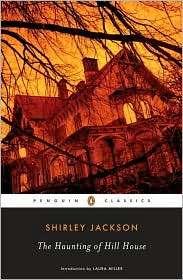
The Haunting of Hill House

One of the unique things about my academic program is that it forces me to revisit my beloved genre with fresh eyes. Most horror fans are voracious devourers of their medium and many of the books and movies I'm assigned to read are works I've already visited in the past. There is a world of difference between being passively engaged in a book and being actively engaged in trying to autopsying the great works of horror and laying their guts open for the world to see.

Or, in less bullshitty falutin' terms, Shirley Jackson's The Haunting of Hill House kicked my ass.


I'm writing a haunted house novel and it sucks because every time I read the prologue of Hill House, I say to myself "That's it. There's no point in writing another haunted house story. How the hell do you write an introduction that sets a mood of eerie, evocative dread that holds a candle to the subtle, imaginative menace of '....and whatever walked there, walked alone.'"

That shit is creeeeepy. We don't meet a specific, sentient menace. We don't have the dusty bones of Hugh Crain greeting the reader, announcing to us that he will be battering at the sanity of poor, doomed Eleanor. Hill House itself is not sane. The size, the vast interiors and the unnatural angles of the home reminded me of a Lovecraftian influence. I tend to hate stories where things have obvious origins and solutions. I feel horror works best with ambiguity, otherwise it becomes puzzle boxes you can open, selfish entities you can strike petty deals with.


I first read The Haunting of Hill House in my early teens, after Stephen King lavished great praise on it in Danse Macabre. People talked about its intense terror and the lurid and shocking underpinnings of lesbianism in the narrative, which attracted 14-year-old me like a pubescent fly to honey. I finished it, but it was a slog. I had gotten used to books with raised lettering and gory pictures on the cover. Hill House by comparison is understated and elegant. It depends on a person sitting alone in a parlor somewhere allowing the book to seduce them.

There were no decapitations by lion statue. There were no hot lesbian make out sessions between Eleanor and Theo. There was none of the lurid, juicy good stuff I loved in my other books. There was just a strange old house and the poor sucker who may or may not have deluded herself into taking her own life. It's all very gracious and subtle, strangely gentile, and I feel Hill House is the template that modern haunted house stories almost ceaselessly follow.


One of the more interesting things that struck me while I was rereading Hill House is how much Eleanor reminded me of Wendy Torrance in Stanley Kubrick's interpretation of The Shining. I never quite bought that the novel's version of the character would have stayed with the self-loathing bully of a husband she found herself with, but the movie's version gave Wendy a strong sense of beaten-down passivity. She exists in a state of perpetual subservience to her husband's whims and makes excuses for his monstrous behavior.

Eleanor Vance struck me as someone desperately waiting for life to give her permission to being. People love harping on Theo's lesbianism, but I think the character appealed more to Eleanor because she was everything that Eleanor wasn't; free, independent, worldly, and confident. Eleanor pushed away from her dickish family in a fairly petty act of independence and her taste of freedom opened the door to a horrible seduction that lead to her doom.

Sure, the ending is an unhappy ending. I guess. Jack Torrance freezing in the snow is an unhappy ending. But ultimately both characters didn't belong in the world. One was too meek, the other too angry. Maybe it's a happy ending. Maybe they were both always ghosts, waiting for a real house to haunt.


Funny story about reading Hill House.

Unlike many horror fans, I'm a big old chicken. Always have been, always will be. I have a much higher tolerance for scares than a casual fan due to sheer overwhelming exposure, but it's not that hard to freak me out to the point where I'm awake at 4AM, staring up at the ceiling, trying not to over-imagine the causes of the noises in my nasty Brooklyn apartment. Because of this, I tend not to take my horror in optimal conditions. I read horror books on trains, watch horror movies at party events, and I get plenty drunk right before I stagger my way through haunted house theme parks (I once puked in a Leatherface set piece in a haunted house attraction in Los Angeles, but that's a story for another time.)

Anyway, I decided to change that up with Hill House. My only memories of it were the memories of a tasteless and stupid boy and I knew there was nothing particularly freaky or scary about it. So I decided to read the book on it's own terms. I kept a copy on my bed stand next to my nightlight and I read twenty pages or so a night before bed. Sitting in the dark, reading a quiet little book in a quiet little space, the story started getting to me.

I live in a party apartment in Brooklyn and we have drunk hipster loudmouths coming and going at all hours of the night. About a week ago, when I was finishing the book, I was laying down to sleep and my roommate's FWB started BANGING on the door. I immediately flashed back to the poor mousy Eleanor and I just about shot out of bed in sheer delightful terror.

The point of this story, aside from the fact that Williamsburg American Apparel zombies should stay away from cocaine and my front door, is that it's tremendously important to take horror stories in the correct context. If I simply read it every day on the subway I would have developed an intellectual appreciation for the craftsmanship of Shirley Jackson's writing, but the emotional impact of it would have been lost to me. Horror is meant for the dark. Keep it there.

Thursday, April 28, 2011

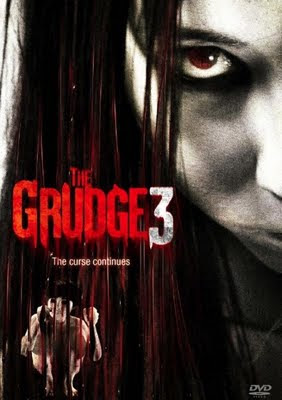
The Grudge 3


The Grudge 3 is a case of the filmmakers trying to hammer a square peg into a round hole.

Ju-On is one of my favorite horror movies of all time. It's effective, subtle, creepy, and absolutely merciless. It's one of my rainy day go-to films. It's comfort food.

I liked the American remake, though not enough to own it on DVD. I enjoyed the American sequel for what it was. But every instinct told me to avoid The Grudge 3. I saw the panel for it at Comic-Con and they had a couple of the fresh faced young actors talking up the movie. The clip they brought along was the boyfriend returning to the haunted apartment. The room is pitch dark, he stumbles forward for a few seconds, there's a heartbeat of eerie silence, then Kayako reaches forward in the darkness. Cue soundtrack-spike jump effect and the lights go back up.

Objectively it all worked very well, especially that creepy moment of silence before Kayako strikes, but there was something off about it. Maybe it was the fact that actor was too pretty or the moment felt too rote, but the scene felt a little off. Adding to my ambivalence was the fact that it was a direct-to-DVD sequel with no direct involvement from Grudge creator Takashi Shimizu. I wound up giving it a pass.

I've been on a huge yurei kick lately. I'm tinkering with a ghost story and I'm reading the excellent Suicide Forest miniseries from IDW so it felt like a good time to revisit the Saeki family.


The story begins with the last surviving kid from The Grudge 2. He's locked up in an insane asylum and terrified that Kayako is going to kill her. The doctors don't believe him and lock him in a padded cell. Unfortunately, he's not alone...

The intro to the movie is actually really scary, due in no small part to the kid's acting talent. I've seen a lot of poor souls lead to their deaths because no one believed them, but this kid was spectacular. He really pulled the scene off. The doctor feels responsible for his death and returns to the apartment that the Saeki family are currently haunting. In the meantime, the landlord's sickly kid sister starts seeing Toshio and a mysterious Japanese woman moves into the building. It doesn't take long before chicks start crawling down the stairs.

As a basic creepy ghost story, The Grudge 3 works perfectly fine. The actors are surprisingly good, the atmosphere is suitably eerie, and it hits all the right notes. The problem is that it doesn't really feel like a Grudge film.


My first problem with the movie is we see WAY too much of Kayako in it.

The original Ju-on keeps her mostly out of sight. She's an indistinct shape in the window or a shadow on the wall or an out-of-focus lurker in a background. The only time we get a long extended look at her is when she's crawling down the stairs. That scene still stands as one of the creepiest things I've ever seen on film. Here, she shows up waaaaay too often, that crawl thing is overplayed, and you see that it's just a women with a lot of white make up on.

The second big problem I had with the movie is that Kayako just doesn't belong in Chicago. I get that yurei aren't necessarily bound to a single physical haunted location, but the logic for having her jump national boundaries was a little bit flimsy. A bunch of dead Japanese people haunting a run-down Chicago building full of attractive white actors feels discordant.

Finally, one of the things I loves about the original Ju-On was the way it told its story in little vignettes. The whole story takes place over a couple generations and we see how the evil in the house affects different people in different circumstances. That makes the horror of Kayako leaner and more graceful and frees the tale from the typical narrative tropes that haunt the ghost subgenre. Here, the story has a straight forward narrative almost lifted out of screenwriting 101. The characters have relationships laden with issues they don't discuss until they are brought to a crisis point. It's actually pretty well written and acted, but sticking to a formula sacrifices some of the intensity of the horror.


Despite all my harping, I enjoyed The Grudge 3. It's got a decent story, some solid scares, and I was engaged in it from beginning to end. It's a good horror film, but I don't quite think it's a good Grudge film.

Sunday, April 10, 2011

Insidious


I keep trying to like James Wan's work more than I do.

There are moments in his movies that scare the utter shit out of me. There are few people working in the genre today who can do the drawn out, tense silence and the sudden sharp shock as well as he can. He's also a master at creating deeply unsettling images that drill themselves deep into my skin. I lost a good hour of sleep last night around five AM envisioning the creepy grandma from Insidious lurking under my bed. I think he's got the chops and I like that he sticks with the genre.

Yet despite his chops, I can't really get behind his movies. The screenplays are full of unengaging characters, weird tonal shifts, and frustrating plot holes. As a purely visceral experience, the movies are fine. As stories, they tend to be lacking. I've seen most of his major films, but I usually check them out on DVD.

Still, this season has been very dry for this little horror enthusiast and the word of mouth around Insidious has been surprisingly positive. I watched the movie last night and I can honestly say that Insidious is my favorite James Wan movie.


Insidious tells the story of a family who move into a haunted house. After the eldest child falls into a mysterious coma, the family becomes the victim of terrible hauntings. They flee their new home, only to discover that the ghost has followed them. In desperation, they turn to a psychic with an odd connection to the family.

The general consensus among all the reviewers I've read is that Insidious attempts nothing original, but it does the classics with style and verve. There are a lot of glib people out there who are saying that this movie is an all-but-in-name remake of Poltergeist, which isn't entirely untrue. It follows a similar narrative structure, with a slow set-up that puts the family in danger and targets a child, followed by the introduction of some comedic ghost hunters and a wise psychic who helps the family get through it all.

Insidious, however, has teeth. Between the long, creepy shots of silence and isolation and the genuinely terrifying ghost scares, this movie scared the bejeezus out of me. This is gonna be one of those movies I come back to, but only in well-lit rooms. I especially liked the now-famous eerie old lady in black, which reminded me of a similar creepy creation in Wan's deeply flawed Dead Silence film.

The movie's one point of genuine originality is the hero's journey into the Further, a shadowy reflection of our world where doomed souls wander. As he searches for his son, the father sees enough ghastly tableaus to fuel a dozen different horror films. It reminded me of the doomed landscapes of White Wolf's Wraith: The Oblivion role playing game. I loved seeing the world from the ghost's perspective, and the chilling images still make my skin crawl. Really, I could have spent an entire movie exploring the Further and it stands as the highlight of the movie for me.


As much as I enjoyed Insidious, it suffered from a few problems. The first was that there are three very large tonal shifts in the movie. The movie starts as a very conventional haunted house story, moves into a VERY exposition-heavy ghost hunter bit, and ends as more of a fantasy film. Each transition is very jarring and a lot of character threads get lost in each jump (most of the family disappears from the narrative by the second act.)

Second, the lead characters aren't particularly likable. Haunted house movies always have one person who doubts and the audience surrogate goes through the frustration of trying to convince them. In Insidious, this scene comes after a huge chunk of exposition that any rational person would have had a difficult time swallowing. Suddenly I felt tremendous sympathy for the poor, beleaguered rationalist who doesn't automatically believe in unquiet spirits and faraway lands of the dead. It didn't help that the wife came off as self-indulgent and high strung.


Insidious ain't perfect. People ding it for being unambitious, the writing is inconsistent, and the characterization is bland. But it succeeds on craft alone. It's a genuinely scary movie, done with tremendous style on a limited budget, and it stayed with me long after the final credits finished. I am probably going to come back to it, and I recommend it for anyone who likes a solid haunted house movie as well as anyone who likes Alice In Wonderland stories of people exploring strange places.

Finally, you ever notice how Wan's movies always have incredibly dark endings? Granted horror isn't exactly an optimist's genre, but his movies always have a sharp kick at the end. If you want a nice little final scare, wait until after the credits end.

Thursday, November 25, 2010

Play Dead


Play Dead: When I went to see Play Dead I was lead onstage, stuffed in a steel casket, beaten with a crowbar, soaked in sulfuric acid, and my dessicated corpse was fed into a floor grate to the ghost of Albert Fish. I apparently went mad in the afterlife when the showman attempted to contact my spirit and I began chucking furniture around the theatre. It took the spirit of a sexy nude medium to bring me back from the dead.

The experience was one of the most memorable I've had as a horror fan.

Play Dead is an off-Broadway play/performance art piece created by Teller of Penn and Teller fame. It's a nifty fusion of ghost story, seance, and magic show, where famed Coney Island performer Todd Robbins tells a series of stories about madness, murder, and the Beyond.


At first, the play is simply a ghoulishly good time. Robbins' performance is pure Cryptkeeper glee. He unfurls the tales with such captivating theatrical delight that I felt like I was around the campfire hearing ghost stories as a kid. He accentuates the tales with amazing stage effects and feats of illusion. He also brings the audience into the fun. There are moments in the play when all lights, including the exit lights were shut off, leaving the audience in pitch darkness. My weirdo friend took the opportunity to freak me out by poking me while we were sitting in the darkness and I jumped about 30 feet in the air.

All the ghost stories are all creepy fun and it's worth seeing just for the fun of it, but the second part of the show moved me very deeply.

I've always found it fascinating that the most famous illusionists are the most vocal opponents of sham mediums. They know the tricks and take great umbrage at opportunists using them to take advantage of people's grief. While the end of the show gets a little melodramatic, Play Dead's message is ultimately moving: the horror genre exists because death is a part of all of our lives. We mythologize our fears in order to explore them and ultimately make a sort of uncomfortable peace with them.

Go see this.

Thursday, June 24, 2010

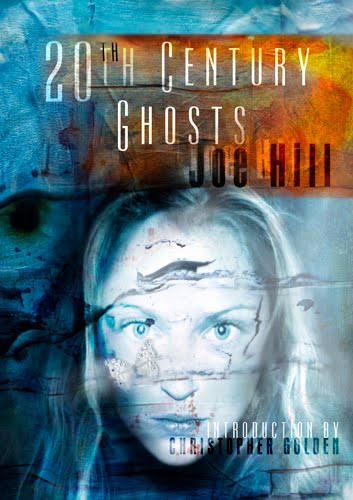
20th Century Ghosts by Joe Hill


Recently, the AV Club did an article about whether or not we are living in a golden age of movies and pop culture entertainment. While I couldn't hack my way through - AV articles can be really pretentious and boring - it did get me to thinking about the way I view genre history. I tend to wax nostalgic about a mythical yesteryear when movies weren't all about the stupid jump scare, when everything didn't feel watered down and played out. The thing is, maybe that's true of any age. Maybe the stuff that is actually worth remembering is always surrounded by mediocrity. Maybe it's the process of casting the wide net through the sea of bullshit and Platinum Dunes remakes that leads us to the things that are genuinely good.

Or, to put it mildly, I think Joe Hill is the real deal.

Maybe I'm such a big Joe Hill fanboy because the characters and subjects he writes about resonates with my own life experience, in the same way melodramatic angsty music resonates with a moody teenager. Maybe I'm trying to apply an objective standard of "good" to highly subjective things. Whatever. I've gone through three of his books and he ain't let me down.

20th Century Ghosts is an anthology of horror-themed stories. Though there are ghosts and monsters aplenty, the stories tend to be about the spectres of memory and loss. Hill does something I wish more authors would do; he tells stories that use horror tropes as a grounding for tales of people rather than drag us through the same rusty haunted house doors. He's got a great command of characters, he uses language beautifully, he doesn't think endless swearing makes a story more tough and authentic (not that I have a problem with swearing. I swear like a sailor. But bad writers often rely on it to make a story more "edgy", like 10 year olds cussing out their parent's earshot. Mine cussed around me, so it was all good) and, unlike certain other major horror writers, he can actually end a story.

Anyway, that's enough of lighting incense at his feet. When I review anthologies I like going through the stories. It's a pattern that has worked well in the past and I don't see a reason not to try to duplicate success. Without further ado:


Best New Horror: I had this idea once. I really, really did. But I chickened out because I didn't think I could pull it off. Honestly, I was probably right, but Hill definitely did a hell of a job on it.

BNH is one of the most dead-on depictions of horror fandom and the fatigue that often comes with it. You love this stuff with a primal ferocity and then one day you realize that most everything out there is either a rip-off of something better or it thinks you're a fool. The protagonist, a burned out anthology editor, comes across a genuinely original and scary work and it shocks him out of his ennui. He recalls the first time he ever felt the joy of the horror genre after watching The Haunting as a small boy:

When the lights finally came up, his nerve endings were ringing, as if he had for a moment grabbed a copper wire with live current in it. It was a sensation for which he had developed a compulsion.

Boom. Nailed it.

It turns out that the guy who wrote the story is a bit messed up and BNH quickly degenerates into a nasty backwoods stalker story. But the story takes it's most celebratory tone when things are at their worst. The protagonist has finally gotten the purest jolt he'd been searching for his entire life. This story should be compulsory reading for the hardcore horror devotee.

20th Century Ghost: A lot of horror writers tell stories about haunted movie theaters, whether it's Clive Barker's seminal Son Of Celluloid or Joe R. Lansdale's trippy Drive-In novels. Most of us horror fanatics developed our taste of the genre in darkened movie palaces and it's natural that haunted movie theaters are just as much a trope of the genre as spooky castles, abandoned graveyards, and eerie summer camps.

Despite the story's scary elements- and the ghost of poor Imogene Gilchrist is genuinely unnerving- the story is really a love story. It's strangely nostalgic and sentimental, maybe a little adorably schmaltzy, but I loved it. It's one of the two stories that I remember most fondly in the collection.

Pop Art: I'm not sure if I'd mentioned this before, but Joe R. Lansdale is one of my heroes as a writer. I read his stuff at a key point in my development and his unique combination of Southern dry wit, machismo, and absolutely insane subject matter got me hooked. I have a natural inclination toward literary pretentiousness and whenever I start writing to impress people rather than writing for the sheer joy of it, I crack open a Lansdale book and marvel at the almost childlike imagination and enthusiasm of it.

Pop Art felt like a Joe R. Lansdale story.

The story is about a boy made out of inflatable plastic and the troubled, angry kid he befriends. It reminded me of a Lansdale piece about an inflatable sex doll that yearns to be free, but Pop Art has its own thing going. The inflatable boy is serene and almost Christlike in the way he views the world and the difficulties of his condition. His positivity and his unconditional love go a long way to healing the narrator.

I read a lot and, God help me, I read a tremendous amount of genre fiction. In most genre fiction, the first person narrative almost always sounds the same: cynical, detached, tough, and cold. Speaking as a long-time roleplayer, I know when someone's creating an avatar for the way they either perceive themselves or the way they want to be and most first person narratives sound vaguely like wish fulfillment. Both this story and the tales "Voluntary Committal" and "Better Than Home" deal with a narrator with emotional problems. They're not dry, detached reporters of events surrounding them, but instead they perceive the tales through the lenses of their own world view. The kid in Pop Art is angry and defensive and the inflatable boy's presence in his life does him a world of good. It's ultimately not a happy story, but it's one of the most emotionally engaging in the book.


You Will Hear The Locust Sing: This really odd mash up of Lansdale-style weirdness, fifties sci-fi big bug horror and Kafka's Metamorphosis is just...odd. I can't quite tell if it's a story that didn't so well for me or if it's doing something I'd need an English degree to figure out, but ultimately it didn't rock my cage too much. It ultimately confined me to an experience I wasn't all that interested with in the first place. Not that it was bad. It's like Korean food; it's really well made for what it is, but it's never gonna be the first thing I want to order on the menu.

Abraham's Boys: Oh, did I love this story.

I'm so sick and goddamn tired of the Dracula story. It's interesting up until we leave his bitchin' castle, then all the movies/stories/whatever degenerate into the characters wringing their hands and watching Lucy die. Even when people screw with the narrative like they did with Hammer's Horror of Dracula, it all still seems too familiar. While I still basically like vampires and I still adore the character of Dracula, stories based around the actual novel don't really do anything for me. I gave up hope on anything interesting being done with Jonathan Harker, Mina, Van Helsing, Lucy, and the rest of the gang. Boy was I wrong.

Abraham's Boys is a vampire story without any vampires in it. Van Helsing has immigrated to America, where he's been cast out of academia for his crackpot beliefs in vampires. He now lives in isolation with his two terrified boys, whom he rules with physical abuse and tales of supernatural forces set against them. We discover that Van Helsing married Mina, who died under terrible circumstances, and the boys begin to doubt their father's sanity.

This interpretation of Van Helsing, while significantly less heroic, totally works. He's a scary, paranoid, cold father figure and there's a real chance that he may simply be crazy. We feel bad for the boys, and their slow rebellion has horrible consequences, but it's the best Dracula story I've read in a long time.

Better Than Home: Probably the best character study in the book, this completely non-horror tale is told from the point of view of a special needs child and his relationship to his baseball coach father.

It's really hard to pull off a narrator with severe mental issues, especially when that narrator is a kid. The best example I've ever seen is The Curious Incident of the Dog in the Night-Time, but author Mark Haddon had worked extensively with autistic children before writing the book. Most writers either slip into that cynical outsider perspective or, to use the distasteful terminology of Tropic Thunder, go "full retard" and make the story unreadable. Hill leaned toward the former and the narrator is a little too on-the-ball for how severe his disability is, but the relationship he has with his wonderfully patient father is one of the strongest emotional moments in the anthology.

The Black Phone: This story felt like a throwback to all those trapped-by-a-serial-killer stories I used to read in Cemetery Dance after Silence of the Lambs blew up. The protagonist is a kid (and I'm just starting to realize, what's up with all these kids and teens in Hill's work?) who gets captured by a grotesquely obese sexual predator and kept in a basement. While he's trying to figure out a way out of his predicament, a black plastic phone starts ringing. On the other end of the line are the voices of the man's previous victims.

Spooooooooky....

I really liked this story. The lead kid was tremendously scrappy, proactive, and resourceful and you were rooting for him through the whole thing. It's a very direct sort of story: stuff happens, followed by other stuff, then boom! done, but it's got creepy ghosts, dank murder holes, and gross hatchet wielding, fratricidal killers. Win.


In The Rundown: Hill has an amazing ability to make completely angry, unsympathetic characters redeemable, and his gifts really shine in this story. The lead character is a nasty jerk who gets fired from working in a video store after making threatening comments to a coworker. On his way home, he comes across a grisly scene of a crazed mom trying to kill her kids and rises to the moment.

I liked this piece because of the way it shifts our perspective on the lead. He's an absolutely mean-spirited shit but he comes through in the end. The scenes with the crazed mother is genuinely chilling because it unspools so slowly. We only get information on what's going on in small pieces, so we're as off-balance and disoriented as the protagonist. It's a great effect. In The Rundown is less of a whole story than the portrayal of a single moment, so we don't quite know how things worked out, but it's a great little horror tale.

The Cape: I grew up on Ray Bradbury. When I was a kid, I loved his imagination, his nostalgia, and the poetic way he told his stories. Though he's since disowned it, The October Game is still one of the most terrifying and grisly stories in all horror fiction. As I've gotten older and ornerier, I've had a hard time connecting to his sentimental, syrupy stuff, but the Ray Bradbury story has become like 80s video game music to me: even if I haven't heard it for a long time, just a few notes brings back a tidal wave of memories and emotions.

The Cape starts out feeling exactly like a Ray Bradbury story. It's about a couple of brothers who spent their childhood tying fake capes around their necks and pretending to be superheroes. As the story begins, one of the brothers is starting to outgrow the game, but his sibling tries to get him to play one more time. He climbs up the tree, taunting the brother, and discovers that his cape gives him the ability to fly.

At that point, I expected the story to turn into a nostalgic childhood tale of whimsey and magic but shit rapidly goes downhill. Stuff happens, people become awful, and lives don't turn out exactly the way the characters want them to before someone goes and does something horrible. It was kinda hard to really like the story because there aren't really any sympathetic or likable characters, but it does play to one of Hill's strengths, which is an honest depiction of the small ways that people and families disintegrate. It's a well-told tale and it showcases some of the things I really love about Hill's work, but it's not something I'm going to be rushing back to any time soon.

Last Breath: The other stand out horror tale in this anthology, Last Breath is a tale about a very polite, very creepy doctor who collects the final exhalations of people at the moment of their death. He bottles them up and displays them in a museum, where people can listen to the sounds with a device called a deathoscope. A family of three visits the museum. The father and child are enraptured by the exhibit, but the mother becomes more and more uncomfortable. Things happen.

I loved the creepy but kindly Dr. Alinger. As a guy who is fascinated by tale spinners and crypt keepers, I love weirdo morbid eccentrics. The way he describes his collection is chilling and evocative. The little tales he tells with each death are amazing and eerie. I think I want to be this guy. It's a fairly straightforward EC comics sort of tale, but it's one of my favorites.

Dead-Wood: A one-page poetical rumination on the ghosts of trees, Dead-Wood...is good. Look, just read the fucking thing. It's a page.

The Widow's Breakfast: Another really good non-horror story, The Widow's Breakfast is a Depression-era story of a drifter who shares a meal with a recently-widowed young woman. It's a great character piece, kinda sad and kinda touching.

We meet the drifter right after his more intelligent friend is killed and he's feeling vulnerable and lonely. I like that he keeps comparing the way he does things to the way his friend did them. He probably wasn't the brains of the outfit, but he's also trapped in tremendous insecurity, which makes him more sweet. Everyone is so sad and lonely and goddamn likable.

It also has the most chilling final line I've ever read in a non-horror story.

Bobby Conroy Comes Back From The Dead: This tale was featured in The Living Dead, an anthology I reviewed awhile back. It's cropped up in pretty much every zombie anthology I've seen since then. My original notes still stand.

My Father's Mask: This is a damn weird story. It's somewhat Alice In Wonderland, somewhat straight horror and all weird. Stories with kids who have weird parents are a dime a dozen, but these cats were really, really weird, especially the sexy mom. It was a very cool piece, though. I think the point was that adult problems go straight over children's head and all they can do is get knocked around in the ripple effect. Still, the mom is pretty damn hot.

Voluntary Committal: The novella that closes the anthology, Voluntary Committal tells the story of a young man whose idiot savant brother creates elaborate forts in the basement of the family house with sheets and cardboard boxes. The forts become more frighteningly elaborate until people go in and never come out...

This story could have been a lot shorter. There's a certain kind of horror author that would have fixated on the creepy shit going on in the basement, but Voluntary Committal, like Better Than Home is mostly about the effect disabled kids have on a family. The family is brilliantly realized and I especially liked the fact that the narrator's mother recognized the mean streak in her healthier son and did her best to suppress it. I liked that the "evil" friend of the narrator wasn't really one of those generic effed-up generic horror sociopath. Instead, he had all the squirrelly, needy defense mechanisms of a kid from an abusive home. I actually felt a little bad for him when his fate came down, and I felt especially bad for the sad, insecure girl he left behind.

As for the horror, it's a pretty Lovecraftian piece, all weird angles and plateaus of Leng. I love that stuff. Voluntary Committal is ultimately a compelling family drama with just enough nastiness thrown in.


20th Century Ghosts sticks to a lot of repeating themes in Hill's work; screwed-up families, emotionally troubled narrators, and horror as a lens to view the troubles of real life. It's a very good anthology with a broad range of styles and subjects, and a couple of stories are among the best I've read. Go check it out.

Tuesday, April 7, 2009

Session 9


I avoided Session 9 for the same reason I avoid women: I really can't bear to fall in love again.

This is one of those flicks people talk about with wide, wary eyes. They tell you that Session 9 doesn't mess around. It doesn't do cheap jump scares and over-the-top gore effects and characters announcing their motivations in hackneyed screenwriter-exposition prose. It's a movie that's out to fuck you up and the kind of minds that would put something like this together lives somewhere deep in the dark.

The kind of movies I've been watching lately are popcorn. They play by the rules, they tell their little campfire tales, and you go home essentially unaffected. I can write about those because they're easy dates. I didn't want the emotional commitment of engaging in something really, really good.


The story is simple enough: A group of asbestos cleaners take a job cleaning the Danvers Mental Institution. As the week drags on the characters get bound up in despair and madness until shit goes down. The movie recalls Kubrick's interpretation of The Shining in its use of days as narrative framing devices, the long claustrophobic hallways, and the wide shots of cavernous rooms that dwarf the characters. Honestly, the location does half the work for the directors. Anyone who has ever gone urban spelunking knows how dreadfully silent abandoned institutions can be.


It's the characters that really make the movie sizzle. Without any jump scares or obvious gore, the horror has to come from the people trapped in the house. I'm a big believer that the best haunted house movies work because the characters are just as haunted as the places they visit. The four middle-aged men and young trainee who take the renovation job aren't wisecracking, beautiful post-teens off the assembly line, but real blue-collar men whose lives lead them into a dangerous line of work and who engage with each other in practical, honest terms. We rarely get to spend time with characters this rich and it's a rewarding experience. It passes my high bar for horror characterization, which is that you can remove the horror elements and tell these character's story as an engaging drama. Very few horror movies, even the classics, can stand up to that scrutiny.

After the movie was over, my brain was on fire. I wanted to make out with this movie. I wanted to awkwardly fumble around under its clothes, I wanted to push myself through its skin and be a part of it. I want to share it with my friends, if only to creep the hell out of them.


Session 9 is absolutely my kind of movie. It plays fair, it avoids any obvious genre cliches, it's shot with macabre artistry, it creates characters you fall in love with, and it descends into absolute, nihilistic horror without apologizing or cracking jokes. Do this one right. Watch it alone in the dark.

As for me, I'm gonna check out director Brad Anderson's contribution to the Masters of Horror series, Sounds Like. Also, if you're keen on asylum-based horror, read Shadows in the Asylum, which stands as one of my favorite horror books of all time. More on this one later.

Saturday, October 11, 2008

Heart Shaped Box


Man, I didn't expect to be jumping into the reviews so early. I thought I had more essays to write, more nonsense to cheerfully babble into the ether, before I got down to the hard task of letting people know my opinions on stuff. But I had a weird week this week, and insomnia came part of the package. At sometime around 5:22AM this morning, I finally finished Joe Hill's debut novel, Heart Shaped Box and I got some thoughts on it I want to share.

I've been really excited about reading this one. It's probably no secret by now that Joe Hill is Stephen King's kid, and while it's not necessarily fair for me as a reader to be bringing expectations to his work based on my experiences as a Constant Reader of his father's books, I'm only human. King had a strong effect on me as a young teenager and I wanted to see what's been distilled into him, and what he's made his own.

By and large, Heart Shaped Box succeeds. Joe Hill's got game, and it's very much his own. Heart Shaped Box passed my two basic tests for genre work: Does it successfully create a strong atmosphere of dread and does the story/characterization stand on it's own without the horrific elements.

I found myself genuinely engaged with the leads. My general problem with most horror fiction is that the characterization tends to be painfully bland: Brooding But Capable Guy With A Dark Past, Plucky Yet Strangely Conservative Girl, Likeable First Victim, Irritating Complication Character The Villain Later Uses Against The Protagonists. Washed up heavy metal icon Judas Coyne, the unfortunate Danny Wooten, and the damaged Georgia are unique creations, their lives framed with tragedy and their dialogue deeply Southern in inflection. Put bluntly, I give a shit about these characters and strong reader identification is much more essential in horror fiction than in horror films.

One thing that I particularly appreciated was the evolution of Jude and Georgia as the story progressed. Judas Coyne is clearly depicted as a man who both carries and welcomes pain into his life, both from his guilt at outliving his bandmates to his intense immersion within his childhood trauma to his constantly rotating harem of damaged goods runaway girlfriends. I really appreciated the fact that the guy Jude is at the end of the story isn't the same selfish, disconnected, emotionally abusive prick that he was at the story, and that the transformation felt natural and not like some I-Have-Seen-The-Light moment. I dug the fact that Georgia (later Marybeth) can start out as a stereotypical shrewish, grating rawk star groupie and become sweet and sad and strong by the end.

As for the ghost Judas foolishly purchases off the interwebs.....ooooh. The ghost of Craddock is one creepy, creepy dude. He creates a very strong presence in the work, and his rage works in very cool, clever ways. He tends to pop up a little bit too often, and the bit about Craddock's spirit using tricks on Jude that he picked up while serving as a psychological warfare officer in 'Nam is kinda goofy, but otherwise I think he's a worthy boogeyman to add to the horror field.

A very intense southern gothic sensibility fills Heart Shaped Box and I dug these elements. The character's melancholy and family strife brought me into their world very effectively.

The story was not perfect, by any sense of the imagination. The story is so lean and so intensely focused on the leads that it feels at times like a drawn out version of a shorter piece. As such, certain passages feel longer than necessary. While I thought the early haunting in the book were more effectively scary, I would have liked to see Jude and Georgia get on the road quicker, if that's where they're truly meant to find salvation.

Jude and Georgia become much more interesting on the road. Unfortunately, putting them on the road eliminates the claustrophobic effect that Craddock's ghost has inside Jude's home. While the lyricism of the Craddock's frequent threatening broadcasts over haunted radios and TVs offers some of the best chills in the book, I felt his vengeful spirit became less threatening as the narrative progressed.

One of the more effective elements of my favorite haunting stories is the idea of characters who have to confront the things from their past as they're fending off the supernatural. Jude's alcoholic, abusive father looms heavily in Jude's characterization, yet the inevitable final meeting between father and son fails to hold much confrontation or catharsis, as the dying man becomes yet another vessel for Craddock to attack Jude. I would have liked to see this scene expanded, especially since Jude's childhood was profoundly affected by the abuse he suffered at the man's hands.

Oh, and a quibbler's note: the definition of "goth" that Hill uses tends to be pretty far away from the Gothic subculture as I've experienced it. Black nail polish and sour faced tales of childhood trauma does not a goth make.

Anyway, give this one a look-see. I dug it for the traditional ghost story elements and the unique and energetic prose.

ia ia cthulhu fhtagn

Creature