Showing posts with label Novel. Show all posts

Sunday, June 9, 2013

Night Show by Richard Laymon


Richard Laymon has always been hard for me to pin down.

I tend to pay a lot of attention to the subtext underneath fiction. It's very difficult for me to accept a story at face value. I always try to derive deeper meaning to the work, often when it isn't there, or I try to tease out the creator's motivations. Horror is particularly fertile ground because so much of the genre is symbolic. It's also often troublingly regressive. Horror is the genre of Don't: don't go into the woods, don't disturb the home, don't have sex, don't transgress, don't stray from the straight and narrow.

So I've always had a hard time wrapping my mind around Laymon. In short, he is either the biggest misogynist or the most subversive commenter on male entitlement in horror fiction.

Reading Laymon is a squicky affair. He writes a lot about sex, but it's the kind of hyper-described soulless mashing of anatomy that turns off anyone short of a Penthouse forum reader. It's always aggro, vaguely abusive, and unerringly predatory. Which isn't to say those things can't be fun, but there's something distancing and uncomfortable about the way he writes sex scenes that makes me feel like I'm watching particularly vicious porn in a room full of leering, past-their-prime frat dudes.

On the other hand, he never portrays predatory sexuality in a positive light. His leering men are usually brutal caricatures of unrestrained male sexual aggression. I've written a little about him in the past and it seemed that the point of his stories was that there's a slippery slope between entitled creep and misogynistic psychopath.

Laymon has sadly passed away. I've only been able to dig up a handful of interviews with him and they rarely address the subtext of his work. I do find it fascinating and ultimately rewarding. Either he was a complete creep or he was a master at getting into the mind of creeps and forcing us to see life from their perspective.


Night Show is the story of Tony, AKA The Chill Master. Tony is an 18 year old kid with severe psychological issues. He gets off on scaring people, he has no understanding of boundaries, and he becomes fixated on people he's attracted to. We first meet him as he kidnaps a girl who had previously rejected him, then tying her to a bannister in a supposedly haunted house. Following that misadventure, he leaves his home in upstate New York for Hollywood, intent on apprenticing with gore effect maestro Dani Larson. Dani is at first unsettled by Tony's outlandish behavior, but reluctantly takes the young man under her wing. He becomes fixated with her and works to sabotage her new relationship and take his place as her new lover.

 I really enjoyed this book. Aside from the fact that it hit all my Fangoria Magazine/Tom Savini buttons, the way that Laymon portrayed Tony's mental instability felt spot-on. He felt like a more accurate depiction of a psychopath, at once charming and manipulative but fixated on his own needs and unable to understand how his actions affected other people. What made Tony so dangerous was that he just didn't get it. He didn't understand how his behavior affected other people. His social abilities extended only as far as his own needs.

Most psychopaths in genre fiction aren't truly insane. They're evil and sexy. They sit in their little see-through cages and glower at the haggard detective with a knowing smile on their lips. That's not a person with a serious mental illness; that's just Dracula with no superpowers. Tony is sick and needs help. The potential damage a sick person can do is much scarier to me than just another bad-for-bad's-sake dude.

My favorite aspect of Tony's insanity as that he doesn't physically hurt people. Sure, there is violence in the book, but Tony's Chill Master schtick never actually causes permanent physical damage. I've seen dozens of stories where a person's fixation on violent media turns them into killers (looking at you, Scream) but Tony asserts his power by terrifying people, not hurting them. We're never quite sure how far he's willing to go as he becomes more fixated on Dani and the tension of escalation is more rewarding than simply dropping bodies like a slasher movie.


I suppose I'm always going to wrestle with my reactions to Laymon's work. He's a good enough writer to keep reading, but his subject matter and presentation make me want to take a shower. The ambiguity of his intentions will always get to me and I'm sure I'll hate the next book I come across. But I've enjoyed my experiences with his work, so long as I take long breaks between reading his novels.

Friday, November 2, 2012

Joyride by Jack Ketchum


This was the one review I didn’t want to write.
It’s not that I’m going to shit all over Joyride. I can’t say that the book was a pleasant reading experience but it was undeniably well done. It’s got prose like a British sitcom, where the camera just stays at one place and unflinchingly describes the ugliness placed in front of it.
I think I’ve been twitchy about writing this one because Jack Ketchum is part of the horror orthodoxy. He’s one of those dudes people just get behind and if I say anything negative I’m afraid I’ll lose my horror bonafides. It’s not that I have anything particularly negative to say about the guy other than his work is nearly the textbook definition of a crapsack world.
Crapsack worlds, as defined by tvtropes.org, is a fictional universe where everything is absolutely miserable. Usually it refers to a post-apocalyptic setting and often there are either zombies or robots or something running around, but Joyride takes place in a crapsack version of the human condition. Everyone sucks, everyone is poisoned by hate or madness, and you can murder your abusive husband in cold blood with your lover and still remain the “hero” of the story.
A lot of horror fiction, especially horror fiction without any overt supernatural elements, takes place in crapsack worlds. I can’t stand the tone of these stories. They feel like thinly veiled misanthropy. I don’t know Jack Ketchum in the way that a lot of people in the program do. For all I know, he’s a lovely human being who is kind to puppies and dotes over little old ladies in their hour of need. But it feels like writing from someone who sees very little light in the human condition.
Which, of course, means that he writes the best overtly vicious psychopath we’ve encountered in the course of the semester. Up until this point Francis Dolarhyde has been my favorite looney. He’s kind of a cop out. He’s easy to like. We feel sad for him, we hope he’s successful in fighting off the urges of the Red Dragon, and his murders aren’t jammed in our faces.
Wayne Lock’s mania is jammed right into our faces. We’re not meant to like him. But he’s brilliantly constructed.
Joyride feels like one of those old EC Comics morality tales where the scheming couple bumps off the husband, only to have him riiiiiiise up from the grave to seek vengeance. The story has been updated and the husband really does have it coming (though, frankly, I saw a million different ways she could have gotten away without killing the guy) but instead of the shambling drippy skeleton we get some misogynistic loon with a grudge against everyone. The basic message remains the same: if you step out of line, there will be horrible consequences.
**********************
Wayne Lock feels less grandiose than Dolarhyde. He’s less intelligent and a whole lot more petty and a whole lot more believable. As I recognized my insecurities in Dolarhyde, I recognize my idiot rages in Lock. It’s not hard at times to feel like people are against you and there’s reason to keep track of those grievances. But most of us shrug our shoulders and get over it. Lock seems like rage writ large, the kind of person with a permanent ‘fuck you’ mentality. It makes sense that he’d become entranced with the violence he sees. A guy like him builds kill lists as a way to vent, then discovers how easy it actually is to hurt people if you have no conscious and a whole lot of entitlement issues.
So he’s a well-designed psycho, but he’s really the only compelling character in the book. I read it months ago and I don’t remember anything about the couple, other than the fact that I wasn’t sympathetic toward them. It’s hard to sell me on cold blooded murderers, no matter how righteous their cause.
I also thought that the book was really centered around the climactic massacre. The back cover of the book sold it as a story of two ‘righteous’ murderers who find themselves trapped in a rolling massacre with a nutjob. That stuff is scary. Some of my favorite tense scenes in movies are the bits where a crazy person is in the back seat of a car, being half-playful and half-threatening to the scared people driving. It’s the ultimate hitchhiker story. That whole hook feels discarded midway through and the story ends in a gigantic setpiece where the wackadoo goes blasting through the neighborhood only to get gunned down by Johnny Law. It’s incredibly well-executed (har de har harrrr….) but it feels like it could be a short story in its own. It fits what came before but doesn’t necessarily follow, if that makes sense.
**********************
Before I finish this post, I want to stress that I don’t think this was a bad book. Jack Ketchum is a really, really good writer and I’ve enjoyed other things he’s written tremendously. I even “enjoyed” reading Joyride. If just feels like a world view I can’t particularly subscribe to.
I’ve been grinding through Silent Hill 2 over the past week as I’ve written this. It’s a supernatural story and it’s one of the scariest things I’ve every encountered, but it’s also a lovely story of grief and guilt and it takes place in a world where the horror of the supernatural contrasts the mundane joys and awfulness of regular life.
The crapsack world of a lot of horror fiction is a place where everything is terrible. Every family is dysfunctional behind closed doors, the mildest mouse can turn into the biggest monster, and everything is two hours and a hot meal away from falling apart. It’s the kind of attitude that feels immature to me. It’s myopic and limited, the world of heavy metal album covers and sullen teenagers. It’s probably not the effect Ketchum wanted the reader to take away from the story, but it’s what I pulled from it. Maybe I’m more interested in what I had to say rather than what the book did.  

Friday, October 19, 2012

The Sculptor by Gregory Funaro

I'm writing this one in adverse conditions.

Normally I write my assigned reading reviews waaaaaaay in advance, right after I read the book. I like to get things finished early and come back as discussions occur between my classmates and I find ideas worth stealing. I read The Sculptor months ago and couldn't quite get my mind around it. I knew it had a lot of problems and there were a lot of sour notes, but I couldn't quite a handhold into the discussion.

I haven't really dug into my classmate's opinions on this one, but I gather from the murmurings that this wasn't a popular read. I can't wait to get into their opinions but for now I have to grind out my own. This blog post is due by the end of today and I'm on a train to Albany in three hours. Bad, bad Joe.

Anyway, here's my hook: The Sculptor isn't really a psycho.

****************


It's impossible to do what The Sculptor does if he was actually psychologically disabled.

Dude was organized, efficient, and he had no internal monologue that contradicted with reality. He was sane. He was evil, but he was sane.

He was supernatural. No one can move a 1000 pound murder tableau surreptitiously in the dark, I don't give a shit how big their lats are.

He was kinda like a fan-fic psycho. He had a token ka-raaaaazy back story but he was also obscenely rich and had a gigantic workspace and everything he needed for his kookadook murder parties. And he had perfect "sculpting" technique and medical knowledge and art knowledge and....yeah.

Professor Boss Man said something that stuck with me. This dude is a Batman villain. That's cool. I like Batman, but I recognize that "comic book reality" doesn't really cross over into our own. A character like The Sculptor would make a great Miller-era puzzle for the Dark Knight to solve. He doesn't work in a book attempting to ape the "real world."

****************

What else?

Markham reads less like an FBI agent and more like what a sensitive artist would THINK that a smart FBI agent would be like. Also, his love affair with Cathy Hildebrant would have gotten his ass deservedly fired AND feels like it belongs in one of those corny romance novels where time traveling vikings join the Navy SEALS and fall in love with a woman in the Navy WEALS.

Look it up. It's totally a thing.

Oh, and Cathy Hildebrant. Man, she was kind of an asshole, wasn't she? I mean, dude, it sounds like your husband really was trying make amends and you were merciless towards him. Also, for an art historian, you sound a lot like a male was writing you and changed your character from an angry teamster at the last moment. It didn't help that your husband was the great squandered opportunity of the novel. The author could have said something interesting about marriage and fidelity and forgiveness. It really, really seemed like the dude was trying and the writer undercut it by making him a cad when we got into his point of view.

Also, as a side note. Half Korean, half German? Haaaaawwt. May certain exes of mine never read this post.

Anyway, I did like all the art stuff. I didn't know anything about the art of Michelangelo and he made that shit come alive. Lot of troubles around the edges, though.

Anyway, I'm out.

Peace.
j.

Monday, September 24, 2012

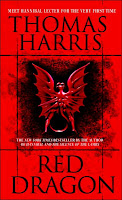
Red Dragon By Thomas Harris

This isn't the first time I'd read Red Dragon.

I got it in my head at age 19 to get a big-ass dragon tattooed on my back. It was my first tattoo and it promised to be a doozy, so I took my entire rent check and wandered down to Telegraph avenue in Berkeley, CA. I walked in, paid my money, and sat in the chair.

Getting poked for seven hours isn't exactly a lot of fun but somehow I endured. In between the controlled karate breathing and occasional reminders to myself to uncleeeeench, I finished the book. The story of a man who believes himself to be ugly and reinvents himself as a dark, majestic god deeply resonated with me then and it still does now.


As a wanna-be writer, re-reading Red Dragon deeply intimidated me.

Sooner or later, all modern psycho stories become police procedurals. You have to have some reasonable grasp on how law enforcement works. I'm a research monkey in general, but if a serial killer was operating on the scale and violence of Francis Dolarhyde, then a writer would have to account for the massive amounts of resources and expertise that would be turned toward his capture. Harris has a background in crime reporting and, like The Wire's David Simon, he uses that insider knowledge to enrich his story. When I think about replicating it, I imagine having to know the structures and methodologies of federal agencies, the science of forensic pathology, and all the other details that make these sorts of stories work.
Granted, audiences are pretty forgiving. Cop shows on TV aren't particularly accurate, but people eat them up. But the smallest screw-up kills all that built up suspension of disbelief and I care about the small details. A good, effective, authentic police procedural is like a finely made watch and I don't know if I am a good enough watchmaker.


I'm going to get this out the way because I cover a lot of this ground in my Silence of the Lambs podcast, but I am kinda over Hannibal Lecter.

First, he's not really an authentic psychopath. He's too clever, too controlled, he lives in a creepy dungeon, and his abilities verge on the paranormal. He's basically a modern-day Dracula.

I like Dracula and Hannibal Lecter is one of the best monsters that has been created in the last 30 years, but I'm more interested in the psychological nuances of the other villains in Harris' work, both Buffalo Bill from Silence of the Lambs and the Dolarhyde from Red Dragon

Plus, frankly, for all the bluster about how clever Hannibal Lecter is, he always seems to be undone by his own arrogance. In their first encounter, he screws with Will Graham but immediately capitulates when Graham prepares to leave. He receives a letter from Dolarhyde and, rather than destroy the whole thing, he keeps the part that strokes his ego. Lecter is terrifying, but he's got a pretty significant achilles heel. It's the kind of thing comic book villains get tripped up on all the time.

Please don't tell him I said that. 


On to Dolarhyde.

I sort of live by the philosophy of "fake it until you make it." If it were up to me, I'd spend my free time in blissful bookish solitude. But having friends and building a life and being popular has taught me savoir-faire and social adaptability. Those who know me (and I'm assuming most of the people who read this know me personally) can attest to my massive personal charisma, but it was a learned skill, not something that came naturally.

I cannot tell you how many times I've stared at my own reflection in the mirrors of nightclubs and douchey bars, looking at the fear in my eyes, and telling myself to put my game face on. The shortcut I used to developing a social persona was to copy the behavior of brighter, more charismatic people.

In other words, I created an avatar of the person I wanted to be. It's a much more minor version of what Dolarhyde did. I suspect every bullied, tormented, and angry kid does the same thing. When I was little, Jason Voorhees was my anger avatar. Dolarhyde's avatar is the Dragon. I sympathized with him, and it disturbed me.

Plus....sigh...let's just say I can empathize with Dolarhyde's body image issue. More than I'd like to admit. 

If Dolarhyde simply remained a well-designed maniac then Thomas Harris would already be ahead of the game. But the thing that makes Red Dragon special for me is that he starts redeeming himself from his own madness.

Okay, Reba McClane is a little bit too perfect for the circumstances. She's blind, so Dolarhyde's body image issues aren't a problem. She was a trained speech expert so she knows exactly what to say to alleviate his fears. And, of course, she's sexually confident enough to break through his barriers. Suddenly he's fighting his psychosis and trying to make deals with the Dragon. It made him a deeply tragic figure and one of my favorite psychos. Most psychopaths in horror fiction aren't really crazy but are instead cookie-cutter pulp fiction cackling evil. They do terrible things because it's fun. Dolarhyde's actions come from human weakness and insanity. I don't know if I buy that Dolarhyde would backslide so far as to attack Graham in his home, though. He was too confused and conflicted by Reba to suddenly turn into a third act monster movie villain.

Still, Dolarhyde has the one thing that most fictional psychos lack: authenticity. 


It probably is clear now that I really enjoyed this book, probably more now than when I first read it. Harris is a helluva writer and I enjoy it more now than I did when I first read it.

My final thought is something Hannibal says to Will Graham. Graham's big secret superpower is his uncanny ability to empathize with a killer's point of view and anticipate their behavior. Maybe it's the fact that I've always had a big imagination and it mostly turned to darker places, but the line "Fear is the price we pay for imagination" stuck with me.  It's true, or at least it's true for my imagination. The upside? Fireworks behind my eyes. The downside? Lots and lots of sleepless nights with monsters under the bed.

Monday, September 10, 2012

The Church Of Dead Girls by Stephen Dobyns

True story.

I grind out the books for and knock out the blogs for this way in advance. I like to have something ready to go, I like to get a thought on paper early and let it percolate for awhile and I hate rushing through things at the last minute. I carry my books with me where ever I go, but when you're studying horror fiction you're going to get a lot of strange looks over your reading material.

Anyway, midway through the book, I decided to take in a burlesque show from the fine people at D20 Burlesque for their WTF Japan anime-themed costumed night. I had bought the tickets well in advance but I wasn't able to convince anyone else to go, my personal life turned into a hot mess, and I found myself in the front row seat, alone, in a bad mood, and with a bunch of naked girls wondering what kind of aspiring serial killer brings a copy of The Church of Dead Girls to a burlesque show. 

Clever, clever me...


Anyway, I was midway through The Church of Dead Girls and I wasn't really feeling it. Dobyns is a really good writer, but the framing device of having a withdrawn, intellectual townsperson narrate it drained any sense of tension from the story. I see why Stephen King liked it, as his blurb is prominent on the cover. King does the folksy narrator unspooling a yarn very well, but this story takes the voice of an uptight closet case middle school teacher and therefore feels cold. Midway through the book, I felt like I was reading a wikipedia page summarizing events rather than actually engaging in the storyline.

It doesn't help that the narrator has no way of knowing some of the details in the story while being maddeningly coy with others ("Who's the 'professional man'?" "I'm not telling yoooooooouuuu."). I kept waiting for the big tweest to be revealed where the narrator was the killer (in retrospect, he probably was) or the narrator was secretly dead or something. It was an odd mix of omniscient and focused narrative.


It strikes me that this is an interesting selection for my Psychos In Literature course. We don't discover who the killer is until the end of the book, when an otherwise lucid major character starts speaking in psycho-child-religious speak. Instead this story is about a town tearing itself apart out of fear of the predators inside their midst.

For all the complaints I had about the way the story is written, I have to admit it's an absolutely engrossing tale. I've read a million zillion stories about the big scary wolf bringing chaos to the sleepy little bedroom community of sheep but I rarely see a serial killer story where the serial killer is almost an afterthought. Really, this novel is more of a "Monsters Are Due On Maple Street" type of story, where the real enemy is fear and mistrust. You see this a lot in horror fiction but it's usually more garish and overt. I like the subtlety and slow-burn of this book.

I felt a tremendous degree of sympathy for the town scapegoat, the mysterious college study group Inquiries Into The Right. Yeah, most of the people in the group sound like assholes, but they don't seem that far off from the kind of radicals that were common in San Francisco State University: factually correct in the grand scheme of things, but so socially maladjusted and myopic that they are unlikable. If the idea behind this nice small town is that it only works because no one upsets the apple cart then it's easy to figure out why the town singles them out.

It doesn't help that some of their members plant fake bombs and ransack cemetaries.


Like all good towns-with-a-secret, this place has a dark past, specifically the murder of the....god, I feel terrible for thinking this, because for all my pro-sex/pro-feminist empowerment sensibilities, my first thought was "...murder of the town bike."

I don't like what that says about me. 

The book is obviously about the secrets we all keep and how they conflict with our public persona. Horror tales are full of towns like these, where every house has an adulterer or a pedophile or a hypocrite or a pervert or something. I can't help but feel like this sort of outlook is something people who grew up in small towns develop after dealing with a bunch of two-faced hypocrisy. I didn't grow up in a small town and I'm accustomed to being surrounded by strangers. I assume that everyone is disgusting behind closed doors. The only difference is that no one else gives a shit here.   


Monday, August 27, 2012

Psycho by Robert Bloch


So does Norman Bates work better as an effeminate, boyishly handsome young man or as a baby faced, portly, forgettable mama's boy?

That's the big difference, innit? The storyline is basically the same. The structure is a bit different, too. Instead of starting with poor doomed Marion Crane and her lover, we crawl right into Norman Bates' life. Reading it, I kinda wonder how many of the original readers figured out what the big twist ending was. You can do a lot of tricks with visuals that you can't do with the written word and it's pretty obvious that Norman is shadowboxing in empty rooms.

Then again, I came to Psycho, both the film and the novel, knowing all the twists and turns. It feels like a fairy tale someone told me when I was really young and remained imprinted on my psyche. Reading it was still very rewarding. When you watch the movie version of a story, it's like you're observing it in real life. You can see the visuals, pick up the non-verbal cues, and interact with a story as a passive observer in the characters' lives. Reading the book lets you climb into people's heads. What you lose in "objective" visual clarity, you gain in intimacy.


Having climbed directly into Norman Bates' head, I gotta say it's a pretty fucked up place.

It's hard to feel sympathy for him, in that mama's boys seldom elicit sympathy in this culture. I feel a bit of pity for him, though it's easier to pity Anthony Perkins' version than the novel's version, if for no other reason than the superficial. The Norman I imagine from the book is shlubby and unappealing. People who encounter him seem to think he's harmless, but the way he carries himself and the stuff he says would set off my creeper alarm. Maybe the late fifties/early sixties were a more innocent charms, but I buy the version of Marion Crane from the movie, sitting in the parlor with Norman and being frightened by the things he tells her.

Blah blah Ed Gein blah blah Texas Chainsaw Massacre blah blah.


The big thing I took away from this book is the idea that no one really understands themselves or the people around them. Norman Bates really believes that he's covering up for his demented mother, Sam Loomis is shocked that the woman he was considering marrying could have stolen $40,000, and Lila Crane has to come to terms with a sister she barely knew. It's an idea that has some resonance with me these days.


I don't really have much to say beyond the fact that Norman Bates is the ur-psycho of pop culture. His weakness, his vulnerability, his dementia, and his mother issues have become what people think of whenever people use the word "psycho." No other madman has captured the public imagination the way that Bates has.

At least not until Hannibal Lecter came along.    

Sunday, April 1, 2012

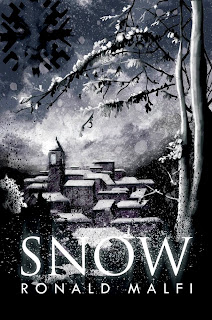
Snow by Ronald Malfi


Before we get started, a couple quick rants.

When a character in a book starts ranting about how bad ass and shocking and not politically correct they are, like Kate Jansen does in her first scene, I get turned off. "Politically correct" is to conservatives what "dive bar" is to hipsters: a meaningless buzzword denoting...I dunno, authenticity? How cool you are?

Whatever, son. My people don't even say that shit anymore. Besides, Kate Jansen is a terrible character. She's one of those female characters that male horror writers constantly create: boorish, abrasive, overly pleased with herself, and probably into obnoxious 80s hair metal. She's set up to be the love interest because...I guess every story needs one? but I can't really say I was rooting for her to make it out of Woodson alive. And, of course, there's a scene where the male characters are trying to convince her to listen to them even as she tries to assert herself. One of 'em says something to the effect of "We'll worry about women's lib later. This is about survival!"

First off, who in this day and age says women's lib? Second, ugh, get over yourself. I have a feeling that, if I were to meet Ronald Malfi, we wouldn't get along. Which is a shame. He's got more game than most genre writers.

Anyway, on to the show.


So, snow, huh? Ever get the feeling that horror is running out of ideas?


Maybe that's harsh. I mean, there's meat on them bones. Part of the reason The Thing is so effective is that snow isolates and entraps. You can't move around easily, cars break down and get buried, and between the howling wind and the whirling snow you can't see a damned thing. I once hiked through a freak snowstorm heading for a date and it was like walking through an empty apocalyptic world.

So, snow can be scary. And there's some really scary stuff at the beginning of the book. The poor doomed quartet pick up a wandering man lost in the snow. He's out of his head, distant and babbling about his missing daughter. As they're driving along and the man's behavior becomes more erratic, the others begin to doubt there is a daughter at all, until the protagonist sees her in passing only to discover she has no face...

Woo! That's some good stuff! I was really excited about this book until it turned into another damn zombie novel.


That's right. It's another damned zombie novel.

More to the point, it's a story that feels like someone wanted to write a zombie story but knew they were played out. It's still a siege story where people struggle to get what they need while hordes of dead people try to eat their flesh. There's guns a'blazin' and people a'dyin' and all you need to do is switch the travelers for homesteaders and the skin-suits for Apaches and you have the original siege western.

American paperback horror novels read more or less the same. It's like a recipe. Insert:
1) Monster or killer with a strong visual description. Check. Snow flurries with lights at their core, scythes for hands, and the broken meat puppets the control.
2) A bunch of people who might as well have "future victim" tattooed on their heads? Check. Nan, Fred, the poor doomed Shawna.
3) Religious weirdo screaming like a schizophrenic Baptist and who is likely more dangerous than the monsters? Check. The fat kid in the church whose name currently escapes me.
4) Guns, guns, guns! Plus the ability to pick up a firearm without any training and instantly shoot like Chow Yun Fat in The Killer? Check. They raid a gun store, grab pistols, and the rest of the book turns into runny runny, shooty shooty.
5) A big fucking explosion at the end? Check. The last remaining sheriff's deputy, who I kept picturing as looking like a bald Henry Rollins, takes out a bunch of the monsters by opening up a gas tank and shooting a flamethrower into it. This ain't no gothic horror, people! This is 'murrican horror! With guitars and people who swear and explosions and cannibals! Fuck yeah!
6)Characters in the middle of a crisis taking a moment to flash back to their personal issues? Check. Kate pauses the story to talk about her non-engagement and Todd talks about the time he had a problem with gambling but was able to pay the guy, who beat him up anyway, which makes good business sense for a loanshark.


A friend of mine who happens to be a proper southern lady (hi Lauren) has a theory about women: they're either ladies or broads.

I think stories are the same way. Stories can be divided roughly into high-falutin' tales and roughneck blue-collar yarns. It's sometimes tricky to separate the two. I'd argue that Joe R. Lansdale's work is tales disguised as yarns and The Yattering and Jack is a yarn told by a guy who usually tells tales.

Snow is definitely a yarn. It is definitely better than most, but it's still a type. You can quantify it, dissect it, and tune it. I've read a bunch of novels very similar to this one and it's sorta like comfort food. I try to keep to my healthy diet and big-city pretensions, but sometimes homeboy just wants a bacon cheeseburger.

I would definitely come back to Malfi. I think he's a good writer. Every now and again he'd come up with a simile or description that took my breath away. The dude has a bit of a poet to him and I respect poets.

I think he's a good writer. I'm betting this isn't his best book.

Also, I have a bad habit of writing fanfic and as I was going through the novel, I kept thinking "this could be improved with Jedi."

Sunday, January 15, 2012

I Am Legend


I started writing this drunk and finished it hung over. Welcome back, Seton Hill.

What am I talking about? Zombies? Vampires? A'ight.

So I was talking to one of my asshole hipster friends and we were lamenting the fact that nobody who is into pop culture seems to look at the roots of the things that they love. Nobody watches Casablanca or Citizen Kane or Gentlemen Prefer Blondes or The Searchers unless they're forced to for film class.

Reading I Am Legend felt like going back to the roots of the whole zombie thing.


Okay, yeah, they're vampires. But the narrative is the same as a zombie story. Lone survivor, desperate circumstances, scrounging for what he needs to get by, and surviving on good old libertarian work ethics (he can maintain generators AND grow garlic AND fix cars AND fight monsters? Man, my ass would be dead in a minute.) Almost all zombie books are siege books and Robert Neville is clearly a man living under constant threat. The book opens with him checking the damage from the night before, repairing busted generator parts, and harvesting garlic from his greenhouse. We don't get the sense that the creatures hounding him are human, but Matheson is coy with the details. Rereading the book, I'm struck how Matheson did himself a disservice by sticking too close to the whole vampire thing. He seems like he's on the verge of creating a brand new monster, but he loses traction trying to fit all the classic vampire details into his narrative. When Romero took this story and made Night of the Living Dead, he was taking the story to the next natural level.

Where Matheson stumbles on the monsters, the construction of the story is brilliant. Zombie stories are actually really hard to pull off. They're siege stories, they're nihilistic, and they only end one of two ways: the heroes either find sanctuary or they get got. The situation isn't helped by the fact that modern creators have eschewed post-apocalyptic survivalist stories for rugged American high-octane machine gun power fantasies. The real threat in old school zombies stories isn't necessarily the zombies. The threat is the isolation, the paranoia, the inability to work together, and fact that our structures collapse in the face of the zombie threat.


Robert Neville is not necessarily an easy character to follow around. The isolation and constant threat has made him weird. He spends his days in a routine: fix, scrounge, and slay. He's tormented by the memory of his dead family, he's got weird sexual hang ups (shades of the dissatisfaction I felt reading Matheson's Hell House) and he's staying alive mostly out of habit. The narrative is fixed on his point of view and we feel trapped along with him. The first time he really opens up to us is when he tries to befriend and stray dog. Frankly, I think the story would have been better if it started with this interaction. It shows how far Neville has fallen from his humanity, especially when you stack it up with the more theatrical scenes of him beating his breast at his wife's grave.

The quibbles I have with the book are mostly minor. The dog scenes should have been first, the vampire stuff is ultimately superfluous, the "science" he comes up to explain the vampire condition is pretty half-baked and takes up too much time, and survival stories ultimately lose narrative flow in favor of the minutia of day-to-day getting by. But Matheson not only creates and nails the zombie genre, he proceeds to end the story in the only logical place it could go.


I keep harping on the idea that the reason zombie stories are unique among the horror genre is that most horror is about the monster invading the normal world. It causes damage, we defeat it, the status quo is saved. Zombie stories are about the monster becoming the status quo. Simply by surviving in our world, the remaining humans become the monsters. Monsterism, therefore, is simply a question of context. In the new world being build by the mutants, Neville is the monster. He's the wild-eyed beast slaying creatures in the daylight. He is a thing to be feared and destroyed. It's a much deeper idea than survival stories, and Matheson created it at the beginning of the modern zombie myth.

Friday, November 4, 2011

The Amityville Horror


Of course it's all fake.

The hauntings that occur in The Amityville Horror are so reliable and violent and...well...obvious that it would left the fringe-y world of parapsychology and become the darling of the scientific community. Things fly, devil pigs talk to children, bugs fill rooms for no reason, stuff flies around and crashes like a low-rent air show. It's all very dramatic and impressive and I'm absolutely mystified that anyone took this book seriously.


I came into The Amityville Horror knowing it was bunk. Besides my natural and intense skepticism, I have a friend who is very active in the skeptic and debunking community. He sent me a bunch of articles and podcasts dealing with the Warrens, paranormal investigators who sound like a couple of crass opportunists, and George Lutz, the homeowner who sounds like a crass opportunist with a screw loose. Before I opened page one, I knew I was dealing with a work of fiction.

Strangely enough, that made the book more palatable.

A lot of horror tales boldly declare they're based on trues stories. It's a part of ghost stories. "We're just down the way from where that girl scout with the lazy eye and hare lip killed the rest of her troupe with a lacrosse stick" or whatever variation you'd care to hear. It lends veracity to the tale, as well as chillingly suggests that it could happen again.

So, whatever. You wanna say you're a true account? Oooookay. I'll be your huckleberry.


The core problem with The Amityville Horror is that it tries to have it's cake and eat it too.

The book tells a lurid story. Mass murders, cursed priests, satanic malevolence, and all that good EC comics stuff makes for a great ghastly tale. Unfortunately, the book reads like it's trying to maintain the pretense of straightforward journalism. Part of it is due to the weaknesses of Jay Anson's style, which can be politely described as leaning toward the hyperbolic. Part of it is due to the fact that it's not really structured like a linear narrative. It's more a series of vignettes. Every chapter is essentially a self-contained story. A bunch of spooky shit happens, the parents act like utter cocks, the priest wheedles and moans and bitches out again, and something really scary happens and a bunch of exclamation points start sprouting on the page like mushrooms on a dry old turd. Not to trash too hard on the man's efforts, which had some nifty imagery and works as a fun beach towel/bedside table book, but it's not much of a narrative.

The only real character is the priest. The parents are sketched out so vaguely that I can't tell if their rising temper at each other and their kids is due to supernatural malevolence or simple bridge-and-tunnel douchebaggery. The priest gets the most pages and most of them portray a cowardly, indecisive Hamlet, forever vacillating on whether or not to help the family and passing off responsibility by appealing to his conservative superiors. Frankly, he comes off like a punk. Fuck that guy.

Speaking of which, I'm noticing a theme in these books.

Between this and Grave's End which is another true life account of the supernatural, I can't help but notice something in the inhabitants of these haunted houses. Both of the books deal with deeply religious people and I can't help but believe people with a strong attachment to believing in gods don't have much of a problem making a jump to believing in ghosts.

Just sayin'.


The movie was much better.

In describing The Amityville Horror in his seminal non-fiction book on the genre, Stephen King called it one of the first "economic horror stories." Think about it. You buy a new house that should be waaaaay out of your price range, you make some rough peace with the fact that people died horribly in there, then you move in and the pipes fill up with black oil and doors rip of their frames and rooms fill up with bugs and the nastiness just keeps escalating. You can't really deal with a fixer-upper when it is actively working against you.

It kinda made sense to me as a kid but it makes a whole lot more sense now. A week ago, I moved into a new apartment in Bushwick. I'm just another hipster kid gentrifying a neighborhood, but it's hard work building a home. It's a tiny room in a basement that was never meant to house people. There is no ventilation in the place, there is no closet, my stuff doesn't fit in the room, the stove barely works, and there's a bunch of teenagers running a craps game going on in front of my place. Yet somehow I gotta make it work. And it's much easier than if some dead asshole started turning over my furniture and knocking over the cheap ass canvas wardrobe I had to buy to keep my stuff.

The movie focuses on that aspect of the tale. The priest is barely in the movie, the family is likable, the performances are good, and shit gets real intense.

Watch the movie. Skip the book.

Sunday, October 23, 2011

The Lovely Bones


There's an argument that The Lovely Bones is a gimmicky book. It's a tale of the disintegration of a grieving family told from the point of view of their murdered daughter. As she watches her family up from heaven with a sort of passive Buddha-like idiot benevolence, we become a sort of voyeur into one family's turmoil. It's pain porn, it's grand guignol melodrama. The story is mostly formless, a series of vignettes dipping in and out of the family's life over the course of several years. The reader doesn't even get to experience a good vicarious sense of vengeance when the murderer gets got. There's no violent death at the hands of a righteous family member or apprehension at the hands of dogged police pursuit. Instead, you get a tale of love and loss, intimacy and regret, growing up and growing old.

I enjoyed the hell out of it.


As I was reading the book, I started to realize that the framing device of the heavenly narrator wasn't actually necessary. She's dead when we meet her, she doesn't seem particularly angry at her murderer (which makes later declarations of outrage hit an oddly false note) and she sort of loves everything and everyone without hesitation. Yes, there is a scene where she inhabits the body of a friend to share a first kiss with her high school sweetheart, but I started to realize that that I had become emotionally invested in the family enough that I didn't need a serene POV walking me through the story.

Still it's unique and dreamy. It feels like the voice of a teenage girl; at once emotionally raw, completely honest, and self-mythologizing. I get harped on a lot in my writing (legitimately so) for injecting too much of an omniscient narrator into my book, and it hit me that author Alice Sebold figured out the perfect way to do this. Susie has a very intimate view of her family, but is distant enough to comment on their behavior as a narrator.


I can't help but feel like I'm going to get in trouble for this, but did anyone else think that Susie's mother was being a self-indulgent asshole for running away from her family?

I mean, okay, her father was entirely too fixated and sloppy about how he went about gathering information on the creep who killed his daughter. And families do fall apart after tragedies like this. But it also seems to me that screwing around behind your husband's back and running away in the manner she did was just straight messed up.

I was at a wedding the other day and, after a few trips to the open bar, me and my fellow bachelors who'd managed to avoid the garter belt were standing around and discussing the wonders of dating women. Someone...okay, me...said that the tricky thing about dating women was that there's a part of them that's always locked away, that always stares at you from across from a great distance. You can try as hard as you like but you can never quite get all the way close to them.

Sexist? Maybe. But when people talk about the mysteries of women, I sometimes think this is what they're talking about.


I tried watching the movie, which was a horrible idea. Aside from the murder and the beatdown in the cornfield and the break in at the murderer's house, not much happens in the story. When Petey Jay directed the flick, he really jazzed up the scenes in Heaven, but the book doesn't focus too much on Susie's afterlife, so tremendous amounts of quality character stuff gets lost in the razzle dazzle world of the movie.

A shame. This is really good stuff. I recommend this book for anyone with a taste for melodrama and a love of strong characterization. I'm going to take a lot away from this book. I hope you do, too.

Tuesday, October 11, 2011

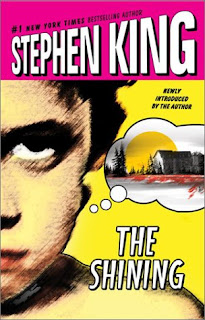
The Shining by Stephen King


My old post for The Shining was unnecessarily verbose and boring, so I decided to make a podcast out of it.

Listen to it here.


If you don't feel up for it, here's the short version.

It's a classic for a good reason. King has a powerful grip on characterization.

Jack Torrance is an entitled, angry, self-pitying dick. I don't understand how Stephen King expects us to have sympathy for him.

I didn't buy that Wendy would have stayed with him.

And hedge monsters aren't scary.

Seriously, just listen to the podcast.

Tuesday, September 20, 2011

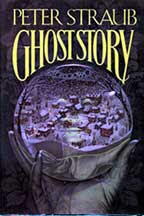
Ghost Story by Peter Straub


Because I am a little shit, and because I have a tendency to soak up and project hyperliberal dogmas of oppression and subjugation, my first thought after completing Peter Straub's seminal Ghost Story was "another goddamned horror novel about poor helpless men besieged by an eeeeevil woman."

On a very surface level, it's an accurate observation. The only two women to get any real screen time are the shapeshifter antagonist in her various guises and the wife of one of the protagonists, who is a cheatin' ice queen with a heart like shards of cold broken glass. The shapeshifter is a seductress kinda monster who uses her wiles to send men to their destruction. Her acolytes speak of her in reverent tones. She's eeeeevil because she makes men love her too much, but refuses to be subjugated by that love.

This is ultimately a boy's story about the one that got away, about impotent men cowering in the face of a female power. It's also pretty damned good.


I fully intend to be in the Chowder Society when I grow old.

One of the most popular tweets I ever...uh...tweeted (JoeAverageSF, if you're interested) was "I can't wait to be old. I want to be an old theatrically morbid man like Vincent Price." Well, I want to be like the Chowder Society, the four old men who get together and tell ghost stories, starting each one with the same eerie introduction, "What's the worst thing you've ever done?," followed by the response, "I won't tell you that, but I'll tell you the worst thing that ever happened to me...the most dreadful thing..."

Eeeeeee! Creepy!

The old men in the story are really likable and engaging, the setting is genteel, and the tales they tell are genuinely eerie. This book plays toward my taste in quiet, evocative horror and the evil that descends on the gentle old professionals is slow and spooky and delightful.


As much as I enjoyed the book, and I really did, there are a couple things that bug me. It has the feeling of being improvised as the author went along. Antagonists that start out as distant and ghostly suddenly become little chatterboxes as they're encountered later. Behavior, motivations, and patterns shift, and people get a case of the stupids later in the book. There's also a certain aimless passivity to the heroes. They spend most of the book waiting to get got, rather than being proactive in any meaningful sense. The most dynamic step they take is to bring in the nephew of one of their murdered contemporaries, who appears to be haunted by the same spirit.

Speaking of the spirit, one of the big questions that bugged me about the book is the antagonist's motivations. She's an immortal shapeshifter who is clearly contemptuous of humanity, yet she wastes decades of her existence hassling four random chumps in an isolated small town? Really? Is her evil that banal and unimaginative? The story would have made more sense if she were an actual ghost haunting them because ghosts tend to fixate on a subject. The creature at the center of Ghost Story ultimately came off as petty.


I do want to make mention of something that I found sort of appealing, which was the relationship between Stella and Ricky Hawthorne.

I think we're living in an age where people are becoming more skeptical about the idea of monogamy. Maybe it's the fact that I'm safely ensconced in a bubble of Brooklyn dating, where being "friends with benefits" is too much commitment, and I'm a Dan Savage devotee who read Sex at Dawn a couple times, but my view of human relationships tends to be a little more...progressive than the mainstream.

Horror, as I've often said, is a fundamentally conservative genre. It's all about the status quo and it's often written by people who hold fairly traditionalist views. That attitude is often an asset, as horror is usually about drawing firm black-and-white lines between good and evil, but it tends to falter around deviations in human behavior.

Somehow, Ricky and Stella work. She cheats, he knows about it, and all seems well. On paper, it appears that she can't help herself and he loves her enough to tolerate it. I suppose to some people that would appear to be a catastrophic state of being, but they seem happy. It works for them, and I liked their dynamic, even if I felt she was a throwaway character.


One of the weird things I took away from reading Ghost Story was the fact that it was less effective as it became a more traditional horror novel.

As a tale of four old men, haunted by a tragedy, who find cathartic release by telling ghost stories to one another, it was a great, evocative book. Once they're knife-fighting developmentally disabled werewolf boys in movie theaters, the book became garish and kinda goofy. Still, the book works. I like the characters, I like their world, I liked the pacing (which was eerie, but not foot-draggingly slow), and I liked the little moments of creepy terror. The dreams, the visits from dead friends, the moments of isolation and menace were all wonderfully done.

I have a litmus test when I read horror fiction. First I look at the non-horror elements. Do they hang together? Are the characters compelling? Do I give a shit about who they are and how they interact and collide against each other? Basically, could they hold up in a book without the horror elements? I absolutely felt that Ghost Story passed this test. There are a lot of challenging, engaging characters and they were all richly detailed and fascinating.

The second part of my litmus test is studying the horror elements. Are they original, or at least engaging? Do they improve the human drama or do they just get in the way? Do they make sense? Are they scary? For me Ghost Story mostly passed the test. When the threat was more ephemeral, when the demon facing the the Chowder Society was more vaguely defined, it was an effective horror story. Once we got to know Eva Galli, she became more of an annoyance than anything else.


I was actually a little bit spooked as I read the book because many of the elements of the novel are very similar, and probably better done, to elements of the novel I'm writing for my MFA.

Old friends tied by strange social rituals and a violent crime. An ethereal menace that lurks in the shadows and begins a campaign of psychological warfare before striking with sudden, decisive violence. A strongly defined setting that the characters play off of and experience in their own unique ways.

Screw it. Straub can call a good tune. I will dance to it.

Overall, I give this book my bump. I enjoyed reading it and I think it's a solid introduction to Straub's key work. It's recommended for fans of more subdued, quiet horror.

Also, the movie is pretty good, too.

Monday, October 25, 2010

Soultaker by Bryan Smith


Soultaker fascinated me.

It didn't fascinate me due to it's quality. It can be politely described as formulaic but fun, something to pass the idle hours on the commuter train. There are about five or six horror writers I regularly come back to when I want something lurid and sensationalistic and fun. They wear their genre bonafides on their sleeve and their stories are almost interchangeable: corruption and anarchy hits a maddeningly suburban town, the protagonist is always some Sunset Strip hair metal type, the violence splashes gleefully across the page, and the woman are always cartoonishly sexually aggressive. The tea sipping elitist in me is mortified that I enjoy this stuff, but my inner five year old devours it.

Soultaker plays pretty close to form. A female sexual demon known as a Lamia comes to a shitty little suburb and begins corrupting the populace by taking the form of a surly goth teenager and fucking the local hot shot jock. The jock's alcoholic writer brother comes to town to help him out and is unwittingly forced to fight against evil and blah blah blah. It's not particularly inventive or challenging but it's competently put together and I enjoyed my time reading it. The reason it stuck with me after I put it down because the more I think about it, the more I feel it's a story about male fear of female sexuality.

I've gone on rants before about how I believe horror is often a satire of our fears. Some of them are cultural fears, some of them are fears specific to an era in our history, and some are universal. It's no secret that human cultures have spent generations trying to control what a woman does with her body and Soultaker feels like a sort of extreme satire about what could happen if women had complete control of her own sexuality.

Lamia is an unequivocably female threat. While her goal is to perform some sort of mass sacrifice for another hundred years of life, she achieves it by seducing and destroying anyone who gets in her way. Her acolytes are all women and they use an almost comically exaggerated sexuality to get what they want. They're not bashful or subdued; they want to fuck and come and push bondaries all the way through to graphic murder. The men who they take over become simpering submissive slaves bent to their evil will. The heroes eventually become drawn into an Invasion of the Body Snatchers-style web where they can no longer trust that their friends or families aren't acolytes or slaves of Lamia. All the heroes are male with the one exception of a lesbian who happens to be Lamia's daughter and uses the same sexuality in an attempt to destroy her mother.

I absolutely don't want to suggest that I think Bryan Smith is a misogynist. While the subjects he's tackling can be incredibly challenging, I don't really sense any particular malice from his work. To be honest, I'm probably overinterpreting the intent behind his book. For all I know he just wanted a little raunchy sex, a little gruesome violence, and a bunch of fun scares. Besides, I'm currently reading the collected horror stories of Robert E. Howard and his virulent racism makes Smith seems like the copywriter for the ACLU.

I don't know if I would actually recommend this book to people. It's crudely written and the subject matter might turn off people with sensitive constitutions or people whose socially conscious dial is set too high. I don't know how much of the stuff I'm drawing from the story is from my notorious penchant for over-interpretation and how much of it was deliberately laid down by Smith, but the gender politics of the book kept me fascinated.

Also, it was a good way to kill five or six hours on my commute.

Tuesday, May 11, 2010

Horns by Joe Hill


I'm really struggling to come up with something clever to say on this one.

First, I loved it. I've been reading a lot lately, given that I no longer have access to video games or a TV, and most of the stuff coming across my desk have been slogs to get through. I breezed through Horns and I didn't want it to end.

Second, the themes of the book hit me at the right time. I broke up with my girlfriend of seven years within the past year and I'm currently at the "oh my god, why did I let her go" phase. This story is essentially The Crow, in that supernatural agency allows a wronged man to seek revenge, but unlike The Crow's ethereally perfect love, Ig's romance with poor doomed Merrin is much more fraught with doubt and discomfort and pain. She's murdered the night she dumps Ig in a bar and the conversation she has with him rings cruelly authentic. There's a bit where she accuses him of putting her on a pedestal and loving the image he's made of her rather than who she is as a person.

That stuff resonated with me because, unlike a lot of love stories in genre work, it resonated with authenticity. Hill has a real gift with chronicling realistically damaged relationships. I remember a line from Heart Shaped Box where Judas Coyne talked about staying up late at night so his girlfriend would be too tired to want sex. I've been to that level of dysfunction and I haven't seen it detailed with the same heartbreaking accuracy that Joe Hill brings. I dunno where he's been in his life, but you can't make that shit up.

I actually had some trouble with the twist, which essentially invalidated Merrin's previous behavior. I liked the difficulty and ambivalence of Ig's memories of Merrin and when it turned out that every decision she made was made out of love for Ig suddenly stripped the story of the emotional murkiness that I found so charming. Then again, I'm not exactly reading the story without baggage.

One of the things that I really liked about the story was the way it was told from multiple angles. It's essentially a very small story between a couple of characters, but nature of Ig's powers allow the readers to see the crime from several points of view. At no point does the book feel padded, mostly due to the strength of the characterization. Hill has a great command of his character's point of view. Ig's lovestruck, self-loathing perspective on events is a million miles away from Lee Tourneau's selfish, sociopathic take on his crimes, and both are equally entertaining to follow.

Finally, both of Hill's novels feature female characters who start out in the background but eventually come into their own. In Horns, it was the sad, damaged Glenna. I really liked her arc in the story. We know that she doesn't like herself much, that she's curvy but sees herself as fat and grotesque, and that she possesses a wounded beauty. She's one of the invisible people of the story and my heart went out to her.


Maybe it's my love of superhero stories, but I really dug Ig's transformation into a pitchfork-wielding, red skinned devil. It's a compelling image for a character and it has the same nifty internal logic of a good comic book story.

I even dug his powers, which compel people to confess their darkest secrets to him. I was originally a little iffy on this aspect of the story because I was worried it would turn into yet another variation of the same old "people are shits deep down" that I've gotten bored with before, but the characters in Ig's world are all interconnected, and you see the effect of one person's secret spill over into another. Their deepest, most unspoken thoughts are especially vicious given that almost every character in the book believe Ig murdered Merrin, which deepens our sympathy for him as we see how much of an outcast he's become. The scene with the waitress who originally reported Ig to the police is especially amusing because we find out just how messed up he is. I could have easily read an entire novel where Ig goes around getting confessions from people. Reading the story in my wretched, misbegotten state, I couldn't help but wish I could use this power on my ex and figure out exactly what she felt about me, but I doubt I would have liked the answers.

Ig's powers grow to a point where he can start tempting people to act on their secret desires. He almost seems like he's going to walk the path of damnation, especially given the shocking and slightly out-of-character scene where he nearly kills his grandmother after she confesses her hatred of him. Instead, this devil turns out to possess some decency, and spends the rest of the story walking a brutal road to redemption, one that involves him using Morse code, finding a tree house, getting set on fire, wearing a blue skirt, and discovering an aversion to the crucifixes of dead ex-girlfriends. As the story went along, I discovered that I really didn't care how he got all these cool powers, but the explanation cooked up at the end is both lyrical and strangely satisfying.


I can't recommend this book highly enough. I liked it more than Heart Shaped Box and I foresee a future where Joe Hill is a big cheese in genre fiction. You can read a really good interview with him here, along with a pretty good review of it from the AV Club.

This was one of those books that came along at the right time in my life. The themes of lost love and alienation really resonated with me. I sometimes wish I could find the Tree House of the Mind, with it's strange votive candles and cheerful proprietor. There's a lot of trees in this city. Maybe it will appear for me when it's needed.