Friday, December 26, 2008

Happy Holidays


Hey all.

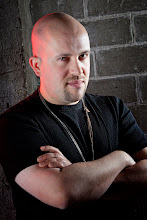
Thank you for your kind comments and support, both from my friends and from my fellow bloggers out there. I'm gonna keep this macabre little ball rolling in the new year. I wanted to wish all of you a happy holidays.

Merry Christmas from the heart of horrorland.
Creature.

Tuesday, December 23, 2008

Event Horizon


Comfort food.

Event Horizon doesn't do anything particularly original. The story is an almost textbook haunted-ship yarn, the narrow ship interiors look like some Swedish metalhead set designer reinterpreted Alien, and the images of hellish torment have a strong Clive Barker tone. There's even a big blood flood like The Shining.

It's also kinda dopey. Characters defy common sense outer space search and rescue rules against touching mysterious floating black puddles of goo and chasing after family members they left back on earth. The special effects come from the early days of CGI and they don't hold up well. It commits the cardinal sin of horror cinema: it relies heavily on the amplified volume jump shock.

It also lacks a central protagonist. The movie starts by following Sam Neill's histrionic scientist-on-the-edge, but he quickly falls under the sway of the haunted ship. The focus then switches to Lawrence Fishburne's captain-on-the-edge, who has remained aloof most of the movie and only gets our sympathy after he reveals the Tormenting Incident From His Past.

Despite all this, I still had a lot of fun watching it.

The whole thing is vaguely Lovecraftian. The unfortunate crew of the Event Horizon aren't simply murdered by whatever they encounter during their FTL jump. They go insane, joyfully, maniacally insane. Reality warps around our poor survivors as the ship draws them deeper into its horrible web. We get the sense that the Event Horizon is just the tip of the much grander, much more terrible reality hidden beneath. I like stories that utilize cosmic horror on that scale, and I think sci-fi/horror stories cover that subject well. Most aren't as ambitious as Event Horizon and even when it falls short it should be praised for trying to do something cool.

I also liked the cast. They tend to fall into the classic gruff character types you find in blue collar sci-fi, but they're well acted and appealing, even if the psychological hooks the ship uses against them are completely unsubtle.

It's kind of like a collage of better movies. Still, its worth checking out every few years.

Sunday, December 21, 2008

Sunday, December 14, 2008

In Defense Of The Running Zombie


Floating around the interwebs is an article penned by Shawn of the Dead's Simon Pegg in which he discusses his objection to the new breed of running zombies famously shown in 28 Days Later (which, I know, isn't technically a zombie movie) and the Dawn of the Dead remake (which absolutely was.) If you want to get really technical, you can say that mainstream American running zombies started with Return of the Living Dead, but the argument mostly comes up when people refer to the 2004 Dawn of the Dead remake. How DARE they change the rules, the purists seem to say. George A. Romero invented the wheel, and how dare you change it for a few cheap scares to amuse the jump-cut MTV generation.

I LIKE the Dawn of the Dead remake. I think the story is well-written, intelligent, and did new and inventive things with the zombie mythos. It bums me out how often the remake gets brushed aside. Obviously, I'm not taking away from the original Romero work, which stands as one of the seminal horror movies ever made, but Pegg's comments seem to be taken as some kind of holy validation among traditionalists. I disagree with him, and I want to get on my soapbox and add my voice to the debate.

I tend to hear the arguments Pegg makes often from people of an older generation, people who saw the original Romero trilogy in theaters. I like to refer to the Dead movies as the Star Wars trilogy for the horror set, minus the reoccuring characters and creepy incest subtext. Romero created a world that was internally consistent, with clearly dilenated rules and a underlying philosophy people click into. It's the kind of world people want to live in, and those people don't like it when you mess with the walls holding up their fantasies.

The dead shamble. The dead creep. The dead moan.

They don't hiss like angry cats. They don't chase after you. They don't run you 'til you're ragged, then smash you down and rip you apart.

THE TASTE OF TERROR


Another thing: speed simplifies the zombie, clarifying the threat and reducing any response to an emotional reflex. It's the difference between someone shouting "Boo!" and hearing the sound of the floorboards creaking in an upstairs room: a quick thrill at the expense of a more profound sense of dread.


Okay. But what if the amped up sense of terror never lets up. What if the audience never gets a chance to breathe, never gets a chance to find humor in the situation. What if you have to share the stress of the character, knowing at any second could be your last?

I own a copy of the Dawn remake and every time I watch it I feel like I leave the movie suffering from combat shock. The writers and performers do an incredible job creating characters I become emotionally engaged in, and we never get any sense of safety or comfort. The sun never comes out, the mall never feels safe, and any hope of rescue is clearly gone.

I've heard the arguments for the slow dead. Central to the argument is that the rush of panic is not as satisfying as the fine creeping terror of a wave of zombies inexorably staggering towards you. It's the horror epicurian's argument: panic is fast food and slowly escalating dread is fine wine. I generally believe this is true, especially in movies that rely solely on jump scares, but the best running zombie movies have so much more going on in them. Both DotD and 28 DL are not just a collection of jump scares. They're both absolutely effective because they never let up. Running zombie movie characters never get a chance to rest, never get a chance to plan, never get a chance to stare at their navels and wonder What It All Means. They are engaged in the purest example of survival horror. No rest. No respite. No heroics. Stay moving, stay alive.

EMPATHY FOR OUR ANNIHILATION


One of the more interesting elements of Pegg's argument is the idea of the sympathetic monster:

The absence of rage or aggression in slow zombies makes them oddly sympathetic, a detail that enabled Romero to project depth on to their blankness, to create tragic anti-heroes; his were figures to be pitied, empathised with, even rooted for. The moment they appear angry or petulant, the second they emit furious
velociraptor screeches (as opposed to the correct mournful moans of longing), they cease to possess any ambiguity. They are simply mean.


Romero peopled his movies with zombies who seem to have died midway through their jobs or their hobbies. Dawn was filled with zombie cops, zombie housewives, zombie softball players, and zombie hare krishnas. Romero's characters would often stare at the zombies and ponder how thin the line between themselves and the walking dead actually was. Despite that, I never felt that Romero had much sympathy for most of his zombie cast (excluding Bub and Big Daddy.) They were more representatives of a world gone wrong, of your friends and neighbors turned against you. The "angry, petulant, velociraptor screeching" zombies have purpose. They are coming to EAT. YOU. ALIVE. Being reduced to prey is a frightening concept, like you're starring in one of those ghastly nature documentaries that show the gazelles being taken down by the lions. It's a very different kind of terror, I'll grant, but that doesn't mean it is worse.

THE "HEY YOU KIDS, GET OFFA MY LAWN!" ARGUMENT.


At one point in the article Pegg argues the traditionalist's argument: that's not the way the rules work.

I know it is absurd to debate the rules of a reality that does not exist, but this genuinely irks me. You cannot kill a vampire with an MDF stake; werewolves can't fly; zombies do not run. It's a misconception, a bastardisation that
diminishes a classic movie monster. The best phantasmagoria uses reality to render the inconceivable conceivable. The speedy zombie seems implausible to me, even within the fantastic realm it inhabits. A biological agent, I'll buy. Some sort of super-virus? Sure, why not. But death? Death is a disability, not a superpower. It's hard to run with a cold, let alone the most debilitating malady of them all.


This is the kind of argument I have when I go to the comic book store. I don't actually believe in magic and it's foolish to debate the semantics of magic, ha ha, but this work conflicts with my definition of magic so it is wrong.

And, like comic book universes, an overly rigid need to conform to continuity can throw off new and innovative work. But there are people in fandom who would rather their gardens remain unruffled and pristine rather than let people enjoy things their own way.

Hey you kids, get offa my lawn!

"EFFECTIVE BUT POINTLESS REBOOT"

One of the most important things to remember about the traditional slow moving zombie is that they tended to be much less of a threat than the disorganized, terrified, angry, ignorant humans they attacked. Both NotLD and the original DotD had the vast majority of the characters killed by other humans or by their own mistakes. A lot of somewhat overblown philosophical junk gets laid at NotLD's doorstep, but I think the movie captured a certain vicious hopelessness that existed for during the Vietnam war. The Romero stories are essentially nihilistic: we could have pulled ourselves out of the zombie apocalypse if we just learned to work together.

All this is well and good, but it comes from a generation that dreaded things inside their culture. Slow moving zombies was an apocalpytic crisis, and Romero's movies showed how we fail as a species to meet the challenge. The real danger in Romero movies come from within. Running zombies represent threats that come from without.

I'm a big believer in the horror genre's ability to capture the zeitgeist of an age by showing us distorted, funhouse mirror reflections of the things that frighten us as a society. I think DotD's remake captured the degeneration of the (forgive the dreaded cliche here) post-9/11 America better than Romero's movies. The opening scares in the remake are absolutely relentless. As Ana makes her escape, we see her neighbors gets butchered around her before they can even understand they are under attack, cars crash into each other, people are dying along the edges of the frame, and the law enforcement officer she runs to sticks a gun in her face. The terror here comes from a very clear place. We are being attacked, We don't know why, we aren't prepared, and no one is coming to help us. As a young, liberal American, this resonates with me.

Also, put bluntly, I find it kind of strange that Pegg attacks running zombies as not being scary when he made a comedy showing that slow moving zombies don't pose much of a threat. Sure, the last half-hour turns into a nasty horror flick, but most of the movie treats the walking dead as gory slapstick props. Even Romero's original Dawn had the outlaw biker gang slamming pies into the ghoul's faces. In the Romero-penned remake of Night of the Living Dead, Barbara looks out at the wave of oncoming zombies and whispers "We can just walk past them." We're too familar with traditional zombies, we're too aware of the rules, and that affects the way we engage with the story. Humanity can contain a slow zombie, but would be wiped out by a running zombie wave.

If you want to keep the nihilism of the zombie mythos relevent, the running zombie has a place in the horror pantheon. Great works are still being done in the classic genre, specifically Max Brooks' terrific World War Z series, but I'm not going to condemn a new idea out-of-hand because it doesn't mesh well with tradition, particularly after strong work has already been produced within the new genre.

Long live the running zombie!

Monday, November 24, 2008

Let The Right One In


Thanks to my man Igor, who made the above Swedish cinema primer possible. It's not like I can run the trailer twice now, is it?

I tend to associate with women much smarter than me, and therefore I've seen a lot of foreign films. I think I was as prepared as anyone to check out Let The Right One In, the nifty vampire film currently making the art-house circuit. Let The Right One In is gonna be a hard sell for the average fan raised on the American style of horror cinema. For one, it's the close-uppiest movie you will ever see. Director Tomas Alfredson seems to believe that the best place for a camera is four inches from a character's face. It's also edited in a rough, jarring way that bats the viewer's focus so hard it makes the teeth rattle.

It's also really, really, friggin' good. It's a story about an isolated, angry young tweener who befriends a vampire and it absolutely works.


I was planning on my next post being about Twilight and the neutering of the vampire archetype, but Let The Right One In renewed my faith in this type of story. Ever since Buffy The Vampire Slayer (or, arguably, the Anne Rice vampire novels) vampires have become the bad boy archetype, basically human but with unusual diets and skin deficiencies who have a dark, conflicted, sexy edge but who can be redeemed with the love of a good, strong, pure girl. Eli, the conflicted vampire of LTROI, is cut from the same cloth as the classic vampire stories. She's a creature with barely controlled appetites, someone whose emotions and sensitivities may be human but whose impulses make her a constant threat.

She finds her perfect match in Oskar, the troubled and lonely boy she befriends. When we first meet Oskar, he is taking out imaginary revenge against the bullies who torment him at school, slashing at the air with a knife and practicing the things he'd say. He's well read and quiet, keeps a scrapbook of gruesome murders, and has a surprising knowledge in forensic pathology. When he's actually confronted by the school bullies he becomes timid and powerless, and this in turn makes his fantasy life darker and more violent. I've long held to my haunted house theory, namely that the best horror movies involve characters who are haunted even before they ever set foot into the realm of the supernatural, and Oskar makes a much better fit for the vampire tale than any goody-two-shoes flyover land blonde.

The story is focused almost purely as a tale between Eli and Oskar. Adults barely feature in the movie, and the parents and teachers who populate Oskar's world are mostly kept off-screen or filmed from behind like characters in a Charlie Brown special. There is a small cadre of locals who slowly become aware of what Eli is up to, but they're mostly used as victims, comedic relief, or targets of ridiculous CGI cat attacks.

My favorite part of the movie, the bit that I think other movies could learn from, is the slow way that Oskar and Eli become friends. In Hollywood movies, teen and tween characters toss out witty and insightful bon-mots, sprinkled with quickly outdated pop culture references. The characters in LTROI talk like kids. They're guarded and shy, insecure and awkward. They slowly up to each other, slowly offer their friendship, and it's tremendously realistic. These felt so natural and so perfectly captured that I dread the upcoming remake, which will no doubt make the kids older, prettier, and full of snappier dialogue and rock song. LTROI is a quiet sort of movie, and Hollywood doesn't do that well, not without being self-congratulating.

The horror in the movie is very well done and effective. The story's emphasis isn't really on the body count, but when the violence hits it's shocking and brutal. Eli is not a romantic seducer type, and she rips out people's throats with animalistic abandon. The gore is limited but effective, particularly the grisly scene where Eli demonstrates what happens when she enters a home uninvited. That scene stands out as one of my favorites in recent memory, along with the ghastly final sequence in the poolside, as Oskar's vampire buddy comes to his aid in the most shocking way, proving that it's probably not a good idea to make friends with monsters.


One of the big questions that I took away from the movie is about how honest the emotional connection is between Eli and Oskar. Eli, as portrayed in the movie, is clearly not bereft of humanity. When she is forced to find her own victims, she weeps after she kills people. She shows tremendous amounts of restraint around Oskar, and the connections they make are tender and very human. She is, however, very callow and heartless to Hakan, the older man who lives with her and kills people to feed her. We never learn the exact nature of Hakan and Eli's relationship, but I wonder if Hakan was once in Oskar's shoes. Did Eli strike up a friendship with someone her own age and then abandon him as he gets older. The story ends with the two of them leaving town, implying that Oskar has taken Hakan's place. Will Eli one day treat the older Oskar with the same contempt?

There are few horror flicks that I can think of where the setting is a perfect fit for the story. Blackeberg, the Stockholm suburb where the story takes place, is oppressively cold. The characters trudge through blank, lifeless landscapes, faces constantly bundled, struggling to move under the bindings of their heavy clothes. It conveys a sense of stillness that fits very well with vampire mythology. Frankly, Sweden is probably the best place to hide if you are a vampire. Everyone is already pale and gloomy.

Anyway, this movie isn't for everyone. I don't think anyone would accuse LTROI of being a particularly kinetic film, and I know that the cinematography turned some of my friends off, as did the particularly twisted nature of the kid's relationship. But it's still one of the best vampire movies I've ever seen. Check it out.

Repo! The Genetic Opera


It's very difficult to actually dislike a movie with this much energy and originality.

I've really been looking forward to this movie, ever since its big marketing push during the San Diego Comic Convention this past summer. Clips from the trailer, downloadable songs, and the awesome posters were available to fans. I thought it looked visually cool and daring and gruesome and I wanted very badly to see it.

This past weekend I got a gang of my friends together and we went to our Local Indie Cinema. We sat down, got our beers and our pizzas and our popcorn and we saw it through. We listened through the songs, cringed through the eviscerations, and were amused by the wild sights that Repo! laid before us. Yet the strangest thing happened when the lights went on. We all liked it....sorta. We mumbled and grumbled, struggled to put our finger on it, but I think we simply wanted to like it more.


Repo! The Genetic Opera is kind of a stretch on my single-topic blog rules. The horror is mostly of the visceral variety as the Repo Men stalk the streets, gruesomely vivisecting any organ transplant patients who can't keep up with their medical payments. The rest of the story is a gonzo rock opera set in a dystopian future, where a small family of psychopaths and degenerates live a decadent lifestyle as the people below them scrape by in poverty, completely dependent on the sinister GeneCo for their health and entertainment. There's something wonderfully grand guignol in the way this story is told, as we watch flesh split and entrails torn out of screaming victims by cackling madmen while crazy industrial songs are sung.


Despite the cheerfully ludicrous setting, the story itself is as outlandish as most musicals. There are lost loves, tragic heroes, monstrous villains, secrets, liars, tragic victims, all-knowing narrators, and all that jazz. All of this is, of course, wrapped up in a heavy gothic/industrial aesthetic.

I used to be much heavier into the goth scene when I was younger, before I realized that the personality affectations and kabuki-style look was more trouble than it was worth. Still, I have a strong affinity for the subculture and it's participants and I get a little Pavlovian response to anything marketed to the community. If ever a movie was tailor-made to the goth crowd, this is it. It takes place in one of those grim, ground-down futures where the sun never seems to turn up. The ever-awesome Ogre from Skinny Puppy plays a supporting character. Everything is so dark and grand and over-the-top and majestic. The heroine is a wan, sickly girl, trapped in a tower and forever melancholy in that theatrical way only goth kids can be, because everything is so unfair to her, goddamnit!

Here's the deal: for a musical, the songs in Repo! The Genetic Opera aren't particularly memorable. They're well shot and well sung, especially by Anthony Stewart Head, who absolutely rules as the Repo Man, but aside from one or two standouts everything kind of blends into each other. The singers and performers assembled for this movie are top-notch and they're able to elevate the material, but you tend to get swept up in the energy and the visuals more than the actual music.

The second issue I had with the movie is that it's one of those films that was hampered by it's budget. The movie mostly takes place on a handful of small sets, which makes the story suffer from a feeling of claustrophobia that seems at odds with the dark grandeur of the performances and the music.


I suppose I should say something about Paris Hilton's performance in the movie, where she portrays one of the three spoiled children who stand to inherit GeneCo after their father passes. She apparently irritates a lot of people, particularly my friend Kwame, who shouted some rather harsh criticisms at her while she blocked traffic during her appearance at the SDCC. I'm sure she's going to pull some people into theaters based on sheer WTF factor alone, but she's barely in the movie. She sings a couple songs in that breathy Marilyn Monroe faux-sexy way that mostly grates on the nerves, and her surgery-addicted character's face falls off during her closing number. All together, Repo! was a highly amusing vehicle for her talents. Bravo!

I totally think Repo! is absolutely worth seeing, if for no other reason than I want to see more of this sort of thing produced. It's a little too precious and self-aware to be a cult movie, but I think it'll find a loyal audience. It's one you have to see in theaters, when you can be completely overwhelmed by the razzle-dazzle onscreen. In a smaller, more intimate setting, the flaws of the movie would become more apparent. Still, go check it out, especially if your formative years were more Bauhaus than Backstreet Boys.

Alliteration, suckas!

Thursday, November 20, 2008

Dark Harvest


It is such a pleasure to read Norman Partridge's work.

I was first introduced to Partridge by people who knew of my affection for Joe R. Lansdale's work. I was looking for idols, people to emulate, and I really connected to the energy and enthusiasm of his stories and the joy that was evident in the craft. I read some of the anthologies that he contributed to, picked up the issues of Cemetery Dance that showcased his work, and quickly breezed through his novels.

Some years later, I found myself in a small liberal arts college in Northern California. I was walking through the quad when I overheard a couple of students chatting nearby. The name Norman Partridge came up. I asked if they were fans and they regarded me blankly. Turns out Partridge held employment at the university.

I sprinted over to his department, where I found him chatting with a coworker. I stammered out an introduction, told him I was a huge fan of his work, and proceeded to act like a fanboy. While I attended the university I must have bugged him a thousand times, hitting him up for autographs of my well-thumbed paperbacks. He was always gracious and kind. One time he stopped by at the video store I part-timed at. We chatted for a bit, I gave him a copy of Pumpkinhead, and he presented me with a fresh, autographed copy of his hardcover short story collection The Man With The Barbed-Wire Fists.

Somewhere in the back of my head, I think I always knew that I wanted to turn my hand toward this writing thing, and I tended to gravitate toward writers who made it look fun. I've yet to come across a Partridge story that I didn't fly through with a big, stupid grin on my face. It's been a long time since I revisited his work, and I heard that his novel Dark Harvest had won serious accolades so I picked it up.

Dark Harvest is another one of those haiku stories, one where the form is fairly familiar but the artistry lies in the execution. It's essentially a "sacrifice of the harvest" tale, one where the security of a rural farming community is kept up by quasi-pagan human sacrifice. The form, most famously used in King's "Children of the Corn" and Jackson's "The Lottery", tends to be a hard one for me to connect to. I'm a city boy and seasons pretty much look the same to me, plus or minus variations on temperature, but I really got into the tale.

The story takes place in the early sixties, where the teenagers of an isolated corn belt town are locked up for five days and then turned loose to attack the October Boy, a pumpkin-headed sacrificial avatar the town butchers at the behest of the mysterious Harvester's Guild. The winner of the contest gets a large cash prize and is allowed to leave the town. Thrown into the mix are mobs of insane teenagers, a young protagonist itching to leave his dead-end life, and a sadistic brute of a cop who acts as the town executioner. Eventually the secrets of the town are revealed, including the ghastly truth behind the contest, and disaster comes to the town.

One of my favorite elements of Dark Harvest is the narrative voice. The story is told in a breezy, conversational style that is characteristic of Partridge's work, but as the tale unfolds we see that the narrator has specific, terrible connections with the dreadful ritual the town participates in. As the story progresses, the secrets that are uncovered hit the reader dramatically. Not unlike Clive Barker's recent Mister B. Gone, we become directly involved with the story.

There is a lot to like about Dark Harvest. Partridge captures the itchy, impatient rage of adolescent males, the trapped, ominous doom of small town secrets left to rot, and the anxious complacency of life in the early sixties. My complaints with the story were fairly minor, mostly that a secondary female lead was almost irrelevant to the story and that a wonderful character moment was missed for the mournful man who waited for the October Boy in the church with the riot gun, but these little gaffes are overshadowed by the energy of the narrative and the strength of the writing.

I think when I was younger I enjoyed his work on a more superficial level. Partridge's work is high energy and wacky, full of bikini killers and burned out boxers and split-personality Nation of Islam hitmen, but rereading his work I am struck by the poetry woven into his writing. The October Boy's lonely quest to reach the old church is told with real emotional weight that lesser writers would have dismissed in favor of the raw visceral action of the tale. Partridge doesn't have the same elegant sensuality that I love in Clive Barker's work, but Dark Harvest draws it's sense of poetry and imagery from the sensibilities of the isolated, small-town Midwestern setting. There's a real working-class lyricism in Partridge's work, and the strong, masculine tales that he spins have a real grace under their barbed-wire fists.

Partridge is one of my favorite writers. If you haven't read any of his work, do yourself a huge favor and read Dark Harvest.