Showing posts with label Review. Show all posts

Thursday, July 18, 2013

Nos4a2 by Joe Hill


Since I reported my completion of Nos4a2 on my GoodReads account, people have been asking me what I thought about. It's natural: Hill is probably the most interesting mainstream up-and-coming horror writer working right now and Nos4a2 has been treated like his breakout novel. I picked up the book in an airport bookstore in Pittsburgh. It was in the recommended reads section and had prominent placement. When was the last time you've seen a horror novel get that much attention?


Nos4a2 is about a vampire named is Charlie Manx. He's a little bit of a rube and a little bit deadly, slightly too comical but also cunningly lethal. He drives a bad ass Rolls Royce Wraith around, picking up little children to take back to his imaginary Christmas kingdom. Once there, he steals their youth and their humanity in order to keep himself young.

If any parent objects, Manx feeds them to his Renfield, an emotionally stunted little misanthrope named the Gasmask Man.


The only person who can oppose him is a damaged young woman named Vic McQueen. The product of a broken home, she has discovered a way to magically travel anywhere she needs to be almost instantly, but the process has done severe damage to her psyche. Now, with the life of a loved one hanging in the balance, she must find the courage to ride across the covered bridge and confront Manx in his nightmarish inscape of Christmasland. 


The more I read Joe Hill's stuff, the more I'm starting to see patterns and repeat motifs emerge. Hill writes brilliantly wounded young adults. Hill doesn't do happy romances. Hill's work straddles a line between fantasy and horror. Hill is already creating his own mythos, where everyday objects bestowing incredible powers on people at horrible cost. Characters strive for either redemption or validation.

The damaged character thing is probably my favorite aspect of his work. Horror fiction has its fair share of wounded heroes but most of them are inelegantly handled. Dark pasts are window dressing for stern figures to brood over or psychos to have a justification. Hill's characters actually feel like damaged human beings. They're barely keeping it together, mired with regret, prone to wishful thinking, and possessed of fearsome self-destructive anger.

One of the things that drew me to horror fiction over, say, science fiction or fantasy is that horror is an examination of human frailty. Both sci-fi and fantasy are full of powerful heroes and humans elevated to godhood. Horror characters don't triumph, they don't win and they're mostly lucky to get through in one piece.

I like that. I play video games to feel powerful. I watch horror movies to feel vulnerable. You can't make an invincible character feel vulnerable. Joe Hill does human weakness very well. I can imagine some people might think he goes too far and his characters are too far gone, but I sympathize with them. 


As much as I liked the characterization of this book, I think I preferred Horns more.

Part of the reason I like the horror genre over the science fiction or fantasy genre is I have an admittedly limited imagination. When I real a sci-fi/fantasy novel, I have to have the world explained to me. Not only do I have to become emotionally invested in the characters and their journey, now I have to spend pages on descriptions of stuff I don't actually care about.

Sorry, y'all. New worlds belong in visual media. So does Christmasland.

Hill does have the advantage of everyone being at least passingly familiar with Christmas tradition, and it's not hard to invert Christmas stuff and make it creepy ("Happy children with knives! Christmas ornaments made from severed heads!") but it felt more like a dangerous fantasy setting than a horror story. This is more a preference than a complaint and I'm sure a lot of people will love that aspect of Nos4a2 but it only kinda-sorta worked for me. I liked the eerie lonely echo of the House of Sleep more. It didn't help that the book downshifted toward the end. The kid gets kidnapped slightly more than halfway through the book and the ensuing chase, which should have been a breathless and tense rush, turns into two separate side quests and a meander.

I did like fact that magic came at tremendous cost. The Wraith provides Charlie Manx with eternal life and access to a tiny pocket dimension, but it also means that he is stuck in perpetual, petulant childhood. Vic McQueen can travel anywhere that she needs to, but the price has been a lifetime of self-destructive behavior and struggles to keep her sanity. I have always liked the idea that there would be a hard cost to disrupting the fabric of reality. It's done well in the book. If I had Vic McQueen's bike, I'd probably leave that covered bridge alone.  


Nos4a2 feels like a later effort from a punk rock band. Some of the appealing raw energy is gone, but the voice is more solid and confident. He's figured out what he does well and he mostly sticks to it. I liked the monster Charlie Manx quite a bit, I felt for Vic McQueen, and I love the way their stories played out. The book did feel a little overlong at parts and the second half could have easily been condensed, but it's a fine story all the same. I'm really digging Hill's work. I can't wait for his next one.


Art by gabrielrodriguez and cpwilsoniii

Sunday, June 9, 2013

Night Show by Richard Laymon


Richard Laymon has always been hard for me to pin down.

I tend to pay a lot of attention to the subtext underneath fiction. It's very difficult for me to accept a story at face value. I always try to derive deeper meaning to the work, often when it isn't there, or I try to tease out the creator's motivations. Horror is particularly fertile ground because so much of the genre is symbolic. It's also often troublingly regressive. Horror is the genre of Don't: don't go into the woods, don't disturb the home, don't have sex, don't transgress, don't stray from the straight and narrow.

So I've always had a hard time wrapping my mind around Laymon. In short, he is either the biggest misogynist or the most subversive commenter on male entitlement in horror fiction.

Reading Laymon is a squicky affair. He writes a lot about sex, but it's the kind of hyper-described soulless mashing of anatomy that turns off anyone short of a Penthouse forum reader. It's always aggro, vaguely abusive, and unerringly predatory. Which isn't to say those things can't be fun, but there's something distancing and uncomfortable about the way he writes sex scenes that makes me feel like I'm watching particularly vicious porn in a room full of leering, past-their-prime frat dudes.

On the other hand, he never portrays predatory sexuality in a positive light. His leering men are usually brutal caricatures of unrestrained male sexual aggression. I've written a little about him in the past and it seemed that the point of his stories was that there's a slippery slope between entitled creep and misogynistic psychopath.

Laymon has sadly passed away. I've only been able to dig up a handful of interviews with him and they rarely address the subtext of his work. I do find it fascinating and ultimately rewarding. Either he was a complete creep or he was a master at getting into the mind of creeps and forcing us to see life from their perspective.


Night Show is the story of Tony, AKA The Chill Master. Tony is an 18 year old kid with severe psychological issues. He gets off on scaring people, he has no understanding of boundaries, and he becomes fixated on people he's attracted to. We first meet him as he kidnaps a girl who had previously rejected him, then tying her to a bannister in a supposedly haunted house. Following that misadventure, he leaves his home in upstate New York for Hollywood, intent on apprenticing with gore effect maestro Dani Larson. Dani is at first unsettled by Tony's outlandish behavior, but reluctantly takes the young man under her wing. He becomes fixated with her and works to sabotage her new relationship and take his place as her new lover.

 I really enjoyed this book. Aside from the fact that it hit all my Fangoria Magazine/Tom Savini buttons, the way that Laymon portrayed Tony's mental instability felt spot-on. He felt like a more accurate depiction of a psychopath, at once charming and manipulative but fixated on his own needs and unable to understand how his actions affected other people. What made Tony so dangerous was that he just didn't get it. He didn't understand how his behavior affected other people. His social abilities extended only as far as his own needs.

Most psychopaths in genre fiction aren't truly insane. They're evil and sexy. They sit in their little see-through cages and glower at the haggard detective with a knowing smile on their lips. That's not a person with a serious mental illness; that's just Dracula with no superpowers. Tony is sick and needs help. The potential damage a sick person can do is much scarier to me than just another bad-for-bad's-sake dude.

My favorite aspect of Tony's insanity as that he doesn't physically hurt people. Sure, there is violence in the book, but Tony's Chill Master schtick never actually causes permanent physical damage. I've seen dozens of stories where a person's fixation on violent media turns them into killers (looking at you, Scream) but Tony asserts his power by terrifying people, not hurting them. We're never quite sure how far he's willing to go as he becomes more fixated on Dani and the tension of escalation is more rewarding than simply dropping bodies like a slasher movie.


I suppose I'm always going to wrestle with my reactions to Laymon's work. He's a good enough writer to keep reading, but his subject matter and presentation make me want to take a shower. The ambiguity of his intentions will always get to me and I'm sure I'll hate the next book I come across. But I've enjoyed my experiences with his work, so long as I take long breaks between reading his novels.

Wednesday, February 6, 2013

Warm Bodies


"Oh my god, it's official, zombies are over, there's now officially a necromantic love story made by a major studio!"

It's the way it goes, isn't it? Something new horrifies people, then people become familiar with and codify it, then they humanize it and make it either funny or cuddly and lovable. Sure, he's a dead thing and he's part of a faceless mass of ruined humanity devouring everything in his path but he's also lonely and conflicted and, gosh darn it, he just wants to connect.

Not to say it was a bad movie. I watched it for a couple hours in a typical Monday night movie crowd of teenage girls and creepy single men (ummmm....) and I never once looked at my watch. It's a nice little story: boy meets girl, boy doesn't eat girl, boy's fragile reconnection to his lost humanity inspires other zombies, girl convinces skeptical dad that zombies can change, human and zombie fight against worse zombies, stuff happens, the end. The hooks are all there, it hits the beats correctly, and there's some nice moments in it.

Having said that, it's probably more of a rental than a see-in-theaters.

The kid playing the zombie is very good. He's expressive and does a lot with struggled dialogue and creaky body movement. Watching him struggling to communicate and feeling his frustration with his limitations reminded me a lot of Bubs, the zombie with a soul from Day of the Dead. The problem is, the object of his affections doesn't have much spark to her. She also winds up doing a lot of unforgivably stupid shit for someone who grew up in a post apocalyptic hellscape. Still, she gets home and everything seems to work out.

In the end, the movie is....a'ight. Nothing particularly grand, but an enjoyable viewing. The AV Club's infinitely better review pretty much nailed it: "For a movie about a love so powerful that it brings people back from the dead, it’s curiously tepid."

I guess that's pretty much all can be said about it. It's right at the cusp of good and meh, but at least I don't have to pull out my old worn drum and start beating on about how this is the death/resurrection of the zombie genre.    

Dream Home


It is tough to find your dream home.

I grew up fairly well off and I became one of those kids who wistfully follows my interests through life because I never learned a sense of practicality. After all, nice homes and long resort vacations to Honolulu were just part of life, right? If things just work out that way, why don't I try my hand at whimsical tales of horror fiction? It just seems soooooo fulfilling. I mean, who'd ever toil in drudgery when they can simply follow their muses through the fields of wonder.

Things changed once my childhood started to end. My parents separated, my family lost our childhood home, my dad lost his business, my mom lost her job in the recession, we lost our home in California, and things just got really sucky for a bunch of years. I'm sure people who had it worse than I did feel a certain sense of schadenfreude from our problems and I will always acknowledge how fortunate we were when I was very young, but it sucked. It really really sucked. 

It was tough for me to adapt once things started to change. Suddenly there were elements in my life I couldn't take for granted anymore and I had to figure out a way to make good things happen. It's been tough, though. I have lived in a procession of tiny, communal spaces. Some were good, some weren't, but I'd still love to have a place to call my own.

I probably wouldn't murder people to get it, though.


Dream Home starts with one of the most graphic and horrifying murders I've ever seen committed to film. The killer is a meek bank employee, the victim is a security guard in a posh high rise. After killing the guard, she kills the security camera feed and massacres her way through the office complex. Her motive? Lower the property values enough that she can afford to buy a home there.

The film switches back and forth between the killer's day-to-day life and the night of her big murder spree. As a killer she's a a brutal pitiless monster, but I was never completely off her side.  Part of it is due to actor Josie Ho's portrayal of the character's vulnerability. Cheng Lai-sheung is smart and ambitious but she simply doesn't have the means to get what she wants. Her coworkers fritter away money on hedonistic trips to Kabukichō but she saves every penny, works two jobs, and takes care of her ailing father. She's doing exactly what you're supposed to do to succeed but she never gets anywhere.

We get the sense that Cheng has been run over her entire life. Her family was evicted from her childhood home by Triad thugs so developers could build high priced condos, her mother died too young, her father stubbornly refuses to take care of himself, and her coworkers are pushy and unambitious. Even her love life is a hot mess. The most heartbreaking scene in the movie is her liaison with her married boyfriend. She rents a hotel room on an hourly rate and picks up dessert for the two of them. They sleep together, he sneaks away in the morning, and she finds out that he stuck her with the other half of the hotel bill. The final image of the scene is her on the ferry ride home, eating both desserts.

Cities can be very lonely places and Dream Home portrays Hong Kong as cramped, unaffordable, and ugly. In those circumstances, who wouldn't dream of something better?


As sympathetic as I was to Cheng's plight, I have never rooted for slasher victims harder.

The violence in Dream Home is somewhere between parodied and sickening. It's not a typical slasher movie where people shut down immediately after being attacked. They crawl and beg for mercy but she dispatches them with merciless efficiency. I did like the blue-collar implications of her using tools from her construction worker father's tool belt, but it means that people need a few whacks from a sledgehammer before they expire. It's ugly work.   

I'm told that there were some behind-the-camera arguments between actress/producer Josie Ho and director Pang Ho-cheung about how farcical they wanted the violence to be and the end result falls somewhere in the middle. It's graphic and most of the people don't really have it coming. Asian horror tends to do squicky violence really well and I liked the counterbalance between Cheng's quiet life and the crimes she committed. 


Dream Home is very much an economic horror film. The recent financial crisis plays a big part of the backdrop of the movie and it's a tale of haves and have-nots. In that way, it's more relatable than a lot of horror films with more esoteric subject matter. I'm not afraid of vampires or being possessed by the devil. I am afraid of being broke as fuck forever. I'm afraid of my student loans, I'm afraid of my career path leading me to destitution, I'm afraid of struggling to live in places that I love and never getting anywhere.  

I want a place to call my own. I want something comfortable, with a beautiful view and an interesting neighborhood, where people I love are near me and I can feel safe.

I'm not saying I agree with what Cheng Lai-sheung did. But I understand.

Monday, January 21, 2013

The Crow


I've seen The Crow so many times that I never need to watch it again. I've internalized it. It's a part of me.

It is a beautiful film. There isn't anything like it, beyond Alex Proyas' follow up Dark City. It also carries an extra edge because the film's star, Brandon Lee, died making it in a horrific shooting accident. Fourteen-year-old me was a martial arts movie nut. I'd been studying shotokan karate for a year or two and I became one of those white kids who wore Bruce Lee tee-shirts. I'd seen Brandon Lee's big premiere Rapid Fire and I was excited to see what else he could do. I was devastated when I heard what happened. I bought every magazine covering the story, from People Magazine to Black Belt, and I devoured every scrap of information on what happened, as if information could provide control over grief. By the end, I came to the conclusion that it was a dislodged shell casing propelled by the gunpowder from a blank, plus it was the dark juju from a film featuring such dark subject matter, plus it was the secret masters of the martial arts world getting revenge on the Lee family for Bruce introducing martial arts secrets to the world.

The Crow came along during the right time of my life. I was really into horror and the occult. I was creeping into my goth phase. I had a headful of fairy tales, an angsty heart, no sense of scale or irony, and a mean streak fused with an adolescent's desperate desire to be loved.

The movie is a fairy tale. After a couple are murdered for nebulous reasons involving fighting tenant evictions and slum lords, the boyfriend comes back as a half-insane revenant. Guided by his spirit-crow, he butchers his assailants more-or-less effortlessly before returning to the grave with his angelic girlfriend. It's a story of True Love. Eric and Shelly are Meant To Be Together and they can't rest until he Puts The Wrong Things Right.

I'm not entirely sure when the film is supposed to take place but I assume it's one of those five minutes in the future kind of things. The Detroit in the film can't exist in real life. It's always night and the city is almost pure obsidian. Everything is wet and dirty and broken. The people are either junkies or sociopathic thrill killers or Ernie Hudson. The crime lord behind it all reminds me less of Scarface and more of the myth-speaking douchey yoga teachers in my neighborhood. In other words, it's stylized beyond reality. It creates a world of its own and works brilliantly within its own context. In a weird way, The Crow is an inversion of the Warren Beatty film Dick Tracy, which is another neo-noir set in its own unique world.

It's impossible not to be on Eric Draven's side. He's a walking raw nerve. He can brutalize a corrupt pawn broker and heal a junkie's poisoned body. He's pain and rage and empathy incarnate. At his most insane, he reminds me of Heath Ledger's performance as the Joker. There's a scene where Draven interrupts a gang meeting looking for his last victim. When the Amazing Interracial Gang cut him in two, he recovers and massacres the room to My Life With The Thrill Kill Kult's song "After The Flesh." Midway through the massacre he stops, picks up a sword, and says "you're all going to die" in a dead man's ice-cold voice. It thrilled me in a way I can only describe as visceral.

Yet, as influential as the movie was to my younger self, I I think I outgrew it.

The big issue I have with the movie is the whole idea of True Love. Eric and Shelly were perfect in every way. We see less than five minutes of their entire relationship and it consists of them being adorable, her smiling down on him like an angel, and the pair of them goofing around with masks and burned food. We never see them disagree or doubt or fight. In other words, we never see them act like two human beings in a real relationship. These days, I think it's interesting how we never really learn anything about Shelly. She's a cypher. She exists to be perfect, to be raped and murdered, and to be the ideal that inspires an ultimately horrible massacre. She isn't a person, she's a statue on a pedestal.

I don't have a lot of patience for avengers these days. There's always something patriarchal about them. You sullied my woman/family and took them away from me, so I have a man's right to do whatever horrible thing I want to in order to avenge it. I'm also too old for fairy tales. I'm too old for simplicity. "True love" doesn't exist. Real love is lumpy and complicated and painful because people are lumpy and complicated and painful, but there's an authentic beauty in that fragility. It has more weight because it has more humanity.

If I were rewriting the screenplay of The Crow, I'd make it abundantly clear that it wasn't Eric Draven running around in the tragedy mask. Eric Draven remains moldering in the ground. The thing moving through the city butchering people is an idea, a figment, and it commits atrocity because it's a broken thing created by pain. In other words, it's a slightly more noble version of the girl from The Ring.

I am looking forward to the remake, if it ever actually comes into being. There's a lot of meat on these bones. Grief and anger are central human emotions and, in many ways, The Crow is one of the purer revenge stories. Because Eric Draven is unliving and insane, he is Vengeance Incarnate. There's a line in the comic that always stuck with me (yeah, I know the comic is significantly different) where he asks a person if he sees Eric's smile. It's sad and evil. Sad because he's utterly alone. Evil because he's dead and he still moves. You see? A dead man visits you.

Thursday, November 8, 2012

Batman: The Killing Joke by Alan Moore and Brian Bolland


I found my copy of The Killing Joke among my dead brother's things.

I don't know if I loaned it to him and never asked for it back or if it was a copy he bought during one of the comic cons I dragged him to. It was one of the few things I gave him to try that he liked. He was never going to be the pop culture junkie I was....pop geekdom requires a certain level of uninhibited enthusiasm and Dominic Borrelli was an eye-roller if ever there was one....but V For Vendetta resonated with his mid-college angry Green party mentality. Burn down this corrupt world and the poisoned systems that supported it! I loaned him my copy of V For Vendetta and when he was done with it I said hey, you liked that one. Well, Alan Moore wrote another story about a maniac. Maybe you'd enjoy it. 

He didn't have many other graphic novels. He didn't have much of anything. They say that suicides give away things they own before they kill themselves but my brother never exactly hoarded the way I did. I have a comic collection that's thousands deep, folios full of obscure yakuza/kung-fu/horror movies, artwork, posters, toys, collectibles, and all the other petty crap of a guy with the attention span of a hummingbird. My brother liked big things. He pissed away a lot of money on a souped up car during his Import Tuner phase and his laptop could probably give navigation assistance to space ships. Beyond that, he owned very little. He had an almost Buddhalike detachment from the material world. Had his story not shaken out the way it did, I would have found that trait admirable.


It's corny to say this but I was into the Joker long before he got popular.

I'm writing this while looking at a tiny Joker statue that sits on my desk. He's got his hands up in a ta-daa pose, the consummate showman. We've spent an entire semester talking about maniacs and their grubby little neuroses and the petty ugliness of the horrors they inflict. The Joker is all of those things, but he's also a showman. That dichotomy always drew me to him. Yes, it's probably forced and way too manic-slash-needy, but the guy seems like he's really having a good time.

I've been collecting Joker memorabilia for years. I had a shelf in my old apartment dedicated to all the statues and figures I could collect of him. My ex-girlfriend and my mother used to add little pieces to my collection. It was one of those tiny signs that showed they were paying attention and that they loved me. Give me those small gestures over the operatic melodrama of fictitious love any day.

The Joker is the avatar for my id. I'm drawn to trickster figures, whether they are Coyote or Anansi or kitsune or Bacchus or Dionysus or Bugs Bunny. I like funny, chaotic, life-of-the-party types. Given a choice, I prefer not to live in silence. For me, heaven is an endless party with really good music and hot chicks and drinks on someone else's tab. Give me laughter over silence any day.

Just make sure they have a really good reading couch to nurse hangovers on and read.

******************

I fell in love with the Joker specifically because of The Killing Joke. A junior high school teacher gave me a copy of the book and it sunk in with me.

I grew up during the iron age of comics. All the guys had muscles and knives, all the girls had porn-star breasts, no one wore any clothes, and everything was covered in blood. It was taboo and dramatic and fun and completely mind-blowingly stupid. Because we're a nation of repressed yokels, we equate "mature content" in our story telling with the sensational. People keep telling me that horror is all about the visceral, that everything in my genre is blood and tits. Mature storytelling can take all sorts of subject matter and apply depth and humanity to them

But I digress. Anyway.

The Joker became my avatar when I realized that the only sane response to the world was to laugh. We're stuck on a rock, nobody gives a shit about us, we go to wars over lies, people try to guard the fortress of a king they've never seen or met but all are trained to murder at the first sign of a threat.   

The Joker became my avatar when I started growing up, realized that life was unfair and uncaring, and I was going to die and there was nothing waiting for me afterward.

After you figure that stuff out, you've got three options. One, you find a system of lies and you believe in so hard that you ignore that nagging little voice in the back of your mind. Two, you shut down and become a French film student.

Or three, you throw a really good party and keep laughing until the lights go out.
 
*****************

I talk about my brother a lot.

I go to a siblings of suicide support group. I participate in suicide prevention walks. I slip it into casual conversation. I've had a hard time filtering out the information when I talk to people. It makes people uncomfortable and it tends to dominate the conversation and casts me in the role of Grieving Person but it's hard for me to stop myself. I want to talk about it. If I keep it up, it will become my identity.

I received the class syllabus while I was back in San Francisco, watching him go. I bought all my books at my favorite sci-fi/fantasy/horror bookstore (Dark Carnival in Berkeley, CA. If you're reading this, you should go there. It is to readers what Santa's workshop is to greedy children) and I started hacking through them as quickly as I could. When I saw The Killing Joke among my brother's things, I knew I had some shit to say on it. It was such an important part of my upbringing and I'd had the opportunity to see the work with fresh eyes.

Here's my take on the story: it's not a tale of madness but a tale of mourning.

Both Batman and the Joker are creatures created by grief. Something terrible happened to both of them and they dealt with it different ways. Batman turned his grief inward and turned broody. The Joker projected outward. I don't even think the Joker is particularly crazy. He's flamboyant and evil and comic-book crazy, but the things he done is a natural continuation of the things that happened to him. 

******************

My brother was a brooder.

He was introverted and kept to himself, which always mystified me because he was a very handsome young man. I once took him to a friend's party and all these cute hipster girls kept asking me about him. "He's so cute!" they'd tell me and I'd seethe with jealousy and he wouldn't move an inch from the couch and not talk with anyone.

Our relationship was somewhat adversarial. I tortured him throughout his childhood and I spent my adulthood trying to make it up to him. We had a pretty good adult relationship but there was always tension between us. It didn't help that my brother got the bulk of attention. He needed it, obviously, but it felt like I was trusted to just be fine.

I contextualized my relationship using pop culture characters. If he were the selfish, destructive Loki, I was the noble idiot Thor. If he was the too-serious, brooding Batman then I was the loud party boy Joker. 

When my brother was in his hospital bed, they encouraged us to play his favorite songs and talk to him. "You never know what they can hear and music helps." So, after a bunch of pandora stations and Hawaiian music and stuff like that, I found one of the cut scenes from the video game Metal Gear Solid. It's about two brothers at war with each other. The dark one is the hero and the loud vibrant one is trying to resurrect the apocalyptic dream of his dead father.

One lived and one died. What does the Joker do without Batman?


The Killing Joke was the first real attempt (as far as I'm aware of) to humanize the Joker.

A lot of smart, serious comic fans complain about the Joker. He's one note. He's an atrocity factory. There's no rhyme or reason to what he does and the trails of bodies that he leaves in his wake is proof-positive that Batman is completely impotent. The best example of this point of view is below:


The Killing Joke is the first and pretty much only attempt to make him anything approaching a real character. Other writers have built on little aspects of this story, but most of their efforts slip into campy angst. During the one moment of lucidity that the Joker has, after he plays the popgun prank on Batman, he's not bemoaning his fate or weeping for the man he once was. He just stands before Batman, resigned and exhausted, asking why Batman doesn't kick the hell out of him for all the things he's done.

The entire scene of Batman reaching out to the Joker takes all of a page and a half. It's short and there's a tremendous amount left unsaid, but it feels authentic and natural in a way that longer speeches would have felt artificial. There's a lot of weariness and dull pain between the two of them and it fills the scene.

Brevity is often the best choice. 

****************

There's a lot of people who think that the final pages of the story, where the Joker and Batman are laughing at the same joke about two lunatics striving for salvation, means that Batman is just as crazy as his nemesis. I hate that interpretation. Batman isn't crazy, or at least not in the same way. But he has felt tremendous loss in his own life. That moment of shared humanity allows them to laugh at the absurdity of their situation.

Plus, okay, maybe they're a little nuts. 

That, to me, is a better ending to The Killing Joke. We deal with our grief in our own ways. Some brood and go inward, some project and go outward, but either way it changes you.

*****************

No disrespectful comments please.

Friday, November 2, 2012

Joyride by Jack Ketchum


This was the one review I didn’t want to write.
It’s not that I’m going to shit all over Joyride. I can’t say that the book was a pleasant reading experience but it was undeniably well done. It’s got prose like a British sitcom, where the camera just stays at one place and unflinchingly describes the ugliness placed in front of it.
I think I’ve been twitchy about writing this one because Jack Ketchum is part of the horror orthodoxy. He’s one of those dudes people just get behind and if I say anything negative I’m afraid I’ll lose my horror bonafides. It’s not that I have anything particularly negative to say about the guy other than his work is nearly the textbook definition of a crapsack world.
Crapsack worlds, as defined by tvtropes.org, is a fictional universe where everything is absolutely miserable. Usually it refers to a post-apocalyptic setting and often there are either zombies or robots or something running around, but Joyride takes place in a crapsack version of the human condition. Everyone sucks, everyone is poisoned by hate or madness, and you can murder your abusive husband in cold blood with your lover and still remain the “hero” of the story.
A lot of horror fiction, especially horror fiction without any overt supernatural elements, takes place in crapsack worlds. I can’t stand the tone of these stories. They feel like thinly veiled misanthropy. I don’t know Jack Ketchum in the way that a lot of people in the program do. For all I know, he’s a lovely human being who is kind to puppies and dotes over little old ladies in their hour of need. But it feels like writing from someone who sees very little light in the human condition.
Which, of course, means that he writes the best overtly vicious psychopath we’ve encountered in the course of the semester. Up until this point Francis Dolarhyde has been my favorite looney. He’s kind of a cop out. He’s easy to like. We feel sad for him, we hope he’s successful in fighting off the urges of the Red Dragon, and his murders aren’t jammed in our faces.
Wayne Lock’s mania is jammed right into our faces. We’re not meant to like him. But he’s brilliantly constructed.
Joyride feels like one of those old EC Comics morality tales where the scheming couple bumps off the husband, only to have him riiiiiiise up from the grave to seek vengeance. The story has been updated and the husband really does have it coming (though, frankly, I saw a million different ways she could have gotten away without killing the guy) but instead of the shambling drippy skeleton we get some misogynistic loon with a grudge against everyone. The basic message remains the same: if you step out of line, there will be horrible consequences.
**********************
Wayne Lock feels less grandiose than Dolarhyde. He’s less intelligent and a whole lot more petty and a whole lot more believable. As I recognized my insecurities in Dolarhyde, I recognize my idiot rages in Lock. It’s not hard at times to feel like people are against you and there’s reason to keep track of those grievances. But most of us shrug our shoulders and get over it. Lock seems like rage writ large, the kind of person with a permanent ‘fuck you’ mentality. It makes sense that he’d become entranced with the violence he sees. A guy like him builds kill lists as a way to vent, then discovers how easy it actually is to hurt people if you have no conscious and a whole lot of entitlement issues.
So he’s a well-designed psycho, but he’s really the only compelling character in the book. I read it months ago and I don’t remember anything about the couple, other than the fact that I wasn’t sympathetic toward them. It’s hard to sell me on cold blooded murderers, no matter how righteous their cause.
I also thought that the book was really centered around the climactic massacre. The back cover of the book sold it as a story of two ‘righteous’ murderers who find themselves trapped in a rolling massacre with a nutjob. That stuff is scary. Some of my favorite tense scenes in movies are the bits where a crazy person is in the back seat of a car, being half-playful and half-threatening to the scared people driving. It’s the ultimate hitchhiker story. That whole hook feels discarded midway through and the story ends in a gigantic setpiece where the wackadoo goes blasting through the neighborhood only to get gunned down by Johnny Law. It’s incredibly well-executed (har de har harrrr….) but it feels like it could be a short story in its own. It fits what came before but doesn’t necessarily follow, if that makes sense.
**********************
Before I finish this post, I want to stress that I don’t think this was a bad book. Jack Ketchum is a really, really good writer and I’ve enjoyed other things he’s written tremendously. I even “enjoyed” reading Joyride. If just feels like a world view I can’t particularly subscribe to.
I’ve been grinding through Silent Hill 2 over the past week as I’ve written this. It’s a supernatural story and it’s one of the scariest things I’ve every encountered, but it’s also a lovely story of grief and guilt and it takes place in a world where the horror of the supernatural contrasts the mundane joys and awfulness of regular life.
The crapsack world of a lot of horror fiction is a place where everything is terrible. Every family is dysfunctional behind closed doors, the mildest mouse can turn into the biggest monster, and everything is two hours and a hot meal away from falling apart. It’s the kind of attitude that feels immature to me. It’s myopic and limited, the world of heavy metal album covers and sullen teenagers. It’s probably not the effect Ketchum wanted the reader to take away from the story, but it’s what I pulled from it. Maybe I’m more interested in what I had to say rather than what the book did.  

Friday, October 19, 2012

The Sculptor by Gregory Funaro

I'm writing this one in adverse conditions.

Normally I write my assigned reading reviews waaaaaaay in advance, right after I read the book. I like to get things finished early and come back as discussions occur between my classmates and I find ideas worth stealing. I read The Sculptor months ago and couldn't quite get my mind around it. I knew it had a lot of problems and there were a lot of sour notes, but I couldn't quite a handhold into the discussion.

I haven't really dug into my classmate's opinions on this one, but I gather from the murmurings that this wasn't a popular read. I can't wait to get into their opinions but for now I have to grind out my own. This blog post is due by the end of today and I'm on a train to Albany in three hours. Bad, bad Joe.

Anyway, here's my hook: The Sculptor isn't really a psycho.

****************


It's impossible to do what The Sculptor does if he was actually psychologically disabled.

Dude was organized, efficient, and he had no internal monologue that contradicted with reality. He was sane. He was evil, but he was sane.

He was supernatural. No one can move a 1000 pound murder tableau surreptitiously in the dark, I don't give a shit how big their lats are.

He was kinda like a fan-fic psycho. He had a token ka-raaaaazy back story but he was also obscenely rich and had a gigantic workspace and everything he needed for his kookadook murder parties. And he had perfect "sculpting" technique and medical knowledge and art knowledge and....yeah.

Professor Boss Man said something that stuck with me. This dude is a Batman villain. That's cool. I like Batman, but I recognize that "comic book reality" doesn't really cross over into our own. A character like The Sculptor would make a great Miller-era puzzle for the Dark Knight to solve. He doesn't work in a book attempting to ape the "real world."

****************

What else?

Markham reads less like an FBI agent and more like what a sensitive artist would THINK that a smart FBI agent would be like. Also, his love affair with Cathy Hildebrant would have gotten his ass deservedly fired AND feels like it belongs in one of those corny romance novels where time traveling vikings join the Navy SEALS and fall in love with a woman in the Navy WEALS.

Look it up. It's totally a thing.

Oh, and Cathy Hildebrant. Man, she was kind of an asshole, wasn't she? I mean, dude, it sounds like your husband really was trying make amends and you were merciless towards him. Also, for an art historian, you sound a lot like a male was writing you and changed your character from an angry teamster at the last moment. It didn't help that your husband was the great squandered opportunity of the novel. The author could have said something interesting about marriage and fidelity and forgiveness. It really, really seemed like the dude was trying and the writer undercut it by making him a cad when we got into his point of view.

Also, as a side note. Half Korean, half German? Haaaaawwt. May certain exes of mine never read this post.

Anyway, I did like all the art stuff. I didn't know anything about the art of Michelangelo and he made that shit come alive. Lot of troubles around the edges, though.

Anyway, I'm out.

Peace.
j.

Monday, October 8, 2012

Misery by Stephen King

Of all the books I had to read for class, Misery is the one I felt the most apprehension about.

A story about a psycho running at me with a knife doesn't really rattle my cage. It's a situation that (thankfully) seems so far-fetched to me that I don't get a lot of anxiety over it. Having a conversation with a crazy person who is responsible for your safety is much more frightening.

Reading Misery was an intense experience.


Most of the people who read this blog know me in real life. I have a fairly over-the-top vibe and a big flapping mouth, but I don't actually deal with conflict well. Blame the screaming matches my parents got into as a kid or whatever cheap pop-psychology explanation fits best, but the long and short is that I prefer things to be peaceful. I want to be liked. I try to please. Sometimes that means rolling over and showing my belly.

The reason that I found Misery so stressful was because, if it were me in Paul Sheldon's chair, I would have done everything I could to make Annie Wilkes happy. I would have told her that Misery's death was simply a lead-up to a sequel where she comes back triumphant. I would have shmoozed her, gushed at her enthusiasm, and answered every one of her fan-girl questions with the answers that she wants to hear. Yes, Misery eventually chooses handsome Edward but keeps a special place in her heart for brooding, passionate Jacob. Yes, I will be writing these stories forever (although, come on, what kinda dude's dude writes Regency romances? The way Sheldon comes off, he should have been writing stories with .45s and tits) and I'm sorry that you found the swearing in my new novel so offensive. I'm trying to capture the streets my character comes from. In my next draft I will tone it down and add a modern Misery. Agony Velasquez, maybe.

As I was reading the book, I kept roleplaying what I would have said and how I would have placated her, but the simple answer is that she's unpredictable and crazy and sooner or later I'd have to stop placating her and start being assertive. The threat of death, mixed in with the threat of disappointing a domineering mother figure, rattled me in ways that I'm kind of embarrassed about.


King is a good writer.

It's trendy to trash King for his weird period in the 90s when his books were at the same time too personal and too bloated. It's trendy to talk down about him because the Uneducated Masses really dig him. When I first got to New York City and was struggling to get by, I knew that I could go to any Salvation Army, slap down a dollar, and have entertainment for hours. His stuff is ubiquitous and that means it's taken for granted. He writes about podunk towns and podunk people (snotty snort, eats some cheese), but the man knows how to capture humanity and human weakness. His images stick in the mind.

Having said that, his pulpy Tales From The Crypt roots sometimes work against him.

I gotta lay out the one petty issue I had with the book. It's the same problem I had with Apt Pupil, where the villain went from a small, believable sort of banal evil to an obnoxiously grandiose cackling lunatic. Todd in Apt Pupil starts off as just a teenager taking lessons in sociopathy from an old kook, then goes off and starts hacking up homeless people? No. Annie Wilkes is a mass murderer living in isolation? No.

There's a scene where trapped novelist Paul Sheldon finds Annie Wilkes' scrapbook locked up somewhere. He flips through it and it turns out that she killed enough people to fill a city. It stretches credibility and takes the character to a farcical territory. Given that the horror is so close and intimate, it would have worked better if she was just a lonely woman out in the woods whose identity was so wrapped up in her fictional avatar that she goes nuts.

I understand that people feel Annie Wilkes is a mean-spirited stereotype of the crazy woman or romance readers or obsessive fans of anything in general. Yeah, maybe. But people get weird about the fictitious characters they empathize with.

Guilty.


I gotta close this one out by discussing the circumstances I read this book in.

I'd been hearing about Misery for a long time. Everyone knows about the movie, which I tried to watch but just couldn't finish, and everyone says it's one of King's best tales. It's supposed to be of special significance to writers, too. A hundred years ago, I read an interview with Gothy horror writer Poppy Z. Brite and she said that Misery was one of the best how-to-write manuals she'd ever encountered. I was really looking forward to that aspect of the book. I HATE books on writing but making the mechanics of storytelling a part of the story weaves how writing actually works and impacts a human life. It's a Scheherazade piece and there's something weird about how thrilling the idea of keeping yourself alive by telling stories is. 

Telling stories keeps you going. I read Misery right after I lost someone I loved. I didn't want to write. I didn't want to love or fuck or dance or drink or do any of the things that defined my life. I wanted to lash out. I sometimes do, and I sometimes go dancing. Reading Paul Sheldon's story helps me work through my own.  

I doubt I'll read this again anytime soon. It was easily the most hairy book I read this semester. I like a good psycho story but I think I'll stick to nice, safe stalk-stalk-knife-knife-misogyny-religion-daddy issues stories. But it was the right thing for me to read at the right time. 

Monday, September 24, 2012

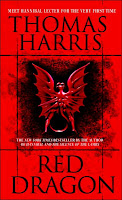
Red Dragon By Thomas Harris

This isn't the first time I'd read Red Dragon.

I got it in my head at age 19 to get a big-ass dragon tattooed on my back. It was my first tattoo and it promised to be a doozy, so I took my entire rent check and wandered down to Telegraph avenue in Berkeley, CA. I walked in, paid my money, and sat in the chair.

Getting poked for seven hours isn't exactly a lot of fun but somehow I endured. In between the controlled karate breathing and occasional reminders to myself to uncleeeeench, I finished the book. The story of a man who believes himself to be ugly and reinvents himself as a dark, majestic god deeply resonated with me then and it still does now.


As a wanna-be writer, re-reading Red Dragon deeply intimidated me.

Sooner or later, all modern psycho stories become police procedurals. You have to have some reasonable grasp on how law enforcement works. I'm a research monkey in general, but if a serial killer was operating on the scale and violence of Francis Dolarhyde, then a writer would have to account for the massive amounts of resources and expertise that would be turned toward his capture. Harris has a background in crime reporting and, like The Wire's David Simon, he uses that insider knowledge to enrich his story. When I think about replicating it, I imagine having to know the structures and methodologies of federal agencies, the science of forensic pathology, and all the other details that make these sorts of stories work.

Granted, audiences are pretty forgiving. Cop shows on TV aren't particularly accurate, but people eat them up. But the smallest screw-up kills all that built up suspension of disbelief and I care about the small details. A good, effective, authentic police procedural is like a finely made watch and I don't know if I am a good enough watchmaker.


I'm going to get this out the way because I cover a lot of this ground in my Silence of the Lambs podcast, but I am kinda over Hannibal Lecter.

First, he's not really an authentic psychopath. He's too clever, too controlled, he lives in a creepy dungeon, and his abilities verge on the paranormal. He's basically a modern-day Dracula.

I like Dracula and Hannibal Lecter is one of the best monsters that has been created in the last 30 years, but I'm more interested in the psychological nuances of the other villains in Harris' work, both Buffalo Bill from Silence of the Lambs and the Dolarhyde from Red Dragon

Plus, frankly, for all the bluster about how clever Hannibal Lecter is, he always seems to be undone by his own arrogance. In their first encounter, he screws with Will Graham but immediately capitulates when Graham prepares to leave. He receives a letter from Dolarhyde and, rather than destroy the whole thing, he keeps the part that strokes his ego. Lecter is terrifying, but he's got a pretty significant achilles heel. It's the kind of thing comic book villains get tripped up on all the time.

Please don't tell him I said that. 


On to Dolarhyde.

I sort of live by the philosophy of "fake it until you make it." If it were up to me, I'd spend my free time in blissful bookish solitude. But having friends and building a life and being popular has taught me savoir-faire and social adaptability. Those who know me (and I'm assuming most of the people who read this know me personally) can attest to my massive personal charisma, but it was a learned skill, not something that came naturally.

I cannot tell you how many times I've stared at my own reflection in the mirrors of nightclubs and douchey bars, looking at the fear in my eyes, and telling myself to put my game face on. The shortcut I used to developing a social persona was to copy the behavior of brighter, more charismatic people.

In other words, I created an avatar of the person I wanted to be. It's a much more minor version of what Dolarhyde did. I suspect every bullied, tormented, and angry kid does the same thing. When I was little, Jason Voorhees was my anger avatar. Dolarhyde's avatar is the Dragon. I sympathized with him, and it disturbed me.

Plus....sigh...let's just say I can empathize with Dolarhyde's body image issue. More than I'd like to admit. 

If Dolarhyde simply remained a well-designed maniac then Thomas Harris would already be ahead of the game. But the thing that makes Red Dragon special for me is that he starts redeeming himself from his own madness.

Okay, Reba McClane is a little bit too perfect for the circumstances. She's blind, so Dolarhyde's body image issues aren't a problem. She was a trained speech expert so she knows exactly what to say to alleviate his fears. And, of course, she's sexually confident enough to break through his barriers. Suddenly he's fighting his psychosis and trying to make deals with the Dragon. It made him a deeply tragic figure and one of my favorite psychos. Most psychopaths in horror fiction aren't really crazy but are instead cookie-cutter pulp fiction cackling evil. They do terrible things because it's fun. Dolarhyde's actions come from human weakness and insanity. I don't know if I buy that Dolarhyde would backslide so far as to attack Graham in his home, though. He was too confused and conflicted by Reba to suddenly turn into a third act monster movie villain.

Still, Dolarhyde has the one thing that most fictional psychos lack: authenticity. 


It probably is clear now that I really enjoyed this book, probably more now than when I first read it. Harris is a helluva writer and I enjoy it more now than I did when I first read it.

My final thought is something Hannibal says to Will Graham. Graham's big secret superpower is his uncanny ability to empathize with a killer's point of view and anticipate their behavior. Maybe it's the fact that I've always had a big imagination and it mostly turned to darker places, but the line "Fear is the price we pay for imagination" stuck with me.  It's true, or at least it's true for my imagination. The upside? Fireworks behind my eyes. The downside? Lots and lots of sleepless nights with monsters under the bed.

Monday, September 10, 2012

The Church Of Dead Girls by Stephen Dobyns

True story.

I grind out the books for and knock out the blogs for this way in advance. I like to have something ready to go, I like to get a thought on paper early and let it percolate for awhile and I hate rushing through things at the last minute. I carry my books with me where ever I go, but when you're studying horror fiction you're going to get a lot of strange looks over your reading material.

Anyway, midway through the book, I decided to take in a burlesque show from the fine people at D20 Burlesque for their WTF Japan anime-themed costumed night. I had bought the tickets well in advance but I wasn't able to convince anyone else to go, my personal life turned into a hot mess, and I found myself in the front row seat, alone, in a bad mood, and with a bunch of naked girls wondering what kind of aspiring serial killer brings a copy of The Church of Dead Girls to a burlesque show. 

Clever, clever me...


Anyway, I was midway through The Church of Dead Girls and I wasn't really feeling it. Dobyns is a really good writer, but the framing device of having a withdrawn, intellectual townsperson narrate it drained any sense of tension from the story. I see why Stephen King liked it, as his blurb is prominent on the cover. King does the folksy narrator unspooling a yarn very well, but this story takes the voice of an uptight closet case middle school teacher and therefore feels cold. Midway through the book, I felt like I was reading a wikipedia page summarizing events rather than actually engaging in the storyline.

It doesn't help that the narrator has no way of knowing some of the details in the story while being maddeningly coy with others ("Who's the 'professional man'?" "I'm not telling yoooooooouuuu."). I kept waiting for the big tweest to be revealed where the narrator was the killer (in retrospect, he probably was) or the narrator was secretly dead or something. It was an odd mix of omniscient and focused narrative.


It strikes me that this is an interesting selection for my Psychos In Literature course. We don't discover who the killer is until the end of the book, when an otherwise lucid major character starts speaking in psycho-child-religious speak. Instead this story is about a town tearing itself apart out of fear of the predators inside their midst.

For all the complaints I had about the way the story is written, I have to admit it's an absolutely engrossing tale. I've read a million zillion stories about the big scary wolf bringing chaos to the sleepy little bedroom community of sheep but I rarely see a serial killer story where the serial killer is almost an afterthought. Really, this novel is more of a "Monsters Are Due On Maple Street" type of story, where the real enemy is fear and mistrust. You see this a lot in horror fiction but it's usually more garish and overt. I like the subtlety and slow-burn of this book.

I felt a tremendous degree of sympathy for the town scapegoat, the mysterious college study group Inquiries Into The Right. Yeah, most of the people in the group sound like assholes, but they don't seem that far off from the kind of radicals that were common in San Francisco State University: factually correct in the grand scheme of things, but so socially maladjusted and myopic that they are unlikable. If the idea behind this nice small town is that it only works because no one upsets the apple cart then it's easy to figure out why the town singles them out.

It doesn't help that some of their members plant fake bombs and ransack cemetaries.


Like all good towns-with-a-secret, this place has a dark past, specifically the murder of the....god, I feel terrible for thinking this, because for all my pro-sex/pro-feminist empowerment sensibilities, my first thought was "...murder of the town bike."

I don't like what that says about me. 

The book is obviously about the secrets we all keep and how they conflict with our public persona. Horror tales are full of towns like these, where every house has an adulterer or a pedophile or a hypocrite or a pervert or something. I can't help but feel like this sort of outlook is something people who grew up in small towns develop after dealing with a bunch of two-faced hypocrisy. I didn't grow up in a small town and I'm accustomed to being surrounded by strangers. I assume that everyone is disgusting behind closed doors. The only difference is that no one else gives a shit here.   


Monday, August 27, 2012

Psycho by Robert Bloch


So does Norman Bates work better as an effeminate, boyishly handsome young man or as a baby faced, portly, forgettable mama's boy?

That's the big difference, innit? The storyline is basically the same. The structure is a bit different, too. Instead of starting with poor doomed Marion Crane and her lover, we crawl right into Norman Bates' life. Reading it, I kinda wonder how many of the original readers figured out what the big twist ending was. You can do a lot of tricks with visuals that you can't do with the written word and it's pretty obvious that Norman is shadowboxing in empty rooms.

Then again, I came to Psycho, both the film and the novel, knowing all the twists and turns. It feels like a fairy tale someone told me when I was really young and remained imprinted on my psyche. Reading it was still very rewarding. When you watch the movie version of a story, it's like you're observing it in real life. You can see the visuals, pick up the non-verbal cues, and interact with a story as a passive observer in the characters' lives. Reading the book lets you climb into people's heads. What you lose in "objective" visual clarity, you gain in intimacy.


Having climbed directly into Norman Bates' head, I gotta say it's a pretty fucked up place.

It's hard to feel sympathy for him, in that mama's boys seldom elicit sympathy in this culture. I feel a bit of pity for him, though it's easier to pity Anthony Perkins' version than the novel's version, if for no other reason than the superficial. The Norman I imagine from the book is shlubby and unappealing. People who encounter him seem to think he's harmless, but the way he carries himself and the stuff he says would set off my creeper alarm. Maybe the late fifties/early sixties were a more innocent charms, but I buy the version of Marion Crane from the movie, sitting in the parlor with Norman and being frightened by the things he tells her.

Blah blah Ed Gein blah blah Texas Chainsaw Massacre blah blah.


The big thing I took away from this book is the idea that no one really understands themselves or the people around them. Norman Bates really believes that he's covering up for his demented mother, Sam Loomis is shocked that the woman he was considering marrying could have stolen $40,000, and Lila Crane has to come to terms with a sister she barely knew. It's an idea that has some resonance with me these days.


I don't really have much to say beyond the fact that Norman Bates is the ur-psycho of pop culture. His weakness, his vulnerability, his dementia, and his mother issues have become what people think of whenever people use the word "psycho." No other madman has captured the public imagination the way that Bates has.

At least not until Hannibal Lecter came along.    

Thursday, April 5, 2012

Relic by Douglas Preston and Lincoln Child


You ever met a person on a date and there was nothing really wrong with them but the conversation never really sparked? Like, the conversation was pleasant and they were attractive and they laughed at your jokes, but a day or so later you look at your cell phone, consider texting them, and go "meh"?

That was my relationship with Relic.


I don't get along well with science.

I really wish I did. I champion reason and logic over superstition and servitude, I love when Neil deGrasse Tyson shows up on The Daily Show, and I have worked in the tech industry for years. You'd think I'd be better at this stuff but when anyone tries to explain anything math or science-y my brain takes a little ADHD journey to the magical land of unicorns and rainbows, where my poet's soul traipses through fields of gilly flowers and there are no scaaaaaary numbers.

Oh hell, I might as well post the whole damned Patton Oswalt bit.


So I wasn't really ready for the whole techno-thriller explosion of the 90s. I did read and love Jurassic Park but that novel had dinosaurs. DINOSAURS! Otherwise, all the books pretty much read the same. There are pages and pages of some expert explaining shit to me, a bunch of non-characters reinforcing whatever the expert explained, some one-off chapters of a dumb ass security guard getting slaughtered, and a bunch of interesting but over-explained action scenes at the end of the novel.

People I know who love science stuff love this book. One of them recommended it to me when we were teenagers (hi, Erica) and I really liked it then, but I couldn't quite seem to get back into it. If it's the sort of book that's right for you, have at it. It's not really my scene.

I did like the bit in the Amazon with all the adventure-scientist cliches. And I loved how ridiculous Agent Pendergast was. He's goddamned clown shoes. I kept forgetting that he was from the Deep South and probably talks like Andy Bernard doing a Southern Accent, because with his highly mannered turn of phrase and unflappability it read like he was one of those stick-in-the-butt British detectives. "I daresay, a lizardman is eating my brain! What a sticky wicket!" Also, he's a goddamned ex-Green Beret! EVERY HERO IN BOOKS IS GODDAMNED SPECIAL FORCES! Is the only career options for former special forces soldiers to star in trashy novels? Romance novels get Navy SEALS and thrillers get Rambo. What ever happened to the poor, unloved infantry? Don't they get cool stories? Or in the wonderful world of fiction everyone who joins the military become forced to take a turn sniping Somali pirates from the back of a Navy ship?

I say this with love. Pendergast and his sidekick D'Agosta were the best parts of the book. They defied authority, strove to protect people, and were fun to watch bumble around failing to find anything.


For all the science in the book, the logic ultimately falls short.

There's a killer in your museum and you continue with the opening? No.

You hire a guy to write a book and you get anal about the very, very minor indiscretions he finds? No.

I'm getting better at spotting the mechanics behind constructing a story and I know when roadblocks are artificially laid down to add conflict to the story. The amount of hostility that the characters encountered from their superiors seemed inflated and artificial. I get that careers are in jeopardy, but there's something in the museum eating people's brains. Come on!


Good story, not my thing.

Also, kothoga is a better name for the monster and Mbwun is a better name for the tribe.

Sunday, April 1, 2012

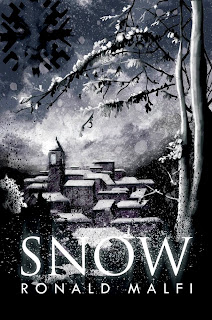
Snow by Ronald Malfi


Before we get started, a couple quick rants.

When a character in a book starts ranting about how bad ass and shocking and not politically correct they are, like Kate Jansen does in her first scene, I get turned off. "Politically correct" is to conservatives what "dive bar" is to hipsters: a meaningless buzzword denoting...I dunno, authenticity? How cool you are?

Whatever, son. My people don't even say that shit anymore. Besides, Kate Jansen is a terrible character. She's one of those female characters that male horror writers constantly create: boorish, abrasive, overly pleased with herself, and probably into obnoxious 80s hair metal. She's set up to be the love interest because...I guess every story needs one? but I can't really say I was rooting for her to make it out of Woodson alive. And, of course, there's a scene where the male characters are trying to convince her to listen to them even as she tries to assert herself. One of 'em says something to the effect of "We'll worry about women's lib later. This is about survival!"

First off, who in this day and age says women's lib? Second, ugh, get over yourself. I have a feeling that, if I were to meet Ronald Malfi, we wouldn't get along. Which is a shame. He's got more game than most genre writers.

Anyway, on to the show.


So, snow, huh? Ever get the feeling that horror is running out of ideas?


Maybe that's harsh. I mean, there's meat on them bones. Part of the reason The Thing is so effective is that snow isolates and entraps. You can't move around easily, cars break down and get buried, and between the howling wind and the whirling snow you can't see a damned thing. I once hiked through a freak snowstorm heading for a date and it was like walking through an empty apocalyptic world.

So, snow can be scary. And there's some really scary stuff at the beginning of the book. The poor doomed quartet pick up a wandering man lost in the snow. He's out of his head, distant and babbling about his missing daughter. As they're driving along and the man's behavior becomes more erratic, the others begin to doubt there is a daughter at all, until the protagonist sees her in passing only to discover she has no face...

Woo! That's some good stuff! I was really excited about this book until it turned into another damn zombie novel.


That's right. It's another damned zombie novel.

More to the point, it's a story that feels like someone wanted to write a zombie story but knew they were played out. It's still a siege story where people struggle to get what they need while hordes of dead people try to eat their flesh. There's guns a'blazin' and people a'dyin' and all you need to do is switch the travelers for homesteaders and the skin-suits for Apaches and you have the original siege western.

American paperback horror novels read more or less the same. It's like a recipe. Insert:
1) Monster or killer with a strong visual description. Check. Snow flurries with lights at their core, scythes for hands, and the broken meat puppets the control.
2) A bunch of people who might as well have "future victim" tattooed on their heads? Check. Nan, Fred, the poor doomed Shawna.
3) Religious weirdo screaming like a schizophrenic Baptist and who is likely more dangerous than the monsters? Check. The fat kid in the church whose name currently escapes me.
4) Guns, guns, guns! Plus the ability to pick up a firearm without any training and instantly shoot like Chow Yun Fat in The Killer? Check. They raid a gun store, grab pistols, and the rest of the book turns into runny runny, shooty shooty.
5) A big fucking explosion at the end? Check. The last remaining sheriff's deputy, who I kept picturing as looking like a bald Henry Rollins, takes out a bunch of the monsters by opening up a gas tank and shooting a flamethrower into it. This ain't no gothic horror, people! This is 'murrican horror! With guitars and people who swear and explosions and cannibals! Fuck yeah!
6)Characters in the middle of a crisis taking a moment to flash back to their personal issues? Check. Kate pauses the story to talk about her non-engagement and Todd talks about the time he had a problem with gambling but was able to pay the guy, who beat him up anyway, which makes good business sense for a loanshark.


A friend of mine who happens to be a proper southern lady (hi Lauren) has a theory about women: they're either ladies or broads.

I think stories are the same way. Stories can be divided roughly into high-falutin' tales and roughneck blue-collar yarns. It's sometimes tricky to separate the two. I'd argue that Joe R. Lansdale's work is tales disguised as yarns and The Yattering and Jack is a yarn told by a guy who usually tells tales.

Snow is definitely a yarn. It is definitely better than most, but it's still a type. You can quantify it, dissect it, and tune it. I've read a bunch of novels very similar to this one and it's sorta like comfort food. I try to keep to my healthy diet and big-city pretensions, but sometimes homeboy just wants a bacon cheeseburger.

I would definitely come back to Malfi. I think he's a good writer. Every now and again he'd come up with a simile or description that took my breath away. The dude has a bit of a poet to him and I respect poets.

I think he's a good writer. I'm betting this isn't his best book.

Also, I have a bad habit of writing fanfic and as I was going through the novel, I kept thinking "this could be improved with Jedi."