Showing posts with label Seton Hill. Show all posts

Thursday, April 5, 2012

Relic by Douglas Preston and Lincoln Child


You ever met a person on a date and there was nothing really wrong with them but the conversation never really sparked? Like, the conversation was pleasant and they were attractive and they laughed at your jokes, but a day or so later you look at your cell phone, consider texting them, and go "meh"?

That was my relationship with Relic.


I don't get along well with science.

I really wish I did. I champion reason and logic over superstition and servitude, I love when Neil deGrasse Tyson shows up on The Daily Show, and I have worked in the tech industry for years. You'd think I'd be better at this stuff but when anyone tries to explain anything math or science-y my brain takes a little ADHD journey to the magical land of unicorns and rainbows, where my poet's soul traipses through fields of gilly flowers and there are no scaaaaaary numbers.

Oh hell, I might as well post the whole damned Patton Oswalt bit.


So I wasn't really ready for the whole techno-thriller explosion of the 90s. I did read and love Jurassic Park but that novel had dinosaurs. DINOSAURS! Otherwise, all the books pretty much read the same. There are pages and pages of some expert explaining shit to me, a bunch of non-characters reinforcing whatever the expert explained, some one-off chapters of a dumb ass security guard getting slaughtered, and a bunch of interesting but over-explained action scenes at the end of the novel.

People I know who love science stuff love this book. One of them recommended it to me when we were teenagers (hi, Erica) and I really liked it then, but I couldn't quite seem to get back into it. If it's the sort of book that's right for you, have at it. It's not really my scene.

I did like the bit in the Amazon with all the adventure-scientist cliches. And I loved how ridiculous Agent Pendergast was. He's goddamned clown shoes. I kept forgetting that he was from the Deep South and probably talks like Andy Bernard doing a Southern Accent, because with his highly mannered turn of phrase and unflappability it read like he was one of those stick-in-the-butt British detectives. "I daresay, a lizardman is eating my brain! What a sticky wicket!" Also, he's a goddamned ex-Green Beret! EVERY HERO IN BOOKS IS GODDAMNED SPECIAL FORCES! Is the only career options for former special forces soldiers to star in trashy novels? Romance novels get Navy SEALS and thrillers get Rambo. What ever happened to the poor, unloved infantry? Don't they get cool stories? Or in the wonderful world of fiction everyone who joins the military become forced to take a turn sniping Somali pirates from the back of a Navy ship?

I say this with love. Pendergast and his sidekick D'Agosta were the best parts of the book. They defied authority, strove to protect people, and were fun to watch bumble around failing to find anything.


For all the science in the book, the logic ultimately falls short.

There's a killer in your museum and you continue with the opening? No.

You hire a guy to write a book and you get anal about the very, very minor indiscretions he finds? No.

I'm getting better at spotting the mechanics behind constructing a story and I know when roadblocks are artificially laid down to add conflict to the story. The amount of hostility that the characters encountered from their superiors seemed inflated and artificial. I get that careers are in jeopardy, but there's something in the museum eating people's brains. Come on!


Good story, not my thing.

Also, kothoga is a better name for the monster and Mbwun is a better name for the tribe.

Sunday, April 1, 2012

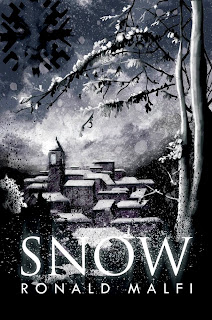
Snow by Ronald Malfi


Before we get started, a couple quick rants.

When a character in a book starts ranting about how bad ass and shocking and not politically correct they are, like Kate Jansen does in her first scene, I get turned off. "Politically correct" is to conservatives what "dive bar" is to hipsters: a meaningless buzzword denoting...I dunno, authenticity? How cool you are?

Whatever, son. My people don't even say that shit anymore. Besides, Kate Jansen is a terrible character. She's one of those female characters that male horror writers constantly create: boorish, abrasive, overly pleased with herself, and probably into obnoxious 80s hair metal. She's set up to be the love interest because...I guess every story needs one? but I can't really say I was rooting for her to make it out of Woodson alive. And, of course, there's a scene where the male characters are trying to convince her to listen to them even as she tries to assert herself. One of 'em says something to the effect of "We'll worry about women's lib later. This is about survival!"

First off, who in this day and age says women's lib? Second, ugh, get over yourself. I have a feeling that, if I were to meet Ronald Malfi, we wouldn't get along. Which is a shame. He's got more game than most genre writers.

Anyway, on to the show.


So, snow, huh? Ever get the feeling that horror is running out of ideas?


Maybe that's harsh. I mean, there's meat on them bones. Part of the reason The Thing is so effective is that snow isolates and entraps. You can't move around easily, cars break down and get buried, and between the howling wind and the whirling snow you can't see a damned thing. I once hiked through a freak snowstorm heading for a date and it was like walking through an empty apocalyptic world.

So, snow can be scary. And there's some really scary stuff at the beginning of the book. The poor doomed quartet pick up a wandering man lost in the snow. He's out of his head, distant and babbling about his missing daughter. As they're driving along and the man's behavior becomes more erratic, the others begin to doubt there is a daughter at all, until the protagonist sees her in passing only to discover she has no face...

Woo! That's some good stuff! I was really excited about this book until it turned into another damn zombie novel.


That's right. It's another damned zombie novel.

More to the point, it's a story that feels like someone wanted to write a zombie story but knew they were played out. It's still a siege story where people struggle to get what they need while hordes of dead people try to eat their flesh. There's guns a'blazin' and people a'dyin' and all you need to do is switch the travelers for homesteaders and the skin-suits for Apaches and you have the original siege western.

American paperback horror novels read more or less the same. It's like a recipe. Insert:
1) Monster or killer with a strong visual description. Check. Snow flurries with lights at their core, scythes for hands, and the broken meat puppets the control.
2) A bunch of people who might as well have "future victim" tattooed on their heads? Check. Nan, Fred, the poor doomed Shawna.
3) Religious weirdo screaming like a schizophrenic Baptist and who is likely more dangerous than the monsters? Check. The fat kid in the church whose name currently escapes me.
4) Guns, guns, guns! Plus the ability to pick up a firearm without any training and instantly shoot like Chow Yun Fat in The Killer? Check. They raid a gun store, grab pistols, and the rest of the book turns into runny runny, shooty shooty.
5) A big fucking explosion at the end? Check. The last remaining sheriff's deputy, who I kept picturing as looking like a bald Henry Rollins, takes out a bunch of the monsters by opening up a gas tank and shooting a flamethrower into it. This ain't no gothic horror, people! This is 'murrican horror! With guitars and people who swear and explosions and cannibals! Fuck yeah!
6)Characters in the middle of a crisis taking a moment to flash back to their personal issues? Check. Kate pauses the story to talk about her non-engagement and Todd talks about the time he had a problem with gambling but was able to pay the guy, who beat him up anyway, which makes good business sense for a loanshark.


A friend of mine who happens to be a proper southern lady (hi Lauren) has a theory about women: they're either ladies or broads.

I think stories are the same way. Stories can be divided roughly into high-falutin' tales and roughneck blue-collar yarns. It's sometimes tricky to separate the two. I'd argue that Joe R. Lansdale's work is tales disguised as yarns and The Yattering and Jack is a yarn told by a guy who usually tells tales.

Snow is definitely a yarn. It is definitely better than most, but it's still a type. You can quantify it, dissect it, and tune it. I've read a bunch of novels very similar to this one and it's sorta like comfort food. I try to keep to my healthy diet and big-city pretensions, but sometimes homeboy just wants a bacon cheeseburger.

I would definitely come back to Malfi. I think he's a good writer. Every now and again he'd come up with a simile or description that took my breath away. The dude has a bit of a poet to him and I respect poets.

I think he's a good writer. I'm betting this isn't his best book.

Also, I have a bad habit of writing fanfic and as I was going through the novel, I kept thinking "this could be improved with Jedi."

Saturday, March 24, 2012

Human Remains by Clive Barker


Human Remains taps into some hot button issues with me.

I'm obsessed with physical beauty. There's an argument to be made that I am deeply shallow. I do believe that people who are beautiful lead better lives, which makes me deeply jealous of them. I do also believe that people who are beautiful become commodities to other people. They can never be entirely invisible and they stop entirely belonging to themselves. It's one of the themes in Natsuo Kirino's novel Grotesque, which is a source of heavy inspiration to me.

Gavin, the amoral hustler from Human Remains, is defined by his beauty. He's aware of it, he revels in it, and he is terrified of letting it slip away. There's a lot of fear of aging going on underneath the skin of the story. The people I know who are the most afraid of aging are athletes and the beautiful; the athletic fear losing their abilities and the beautiful fear losing their identities. In the back of my brain, where all my nasty ideas live, I like to think that all aging does is even out the playing field.


This is a doppelganger story that starts out about fucking and ends with identity.

It's not sex. In the immortal words of Dear Coke Talk, the difference between fucking and making love is Hallmark. There's something incredibly narcissistic about the way Gavin approaches his work. Most prostitution stories in the horror genre paint prostitutes as victims, but Gavin isn't really about sex. He commodifies his beauty, and looks down on the people he deigns to share himself with. He's not even particularly straight or gay or bi. He's just an object to be desired.

So, of course, he picks up a man outside an art house cinema. There's something off about the man. He's nervous and the nervousness never lets up even on safe ground. He doesn't give the usual tells. While he's admiring the beautiful but odd collection of antiquities, the mark gets attacked by something. Gavin investigates the bathroom rather stupidly and discovers a statue in a bathtub. Things go pretty wrong for him after that.

The rest of the tale is a fairly simple doppelganger tale, but with one twist. There's not a lot of active malevolence between Gavin and his shadow. He almost embraces the idea of having something else deal with all the sloppy work of presenting his face to the world. He becomes hollowed out, turns to junk, and watches as his twin become a better version of him than he could ever be. Barker has a real gift for creating fine lines between enmity and love, and this story blows me away every time. It's more rich and emotionally complex than the two other stories we've read this semester.

In an interview on his work, Barker echoes a lot of views I have about the horror genre. It's very conservative. It's obsessed with the status quo. It's about destroying the monster. People who've delved deeper into the genre (I'm looking at you, Chris) are there any other writers who successfully celebrate the supernatural with the same intelligence and beauty as Barker?

Sunday, March 11, 2012

The Wolfman by Jonathan Maberry


Oh my god I am so friggin' pretentious.

I do most of my course reading on the M-train commute to work. I live in Bushwick and pass through Williamsburg, heart of the Brooklyn hipster universe. Every morning I see the same familiar flannel shirt-tight jeans-ironic facial hair crowd reading Murakami and listening to Animal Collective or Das Racist or whatever. They're a pretty literate bunch, too. There are all sorts of tiny rituals involved in riding the subways and one of them involves sizing up what people are reading. When I first came to NYC, everyone was reading the Dragon Tattoo series. These days it's mostly the Game of Throne books.

Nobody's reading a novelization of a failed horror flick.

I'd see people give my book the once-over and I could almost hear that checkout counter this-does-not-compute WONK sound. For the first few rides I just wanted to plead with people: "No, you don't understand! Maberry is a really good writer! And I have to read this cuz the madman I'm taking the class from assigned this to us!"

Eventually I took to covering the cover with my bookmark while I read. It was just easier.


I really, really didn't get this assignment.

I saw the movie back in the day and I can't remember any of the plot. It was one of those 'meh' films, instantly forgotten immediately after consumption. I remember that Benicio Del Toro was miscast, Anthony Hopkins was in high camp mode, and the movie's attempt to recapture the feel of classic Universal Horror was crushed under the curdling weight of studio mediocrity.

I had zero interest in reading this book and, frankly, I thought you were nuts to assign it.

Turns out the novelization was a zillion times better.


I like werewolves okay. They make a strong metaphor for our unchained animalistic desires and they fit in extraordinarily well in straight-laced, repressive Victorian England. During the residency, I pushed forward the theory that monsters are ultimately about our polarizing desires between freedom and conformity. There's a part of us that wants to be free, even if it is completely damaging to the world around us, and there's a part of us that wants to be safe and cheers when the free thing is destroyed. I found the chapters of the wolf's rampages exhilarating. In the really-real world, I'd hate to be responsible for the violent death of dozens of people, but there's something primal in my psyche that had a lot of fun with the wolfman's gory exultation.

I like gothic stories. I like crumbing old manors full of mysteries, crazy children, mysterious deaths, and dark secrets slowly unfurling in the foggy moors.

I like stories where the werewolves are barely-disguised Oedipal complex figures battling it out to have sex with their in-law. It's so squicky!

I like the whole Goddess of the Hunt thing. It's a clever way for the characters to conceptualize the full moon.

I like decadent actors. They made living in Astoria fun. They break out into song in the middle of Two Boots, they're flirts because they're needy and they're pretty because it's part of the job. I like the world Lawrence inhabits, even if he is kind of a wet blanket.


I recently chewed apart Breeding Ground for its lack of ambition and I kind of feel like a hypocrite for not attacking The Wolfman in the same way. The difference is, I feel, style and missed opportunity. Every aspect of Breeding Ground lead me to believe it was going to say something deeper and more interesting about gender products. Even ignoring the shaky plotting, too many opportunities were missed.

The Wolfman set out to tell a gothic werewolf story and Maberry told it well. It ain't perfect, it didn't change my perspective of werewolves the way Alan Moore did with "The Curse" or the way the film Ginger Snaps did, but I liked the story. Werewolf stories are often ultimately terminal disease stories and I felt sad to see Talbot go.

It was, of course, better than the movie.

Monday, February 27, 2012

World War Z by Max Brooks


Awright. I think we've hit the high point of the whole zombie apocalypse thing. Time to pack it up and move on, because it ain't gonna get much better than this and everything else is either a poor imitation or just wasting our time.


This article has been stewing in the cooker for a long time, but I never had the guts to write it. Aside from the fact that I really like this book and its predecessor The Zombie Survival Guide, I feel that this takes the Romero zombie as far as it can possibly go. So, talking about this means talking about the whole zombie sub-genre and that's a loooooong conversation.

Deep breath. This is a day for decisive action.

Here we go.

Okay, so everyone calls The Zombie Survival Guide a comedy, but aside from the absurdity inherent in the idea of an Army-style survival guide for a completely absurd apocalypse the material is played straight. I don't know much about wilderness survival or military maneuvers, but the advice seems legit enough. It also appeals directly to the darkly pleasant side of the zombie fantasy: you've survived in a war-torn wasteland. You're hardy and self-sufficient, cool in a crisis and skilled at war. Post apocalyptic stories are one or two steps away from westerns, and to understand the western is to understand America.

It makes sense that the zombie came back into popularity around the same time as new millennium panic kicked off. There's something about our cultural mentality that has a dark fascination with apocalypses. Personally, I think it has something to do with our parents growing up during the A-bomb crisis and the Vietnam war, my generation growing up with 9/11, and the overall crazy Four Horsemen fundie Bible Belt bullshit that sits at the center of our nation.

Plus, at their heart, the zombies are us. They are everywhere we are, they wear our costumes, they suffer our death, and the relentlessly approach us with soulless eyes. And if they catch you, they'll eat you alive.


So zombies do what a good horror critter is supposed to do. It gets under your skin. The rules are simple, the images are grostesque, and death at their hands is ghastly. But there's only so much you can do with them.

The vast majority of zombie stories are siege stories. People are under assault, people barricade themselves in, the stress gets to the survivors, and shit eventually goes wrong. It's a fine story but it's very overdone. There's also an aspect of zombie tales that appeal to a very American Libertarianism sense of self-reliance and individualism. I got my gun, I got my dog, and I can carve a place for myself out of this hostile land.

Some people take that shit really, really seriously. Meet someone who claims to be a zombie nut and ninety nine percent of the time you're meeting with someone who secretly wants a zombie uprising. I have a sneaking suspicion that the vast majority of actual survivors would be in military bases or living in isolated communities. I'm a creature of cities. My ass would be grass.

Anyway, there are only so many stories that you can tell with zombies. People keep trying, and when they don't actually want to do zombies, they do spider critters or creatures made of snow. If the apocalypse has already been tackled on an intimate level, the only way to go is to go bigger. Make it about humanity. How do different people, different cultures, different value systems deal with the rise of the dead?


In a lot of ways, World War Z is pretty much the final word on zombie apocalypses. Rather than focusing on one group of knuckleheads, Brooks tells the story from dozens of different angles. How would celebrities deal with this? How would soldiers? How would pharmaceutical companies try to cash in? What would a major evacuation at the mouth of the Ganges be like? All of these stories could probably make individual novels, but Brooks threads them all together into a Ken Burns-style documentary of the event as survivors tell the story of society trying to rebuild itself.

It's brilliant. It's one of the best horror novels of the last ten years.

The thing that rugged apocalypse stories don't really get is that if the zombies arise, the individual is ultimately meaningless. Some random tough guy asshole may make it through the narrative, but then what? He continues on until he falls off a cliff or his luck fails and he's monster food.

Therefore, the zombie apocalypse tale must be about humanity itself. This is the thing that pulls us together. We got our iphones and our youporn and our netflix and our Republican primaries and all the other crap we use to feather our nests. The cost in human life to scorch the earth would be catastrophic, but what if we rose up afterward and worked together in rebuilding what is hopefully a better world?

Idealistic? Sure. Stupid? Absolutely. But the secret appeal of the post-apocalypse story is that the world is scrubbed clean. To quote the great poet Billy Idol: "and there's nothin' pure in this world. Look for something left in this world...."

"Start again."


Brooks does something I want to do. He takes tropes that are getting pretty ragged and tells a story that isn't about monsters and mayhem, but our shared humanity. It ain't perfect. Too many of his voices sound interchangeable and, while the chapters centered around the hikkikomori in Japan touched my inner weeaboo, the blind woodsman with the sword lopping off heads was a little ridiculous. He mentioned a secret society of zombie hunters in his Survive A Zombie Apocalypse book, but it's something that belongs in a comic book. Still,

Quibbles. This really is one of the best horror books of the last ten years. It's also the final word on the zombie thing. There isn't much left to do with Romero zombies. Hell, Romero can't even do anything with them any more. Brooks nailed it. Time to find something new.

Oh, Brooks wrote a good comic featuring tales of the zombie war. Also, Brad Pitt is doing a movie version of this. Oy.

Saturday, February 11, 2012

30 Days of Night by Steve Niles and Ben Templesmith


I love comic books.

Cartoon strips were the first stories I fell in love with. As a very small child my folks read picture books to me and it was a natural transition into the Calvin and Hobbes books that I still love and revere to this day.

One fine day, I was out grocery shopping with my mom and I saw and Archie's Digest on one of the spinner racks between the thing and the other thing. I loved the stories and will defend them to this day, and when my father came home from work that night I asked him if he would pick up another issue from the comic store next door.

He bought me an entire box of 70s-era Archie comics. My dad was that kind of guy.

When I hit age nine, give or take, Marvel released trading cards of their heroes. The images on the cards were crisp and vibrant and the character bios on the back were fascinating. Plus you got little sport-stat assessments of the character' intelligence and fighting ability. I left the clean, sexless, halcyon fields of Riverdale for the elaborate costume dramas of 616 Manhattan.

I kept reading comics throughout my childhood. I was not particularly bullied as a kid, but I had to eat shit a fair amount of shit for it. I like to think that the little bastards who teased me for loving Jim Lee-era X-Men books loved all the movies that came over the last ten years.

I've been going to comic book conventions ever since they were shady affairs held in church basements full of Comic Book Guys and pedophiles. Now they're somewhere between nerd Mardi Gras and heartless corporate marketing machines. Still, I love the medium. My pull list is about ten bucks a week, give or take.

I love them so much, I want to write comic books for a living.

Shhhh. It's a seeeeeecret.


Comic books have to be judged by a slightly different standard than prose. They are primarily a visual medium, they're often serialized so the story construction tends to be both longer form and paced in fits and starts.

They can be deep. Watchmen is deep. But Watchmen is probably the best American comic ever made. Most of the rest of the mainstream books are fight books between characters that have been teenagers and young adults for over fifty years.

The horror genre has a shaky history in the medium. It nearly killed comics during the panic in the fifties, the seventies saw the birth of the horror-themed superheroes, and the eighties saw the creation of the DC offshoot Vertigo and books like Alan Moore's Swamp Thing and Neil Gaiman's Sandman, both of which are classics by any standard. Horror, however, is not a mainstream thing. Comics in America mean superheroes and savage cyber-killers, not monsters skulking in the dark.

I've seen it all. I've read it all. And I never got around to reading 30 Days of Night.


The reason I've never picked up 30 Days of Night is that I don't care for the art of Ben Templesmith.

I don't think it's bad art. It's definitely unique. It reminds me a lot of the fluid styles of David Mack, which borrows more from the fine art world than from the hidebound styles of comic draftspeople.

Experimentation is fine. Hell, I have a David Mack piece tattooed on my body. But I am not a particularly visual person and it's easy to lose me to overly clever artwork. Templesmith's style is too fluid. Frankly, I have no idea what the hell is going on most of the time. And it's also somewhat of a bad fit for Steve Niles, one of the only purely horror writers in the medium.

30 Days of Night is a fairly straightforward vampire yarn. There's a town in the arctic circle that stays dark for a month, so a bunch of vampires decide to throw a celebratory massacre and invite some of their big leaders. The rest of the story becomes a struggle between frightened survivors and the squabbling vampires.

It's....a'ight. A bit character-lite, not a lot of surprises, pretty to look at. Some of the vampires are nifty. Nice bittersweet ending but it ultimately feels a little bit hollow.


The one interesting thing that stood out was the conflict between the vampires. The younger vampires organized the whole party. The older vampires they invited to impress are furious with them for drawing attention to their existence and because the whole event is, by elitist snooty vampire standards, tacky. I love that stuff.

I've discussed in the blog how I learned my storytelling chops from running role playing games and the very first game I picked up was Vampire: the Masquerade. Long and the short, the Masquerade is the law in vampire society prohibiting its members from revealing their existence to humanity.

I love this stuff. It's the only way vampires work in modern society and I'm pretty sure that White Wolf Games' product line helped kick start the whole urban fantasy thing.


So, there ya go. It was pretty good for what it was. It was worth the four bucks I spent but I don't really see it shaking any new ground in my vision of vampires.

"Hey, vampires can't be out in daylight. Let's set it some place where night never comes."

And they did.

Sunday, February 5, 2012

Breeding Ground by Sarah Pinborough


The disease is carried in male sperm.

We presume that Matt and Chloe are in a sexual relationship and Katie is untouched by the diesase until after she makes love to Matt. Once they have sex, she starts to change. The poison in his system begins to affect her and it's a slow descent into....

No. Matt also hooks up with Rebecca, she doesn't become infected, and they suddenly decide they're in love and their baby is going to breathe new human life into a spider-ravaged world.

Okay, scratch that.

It's about the fear of pregnancy. The creatures are birthed from women, their gestation uses a lot of squicky imagery we associate with pregnancy: there's a life growing inside me, it's making me nuts, and it will kill me once it comes out. These are powerful fears that are often difficult for a male reader to wrap my head around.

Except...not really. The creation of these creatures don't really go past the gory dynamics of their birth. Aside from a few "there's something wrong with my baby" riffs, it's not much more than a gross image. Sure, it's tapping some psychological buttons that a lot of readers are likely to have, but it doesn't seem to go beyond "everyone's freaked out about this stuff on some level, let's go with pregnant women birthing spiders." It reminds me of those jump scares in horror movies: everyone can be started by loud noises in dark rooms, but it ultimately doesn't mean much.

OOOOH! I got it! It's about gender dynamics. The creatures in the book are unquestionably human-level sentient. They have plans, they have an agenda, and they're not very nice. When the story starts, it seems like the poor beleagured menfolk are under siege. Their formerly domesticated partners have "died" metaphorically, shedding the trappings of domesticity and subservience under their male partners. The book begins with a bunch of befuddled men from different parts of society watching their patriarchal structures dissolve around them. Oooh, and here come some uninfected females! Better watch out, they might look like they're on our side now, but pretty soon they're going to become spider lesbian feminazis reading Steinem and Anais Nin and listening to Ani DiFranco while they open up vegan cafes in Boulder Colorado with their life partner Dillon...

Nope. Eventually, the males start turning into spiders. It's just a plain-old extinction event.

Time to scratch my head. Disease? Oh god, I got lumps. I'm gaining weight in weird places. I'm becoming angry. Powerful stuff, but there's not much beyond the symptoms. People get freaked out, then they die.

Hm. Is it about humanity with our backs against the wall? Could be. Those stories are popular these days. They appeal to people's hysteria and bizarre narcissism (I'm in agreement with Jon Hodgman on this one: post-apocalypse stories are ultimately wish fulfillment). Yeah, everything is fucked. Look how it all falls apart when the lights go out and spider things skitter towards us in the darkness..

Except....it's really badly thought out apocalypse. Like, really, really bad.

Okay, that's dramatic. It's a fine enough yarn. Things happen, people get eaten, it's in the British countryside so everyone calls each other "mate" and there are no handguns and there are Tescos instead of Walgreens. But it's waaaaay too aware of other post-apocalypse stories. Pinborough bypasses that whole oh-my-god-what's-happening-here-are-the-evacuation-plans-oh-wait-they-don't-work. We go straight into desolate Road Warrior country. The only hint we have that there is any sort of formal inquiry into the odd happenings is a completely illogical scene where a doctor gives Chloe a perfunctory examination, blows her off, then goes and gets drunk. No radio broadcast, no "keep calm and carry on." Matt escapes from Chloe and everything and everyone is gone. Ghost town. Boom. Granted, England is a sad, desolate place where all hope dies under the crushing weight of gray skies, good conduct, and sexual repression, but at least have a humvee or two drive by. Drop leaflets from a plane. SOMEONE WOULD HAVE DONE SOMETHING!

Oh god. Does that mean.....is it....no......is Sara Pinborough only trying to tell another goddamned SCIENCE GONE MAD!!!! story?


Sure seems like it. "You faaaacking daft scientists, always messing with things and offending the natural order! I've 'alf a mind to give you a right kicking, so I do!"

"Oh you're bloody right! I'm so concerned by what I can do that I don't ever think of the ramifications of genetically engineering foods so that they will last longer and can therefore feed more people. My word and I daresay, this whole spider plague is my fault. Oh by jove I'm being devoured. What a sticky wicket!"

Guh.

I've gone on a rant about this before, but I HATE science-gone-mad stories. They're simplistic and regressive and reductive and remind me of why I hate horror.

Yep. You read that right. I hate horror.

Grain of salt, obvious. I'm getting a master's degree in horror fiction, I host a horror podcast, I've been to Transylvania, I started my high school horror club, I worked four seasons in a Halloween store and I've been to the Fangoria weekend of horrors a few times. I've earned my stripes. Having said that, fuck horror.

Horror is predominantly a conservative genre. While sci-fi looks to the future and imagines a world of possibilities and fantasy kills hours of my productivity (damn you, Skyrim!), horror is the sad-sack Strong Sad bemoaning change. Horror is the guy from the cornfield town with the religious upbringing and limited sexual experience who sorts out all his pissy little fears and seething sexual inadequacies in formulaic tales that remind us all to stay in our place because the big wide world is super-duper scary. Horror is Chucky Finster from Rugrats: "I don't know, guys. It looks scary. And we'll get in trouble."


Since starting my MFA program, I've come to appreciate the amount of effort that goes into writing a novel. It's hard. You gotta sit down and grind every. fucking. word. out. over the course of MONTHS. You miss things, it's lonely, and you fight a long internal battle with yourself to get something of merit down. Any book, successfully written is a herculean effort and I applaud Pinborough for the effort she put it. It is a failure, but it's a failure of ideas, not craftsmenwomanspidership.

I don't have much patience for this sort of book and I'm probably never going to pick up anything by Pinborough again.

It's unambitious. It's not trying say anything. It's not trying to do anything. It doesn't mean anything. There are a lot of other flaws to it that my fellow Setonians (Hillians?) covered. Who gives a shit about Matt? Nigel is set up to be a straw man jerk and I didn't care about his conflict with the group and the ultimately horrible and immoral way they let him die.

Spiders are scary. Here's a spider.

Post apocalypses are fun. Here's a post apocalypse.

Here's a bit of internal conflict.

Here's a couple relationships (to her credit, I did like the sex scene between Matt and Katie. I love reading female writers writing about sex from the male perspective and I thought she did a good job.)

Here's an ending where the book just....stops. We're done. Lights out. First round at the pub's on me, gents!

Meh.

(Post Script: I found an interview with Pinborough where she talks about Breeding Ground as a book full of interesting ideas. I'd read the HELL out of that version.)

Friday, January 27, 2012

The Funeral by Richard Matheson


I don't really know what I'm supposed to add to The Funeral.

It's a very funny story. The temptation to be the zillionth Seton Hill commentator to point out the parallels to the song "Monster Mash" is just too damned easy. There's a bunch of monsters gathered around for the 'funeral' of one of their own number, everything goes tits-up, the strangely nebbish and easily shocked funeral director watches everything go south and nearly goes insane, things eventually settle down once the combative witches stop trying to pick fights, the 'corpse' thanks him for the quality presentation of the funeral, and the story ends with the funeral director accepting a request from an Unspeakable Horror From Beyond The Stars to set up his/her/its/fhtagn funeral.

Kicking the tires and lifting the hood of the story, this story tells me three things. One, nobody does absurdist comedy-of-manners style comedy better than the British and this feels like a VERY British story. If I were to steal this riff, I'd watch a lot of Blackadder or A Little Bit of Fry and Laurie. Second, it's not that hard to defang classic monsters. We've all seen them a hundred times before and we've internalized the lyrics to the point where the song is way too familiar. Forget the whole "Twilight ruined vampires foreeeeever" malarkey. Matheson proved back in the '60s that this shit is played out. Third, there's a lot of mileage to be had in monster comedy. As much as it is a comedy of manners, it's also a high-octane cartoon. There's pratfalls and bright colorful characters and an atmosphere of loony, over the top menace. This would make a bomb-ass movie.

Anyway, yeah, it's a damned fine yarn. I like monsters, I like Matheson, I like funny. I don't....I don't really know what I can add beyond that.

Sunday, January 15, 2012

I Am Legend


I started writing this drunk and finished it hung over. Welcome back, Seton Hill.

What am I talking about? Zombies? Vampires? A'ight.

So I was talking to one of my asshole hipster friends and we were lamenting the fact that nobody who is into pop culture seems to look at the roots of the things that they love. Nobody watches Casablanca or Citizen Kane or Gentlemen Prefer Blondes or The Searchers unless they're forced to for film class.

Reading I Am Legend felt like going back to the roots of the whole zombie thing.


Okay, yeah, they're vampires. But the narrative is the same as a zombie story. Lone survivor, desperate circumstances, scrounging for what he needs to get by, and surviving on good old libertarian work ethics (he can maintain generators AND grow garlic AND fix cars AND fight monsters? Man, my ass would be dead in a minute.) Almost all zombie books are siege books and Robert Neville is clearly a man living under constant threat. The book opens with him checking the damage from the night before, repairing busted generator parts, and harvesting garlic from his greenhouse. We don't get the sense that the creatures hounding him are human, but Matheson is coy with the details. Rereading the book, I'm struck how Matheson did himself a disservice by sticking too close to the whole vampire thing. He seems like he's on the verge of creating a brand new monster, but he loses traction trying to fit all the classic vampire details into his narrative. When Romero took this story and made Night of the Living Dead, he was taking the story to the next natural level.

Where Matheson stumbles on the monsters, the construction of the story is brilliant. Zombie stories are actually really hard to pull off. They're siege stories, they're nihilistic, and they only end one of two ways: the heroes either find sanctuary or they get got. The situation isn't helped by the fact that modern creators have eschewed post-apocalyptic survivalist stories for rugged American high-octane machine gun power fantasies. The real threat in old school zombies stories isn't necessarily the zombies. The threat is the isolation, the paranoia, the inability to work together, and fact that our structures collapse in the face of the zombie threat.


Robert Neville is not necessarily an easy character to follow around. The isolation and constant threat has made him weird. He spends his days in a routine: fix, scrounge, and slay. He's tormented by the memory of his dead family, he's got weird sexual hang ups (shades of the dissatisfaction I felt reading Matheson's Hell House) and he's staying alive mostly out of habit. The narrative is fixed on his point of view and we feel trapped along with him. The first time he really opens up to us is when he tries to befriend and stray dog. Frankly, I think the story would have been better if it started with this interaction. It shows how far Neville has fallen from his humanity, especially when you stack it up with the more theatrical scenes of him beating his breast at his wife's grave.

The quibbles I have with the book are mostly minor. The dog scenes should have been first, the vampire stuff is ultimately superfluous, the "science" he comes up to explain the vampire condition is pretty half-baked and takes up too much time, and survival stories ultimately lose narrative flow in favor of the minutia of day-to-day getting by. But Matheson not only creates and nails the zombie genre, he proceeds to end the story in the only logical place it could go.


I keep harping on the idea that the reason zombie stories are unique among the horror genre is that most horror is about the monster invading the normal world. It causes damage, we defeat it, the status quo is saved. Zombie stories are about the monster becoming the status quo. Simply by surviving in our world, the remaining humans become the monsters. Monsterism, therefore, is simply a question of context. In the new world being build by the mutants, Neville is the monster. He's the wild-eyed beast slaying creatures in the daylight. He is a thing to be feared and destroyed. It's a much deeper idea than survival stories, and Matheson created it at the beginning of the modern zombie myth.

Friday, December 2, 2011

A Christmas Carol


When I saw that we had to read A Christmas Carol for class, I was gobsmacked. It fits the bill and it's appropriate for the season, but I approached it with a sense of exhaustion. I'd seen a zillion versions of the story, featuring yuppie Bill Murray and Muppets and Scrooge McDuck and Jean-Luc Picard. I felt like I knew the framework back and forth and I even had my snarky little opinion about the whole thing: he wasn't actually moved by the kindness of the human spirit into celebrating the holidays. He was just terrified into a death-row conversion.

One of the academics writing the introduction to the ebook version I read said that the value of reading the original work is that you can reexamine the character of Scrooge as he was meant to be written, before his cruelty was exaggerated for comic effect in later iterations of the story. The Ebenezer Scrooge I grew up was a hair's breath away from The Grinch. He was a cartoon character, cringing and hissing and cowering in his evil moments and tapping his heels together when he was happy.

Yes, the Scrooge in the book is much more toned down than the interpretations I've seen in other mediums. His miserliness isn't quite as screechy. He's just a cheap old bastard who doesn't have much use for other people. Whatever shell he built around his soul strips him of his humanity to the point where he doesn't feel the cold that nearly freezes his poor whipping boy of a clerk.


One of the nice things that I enjoy about discovering accessible classics is that you often find a shared spark of the collective human experience. When I read the scene of Scrooge chastising the men who came to collect for the poor, I heard the same perfectly rational and completely heartless arguments I hear fiscal conservatives sometimes make about poor people being poor because they're unwilling to work or undeserving of aid. It's the same sort of blanket statement minimalist bullshit you hear from people talking about welfare cheats and it's complete anathema to the spirit of the holidays.

What else is there to say? I liked the story, I liked that the spirits were slightly more mysterious and eerie than I always imagined them to be, and I liked the peculiar way Dickens wrote. I haven't read too much Victorian fiction but I've read a tremendous amount of stuff that parodies Victorian fiction and it's funny to see how oddly postmodern it scans to my modern sensibilities. Dickens is an odd mix of ominous narrator and focused POV storyteller, with the occasional asides to address the reader directly. It was jarring at first, but I eventually grooved to it.


I'm really happy I was forced to read this book.

I read somewhere recently that the vast majority of people who have claimed to watch classic movies like The Godfather haven't actually watched them. I don't actually think they're lying, but rather that the tropes and images of those movies have so completely invaded the public consciousness that we feel as though we've watched them from beginning to end. When I saw A Christmas Carol on the syllabus, I felt that feeling. What I needed to learn was that knowing the story doesn't mean you know the book. It's incredibly rewarding to see the tale directly through the eyes of the creator and to get a sense of what other creators drew from the source material.


Do you want to know the secret story of how A Christmas Carol ends?

I've been collecting comic books since I was a little kid. These days, the stories are geared toward mean old dudes like me, but back in the day they were a little more kid friendly. Marvel Comics released a Christmas Special back in 1991 that told the story of Franklin Richards, the young child of Invisible Woman and Mr. Fantastic. As he's going Christmas shopping with his mother, he spies an old man wearing Victorian era clothes and wrapped up in chains. He's Jacob Marley and he's decided to lie down into the New York City snow until he fades from existence. Through a bunch of self-sacrifice and courage, Franklin manages to break Marley's chains and everyone has a happy Christmas. It's a terribly sweet story and a wonderful coda for Dickens's book. Go check it out.

Tuesday, November 15, 2011

Paranormal Activity


I feel really bad that I missed Paranormal Activity in theaters.

It was the one movie that I really should have made the effort to see. All the ads made this film look like the second coming of Leatherface. Remember these ads?


Yeah.

Anyway, the people who know me in real life were dying to find out my opinion on it. Unfortunately I missed it in theaters. Partially it was because I was a little intimidated by its supposed intensity, but mostly it was because I could never get the money and the time together. I'm sad I missed it in the theater because I would love to have seen it done properly. As it stands, I watched a DVD of it while on three different types of medication for an epic ear infection, which made the whole thing extra-surreal.

It's also making writing this review a challenge.

Anyway.

Is Paranormal Activity good? Depends on the audience. Kids who expect horror to be nothing but gore and jump-spike scares are gonna feel let down by this one. I liked it. It reminded me of how little you actually need to tell a scary story. The movie works just on sound and suggestion, on strong performances and a slow escalation of terror. Much like The Blair Witch Project, it's a movie that keeps a claustrophobic focus on the leads. In both movies, as shit begins to unravel, I really came to dread nightfall and the terrible escalation of the demon's assault. If that's your cuppa tea, go check it out. Final Girl's reviews are here and here, with a less-gushing one by Flick Filosopher.

The other thing I took away from the movie is the characterization of Micah and Katie, the doomed couple who find their suburban San Diego home under siege. Micah is one of those take-charge alpha male idiots who sees the supernatural siege as something he treat like a home-improvement project. He constantly shines on and ignores poor haunted Katie and refuses to accept help or treat the threat with any degree of caution or respect. He's basically the pushy jerk in every slasher film that dies the most horribly, only fleshed out and broadened into a real character. Our sympathy really lies with poor Katie, torn between a jerky boyfriend and a menacing spirit. Perhaps she courts her doom by not being assertive enough, but they're both people I can believe in. That's the kind of stuff I like: characters that exist as something other than knife-bait.

Go check it out, as it's probably one of the most important American horror films of the last few years. While you're at it, wish me a speedy recovery from this miserable ear infection. Also, for the record, I liked the theatrical ending more than the alternate DVD ending.

Tuesday, November 8, 2011

Grave's End by Elaine Mercado


Maaaaaan, I hate these conversations.

So you tell people you're a horror writer and they're all like, "Do you believe in ghosts?" and internally you're all like "Do you ask fantasy fans if they believe in elves?" (but then you catch yourself in a contradiction because you've met some fantasy people who really really really believe in elves and you just want to ask them if high school was really that bad) but you're all polite and deferential and you say "well, I don't actually believe in ghosts but they make good stories" and then someone who's been waiting to pounce on the conversation the way Hobbes pounces on Calvin when he comes home from school butts in and says "Well I saw a thing one time and felt a presence one time and my dad died but I knew he was there and we lived in a haunted house as a kid and I lost my virginity to an Inuit spirit named Pridefoot" and they look at you with a hint of defiance and challenge in their eyes because if you say you don't believe them then you're calling them a liar or crazy to their face and you're challenging something special they experienced that has subtext of mortality, which is the biggest scariest thing of all beyond turning out like your parents and you say something evasive and inadvertently but unavoidably condescending like "Well, I believe YOU believe that you saw something" and there's a rift in the conversation because they're saying something completely fantastic and they can't back it up and you just can't buy it so you go back to safer conversation topics like why the Tea Party are a bunch of uneducated old fart hypocrites for raising cain about the Occupy Wall Street crowd and why the Catholic Church no longer has any right to claim any sort of moral authority because of of institutionalized practices stretching over decades covering up the abuse of children in their care and you know you're a) not getting laid that night, b) no one is going to invite you back, c) you're not allowed to have any more G&Ts and you're stuck drinking from the Miller High Life like you're a 15 year old and d) you are somehow the dickhead because people, even snotty rational atheists like you, need something irrational to believe in and all you've done is piss in everyone's Ovaltine at the party by pointing out the obvious, which is that you're making some damn fantastic claims and that witness testimony is super subjective and people who have certain personality types are more likely to see fantastical explanations to things and confirmation bias is a thing and our minds release chemicals when we confirm our suppositions and that has a narcotic effect and blah blah blah.

Good for you.


I believe that Elaine Mercado believes something was inhabiting her home in Grave's End.

I believe that Elaine Mercado admits in her book that she's prone to panic attacks and night terrors and things like that. I believe her when she reports that her husband and children report very different views on what she experiences, specifically that they are either skeptical at points or believe that the presence in her home is benevolent which makes me wonder about whether or not her tendency to feeling anxiety might be more fine tuned than the people around her. I believe that she discussed her failing marriage and her children maturing in a way that would lead me to believe that there was a lot of turmoil in her life and that might influence her perception of events. I believe that she has religious beliefs that are not necessarily at odds with belief in spirits haunting her home and one thing can feed the other. I believe that she chronicled what appeared to me to be a series of minor events over the course of ten-plus years that could easily be interpreted in a variety of ways over that time. And, not to kick too hard, I believe that a woman who appears on paranormal shows and pursues work as a clinical hypnotherapist, which is a heavily debunked field, might have a variety of reasons to tell this story this way.

And, given that paranormal expert Hans Holzer is the one who pushed the bullshit Indian burial ground story in the Amityville haunting forward, I have to say my skeptic's alarm kept going off.

But, if I were to meet her in a party or meet someone who held her beliefs, I would probably say "I believe YOU believe it's true."

And then I'd change the subject. Man, I'm a firm believer in gay rights. How about you, fundie weirdo?


As far as paranormal things go, it's a pretty good story. Mercado is a good writer. I felt a lot of sympathy for what she was going through. The whole thing doesn't reek of opportunistic profiteering that The Amityville Horror did, and it's a pretty damned good story of a middle aged woman trying to start over. Little balls of light and trapped miners don't mean much to me, but this woman getting out of a bad marriage, beginning a new career, and raising kids meant a lot more. I kinda barreled over her perception of experiences in my previous little tirade but I was totally on her side through the challenges in her life. She seems like a smart, sensitive, caring woman. She and I share different belief systems, but she seems like a cool woman.

In fact, I will say this about the book. When she's talking about ghosts, I kinda blinked out. When she talks about herself, I was completely engaged. I rocketed through it in a couple days of erratic reading.

It was a good story.


Gentle reader, you can probably assume that this is another assigned reading for my ghost story class. It is.

I know you're reading this, Professor Scott.

When I read the syllabus and saw we were doing "true haunting" books, my alarm bells went off. I know you're a paranormal investigator and I've seen you tell a mean true-life ghost story. I was worried that my opinionated dickhead skepticism was going to flare up and you were going to flunk me or go all kajukenbo on my ass. In the back of my head, I was all "man, we're a literature class, what are we doing reading a bunch of pseudoscience?"

I did learn a lot from it. I learned how believers expect these stories to be structured, how belief reflects what we see, and how our funny little minds work when we're frightened in our homes, how much chaos rests in the center of our spirits. It was an interesting read.

Now, if you'll excuse me, I'm taking Pridefoot out on a date tonight. She called me last week on a ouija board and I think it could work this time. We're gonna see Paranormal Activity. Please don't kick my ass at the next residency.

Friday, November 4, 2011

The Amityville Horror


Of course it's all fake.

The hauntings that occur in The Amityville Horror are so reliable and violent and...well...obvious that it would left the fringe-y world of parapsychology and become the darling of the scientific community. Things fly, devil pigs talk to children, bugs fill rooms for no reason, stuff flies around and crashes like a low-rent air show. It's all very dramatic and impressive and I'm absolutely mystified that anyone took this book seriously.


I came into The Amityville Horror knowing it was bunk. Besides my natural and intense skepticism, I have a friend who is very active in the skeptic and debunking community. He sent me a bunch of articles and podcasts dealing with the Warrens, paranormal investigators who sound like a couple of crass opportunists, and George Lutz, the homeowner who sounds like a crass opportunist with a screw loose. Before I opened page one, I knew I was dealing with a work of fiction.

Strangely enough, that made the book more palatable.

A lot of horror tales boldly declare they're based on trues stories. It's a part of ghost stories. "We're just down the way from where that girl scout with the lazy eye and hare lip killed the rest of her troupe with a lacrosse stick" or whatever variation you'd care to hear. It lends veracity to the tale, as well as chillingly suggests that it could happen again.

So, whatever. You wanna say you're a true account? Oooookay. I'll be your huckleberry.


The core problem with The Amityville Horror is that it tries to have it's cake and eat it too.

The book tells a lurid story. Mass murders, cursed priests, satanic malevolence, and all that good EC comics stuff makes for a great ghastly tale. Unfortunately, the book reads like it's trying to maintain the pretense of straightforward journalism. Part of it is due to the weaknesses of Jay Anson's style, which can be politely described as leaning toward the hyperbolic. Part of it is due to the fact that it's not really structured like a linear narrative. It's more a series of vignettes. Every chapter is essentially a self-contained story. A bunch of spooky shit happens, the parents act like utter cocks, the priest wheedles and moans and bitches out again, and something really scary happens and a bunch of exclamation points start sprouting on the page like mushrooms on a dry old turd. Not to trash too hard on the man's efforts, which had some nifty imagery and works as a fun beach towel/bedside table book, but it's not much of a narrative.

The only real character is the priest. The parents are sketched out so vaguely that I can't tell if their rising temper at each other and their kids is due to supernatural malevolence or simple bridge-and-tunnel douchebaggery. The priest gets the most pages and most of them portray a cowardly, indecisive Hamlet, forever vacillating on whether or not to help the family and passing off responsibility by appealing to his conservative superiors. Frankly, he comes off like a punk. Fuck that guy.

Speaking of which, I'm noticing a theme in these books.

Between this and Grave's End which is another true life account of the supernatural, I can't help but notice something in the inhabitants of these haunted houses. Both of the books deal with deeply religious people and I can't help but believe people with a strong attachment to believing in gods don't have much of a problem making a jump to believing in ghosts.

Just sayin'.


The movie was much better.

In describing The Amityville Horror in his seminal non-fiction book on the genre, Stephen King called it one of the first "economic horror stories." Think about it. You buy a new house that should be waaaaay out of your price range, you make some rough peace with the fact that people died horribly in there, then you move in and the pipes fill up with black oil and doors rip of their frames and rooms fill up with bugs and the nastiness just keeps escalating. You can't really deal with a fixer-upper when it is actively working against you.

It kinda made sense to me as a kid but it makes a whole lot more sense now. A week ago, I moved into a new apartment in Bushwick. I'm just another hipster kid gentrifying a neighborhood, but it's hard work building a home. It's a tiny room in a basement that was never meant to house people. There is no ventilation in the place, there is no closet, my stuff doesn't fit in the room, the stove barely works, and there's a bunch of teenagers running a craps game going on in front of my place. Yet somehow I gotta make it work. And it's much easier than if some dead asshole started turning over my furniture and knocking over the cheap ass canvas wardrobe I had to buy to keep my stuff.

The movie focuses on that aspect of the tale. The priest is barely in the movie, the family is likable, the performances are good, and shit gets real intense.

Watch the movie. Skip the book.