Showing posts with label Zombies. Show all posts

Wednesday, October 22, 2014

Why I like Resident Evil 2


Why I like Resident Evil 2

1) I'm fairly certain that Resident Evil started the zombie renaissance. When I got into the horror genre in my tweens, the most recent major zombie story was the Return of the Living Dead franchise, which was several years old at the time. The genre was leaving the franchise slasher era of the 80s and entering the ironic slasher franchise era of the early 90s, with a handful of supernatural horror tales interspersed between. Nobody was doing anything with zombies at the time. While 28 Days Later probably brought the zombies into the mainstream audience, the Resident Evil franchise brought the subgenre back to horror fans my age. 

2) I started playing the series at the second game and I'll never forget the very first game screen:


It's an old trick that gets me every time: if you tell me I'm about to see SOMETHING HORRIBLE, I'm going to work myself into a tizzy worrying about whatever it could possibly be.

3) Both Resident Evil 2 and Metal Gear Solid were the first games that crossed the line between games and movies for me. Both used a lot of cut scenes to great effect. I remember the intro movie to RE2 very well. Having not played the original game, I came in to the story as the two lead characters did, alarmed as I found myself trapped in a city under siege.

4) I don't remember who I played as first. I usually play female characters if given the choice, but Leon Kennedy was a cop and had a gun. Either way, I remember the first nerve-wracking slog through Raccoon City's ruined streets. The characters are hard to control, the zombies are all over the place, and you were constantly under assault. Much has been made of the tank controls that early RE games used, but they definitely added to the vulnerability. I was used to playing agile characters, but now I was stuck in a clumsy shell. It amplified the horror, making my video game avatar an extension of myself.

5) The interesting thing about the Resident Evil games is that they took place in a Universal Horror reinterpretation of our world. The characters and the technology were all modern, but the spaces that the characters resided in had a Gothic architecture and sense of decay. Puzzles all involved clockwork architecture, the police department and mansion all concealed areas that looked like Dark Ages castles, and the crazy villains were operatically, House of Usher-crazy. Underneath all the modern trappings, the mad experiments that birthed the T-Virus came from Frankenstein's Castle.

6) Because I started the series at Resident Evil 2, I bypassed the worst of the bad voice acting that characterized Resident Evil 1. No master of unlocking cracks for me. Because of that, I took the series deadly serious. I wanted to know everything about the world, about the T-Virus, about the horrible Tyrant that relentlessly stalked you through the police station.

7) The game pulled me into the world so effectively. I found all the little clues in the police station, I read all the reports, I heard about the doomed efforts to keep the monsters out. It created a thoroughly engaging fictitious world. The longer I played, the more I accepted the quirks of the control scheme. I developed a particular strategy for moving through corridors and fighting different monsters, which I had to constantly reevaluate in the face of new threats.

8) The game has a palpable sense of loneliness. You spend so much time fighting alone for your life that it became a relief every time I ran into another human being, especially Claire/Leon.

Conclusion: Horror gaming has a different rhythm than most other media, in that it doesn't follow the same peaks-and-valleys structure that more passive media often follows. The games are relentless exercises in horror, and I loved slipping deeper into the madness of the Raccoon City's zombie infestation.    


Tuesday, October 7, 2014

Why I like The Walking Dead TV Show


Why I like The Walking Dead TV Show

1) I'm living in a time my 12-year old self would have loved. American pop culture is dominated by the superheroes and monsters I loved as a kid. It's a weirdly validating.

2) I always liked zombies, long before they took over pop culture and replaced the Western as the dominant genre for expressing hardscrabble American values in a lawless frontier.

3) I never thought I'd see a TV show that gets away with shit that Romero once earned an X-rating for. The Walking Dead is an extraordinarily violent show, with tearing bite wounds, spilled organs, and massive head wounds, all done brilliantly by the modern effects wizards at KNB effects. 

4) I like that the show goes all out for gore. Not because I'm a gorehound, but because if they drew back in order to protect my delicate sensibilities then they would draw back on the inherent nihilism of the material. 

5) I remember an interview with Robert Kirkman from some time ago. He said that he was always interested in what happened after the survivors escaped at the end of Night of the Living Dead or Dawn of the Dead. I always thought that was a dumb answer. What happens next is that the characters keep going until they get killed. All zombie stories are siege stories: the characters find safety, get complacent, and the safety is inevitably compromised. There is no happy ending in the zombie world, so why bother following characters to their inevitable doom? 

6) People make that complaint about The Walking Dead all the time. It's the same complaint they have about Game of Thrones: why bother caring about anyone when any of them can be taken out at any time. I suspect that people who make that complaint are a little too in love with the safety of formulaic storytelling. Sometimes you don't want the heroes to be safe.

7) I really like a lot of the characters in The Walking Dead. I like how Rick Grimes is barely keeping it together, while constantly stepping up when the group needs him. I like Daryl's tarnished nobility and badassitude. I like Michonne's cold ronin efficiency and reserves of pain. I like Herschel's dignity and wisdom. I like Glenn's quiet courage. The core group is interesting to follow.

8) I like the stillness of the show during silent moments, when the characters aren't arguing or battling for their lives. The wind shushing through the trees creates a sense of a world stripped of human life better than any special effect can convey.     

Conclusion: The show is far from perfect. The writing can be wildly inconsistent (season two was kind of a drag), smart characters do frustratingly stupid shit in order to move the story along, and the show occasionally falls in love with it's own bleakness. But The Walking Dead has done an amazing job at creating an entirely new world. When all is said and done, it's the best long-form story about the apocalypse.  


Wednesday, February 6, 2013

Warm Bodies


"Oh my god, it's official, zombies are over, there's now officially a necromantic love story made by a major studio!"

It's the way it goes, isn't it? Something new horrifies people, then people become familiar with and codify it, then they humanize it and make it either funny or cuddly and lovable. Sure, he's a dead thing and he's part of a faceless mass of ruined humanity devouring everything in his path but he's also lonely and conflicted and, gosh darn it, he just wants to connect.

Not to say it was a bad movie. I watched it for a couple hours in a typical Monday night movie crowd of teenage girls and creepy single men (ummmm....) and I never once looked at my watch. It's a nice little story: boy meets girl, boy doesn't eat girl, boy's fragile reconnection to his lost humanity inspires other zombies, girl convinces skeptical dad that zombies can change, human and zombie fight against worse zombies, stuff happens, the end. The hooks are all there, it hits the beats correctly, and there's some nice moments in it.

Having said that, it's probably more of a rental than a see-in-theaters.

The kid playing the zombie is very good. He's expressive and does a lot with struggled dialogue and creaky body movement. Watching him struggling to communicate and feeling his frustration with his limitations reminded me a lot of Bubs, the zombie with a soul from Day of the Dead. The problem is, the object of his affections doesn't have much spark to her. She also winds up doing a lot of unforgivably stupid shit for someone who grew up in a post apocalyptic hellscape. Still, she gets home and everything seems to work out.

In the end, the movie is....a'ight. Nothing particularly grand, but an enjoyable viewing. The AV Club's infinitely better review pretty much nailed it: "For a movie about a love so powerful that it brings people back from the dead, it’s curiously tepid."

I guess that's pretty much all can be said about it. It's right at the cusp of good and meh, but at least I don't have to pull out my old worn drum and start beating on about how this is the death/resurrection of the zombie genre.    

Monday, February 27, 2012

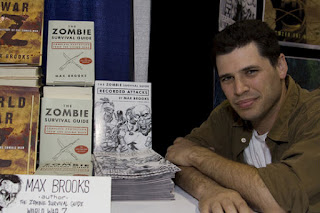
World War Z by Max Brooks


Awright. I think we've hit the high point of the whole zombie apocalypse thing. Time to pack it up and move on, because it ain't gonna get much better than this and everything else is either a poor imitation or just wasting our time.


This article has been stewing in the cooker for a long time, but I never had the guts to write it. Aside from the fact that I really like this book and its predecessor The Zombie Survival Guide, I feel that this takes the Romero zombie as far as it can possibly go. So, talking about this means talking about the whole zombie sub-genre and that's a loooooong conversation.

Deep breath. This is a day for decisive action.

Here we go.

Okay, so everyone calls The Zombie Survival Guide a comedy, but aside from the absurdity inherent in the idea of an Army-style survival guide for a completely absurd apocalypse the material is played straight. I don't know much about wilderness survival or military maneuvers, but the advice seems legit enough. It also appeals directly to the darkly pleasant side of the zombie fantasy: you've survived in a war-torn wasteland. You're hardy and self-sufficient, cool in a crisis and skilled at war. Post apocalyptic stories are one or two steps away from westerns, and to understand the western is to understand America.

It makes sense that the zombie came back into popularity around the same time as new millennium panic kicked off. There's something about our cultural mentality that has a dark fascination with apocalypses. Personally, I think it has something to do with our parents growing up during the A-bomb crisis and the Vietnam war, my generation growing up with 9/11, and the overall crazy Four Horsemen fundie Bible Belt bullshit that sits at the center of our nation.

Plus, at their heart, the zombies are us. They are everywhere we are, they wear our costumes, they suffer our death, and the relentlessly approach us with soulless eyes. And if they catch you, they'll eat you alive.


So zombies do what a good horror critter is supposed to do. It gets under your skin. The rules are simple, the images are grostesque, and death at their hands is ghastly. But there's only so much you can do with them.

The vast majority of zombie stories are siege stories. People are under assault, people barricade themselves in, the stress gets to the survivors, and shit eventually goes wrong. It's a fine story but it's very overdone. There's also an aspect of zombie tales that appeal to a very American Libertarianism sense of self-reliance and individualism. I got my gun, I got my dog, and I can carve a place for myself out of this hostile land.

Some people take that shit really, really seriously. Meet someone who claims to be a zombie nut and ninety nine percent of the time you're meeting with someone who secretly wants a zombie uprising. I have a sneaking suspicion that the vast majority of actual survivors would be in military bases or living in isolated communities. I'm a creature of cities. My ass would be grass.

Anyway, there are only so many stories that you can tell with zombies. People keep trying, and when they don't actually want to do zombies, they do spider critters or creatures made of snow. If the apocalypse has already been tackled on an intimate level, the only way to go is to go bigger. Make it about humanity. How do different people, different cultures, different value systems deal with the rise of the dead?


In a lot of ways, World War Z is pretty much the final word on zombie apocalypses. Rather than focusing on one group of knuckleheads, Brooks tells the story from dozens of different angles. How would celebrities deal with this? How would soldiers? How would pharmaceutical companies try to cash in? What would a major evacuation at the mouth of the Ganges be like? All of these stories could probably make individual novels, but Brooks threads them all together into a Ken Burns-style documentary of the event as survivors tell the story of society trying to rebuild itself.

It's brilliant. It's one of the best horror novels of the last ten years.

The thing that rugged apocalypse stories don't really get is that if the zombies arise, the individual is ultimately meaningless. Some random tough guy asshole may make it through the narrative, but then what? He continues on until he falls off a cliff or his luck fails and he's monster food.

Therefore, the zombie apocalypse tale must be about humanity itself. This is the thing that pulls us together. We got our iphones and our youporn and our netflix and our Republican primaries and all the other crap we use to feather our nests. The cost in human life to scorch the earth would be catastrophic, but what if we rose up afterward and worked together in rebuilding what is hopefully a better world?

Idealistic? Sure. Stupid? Absolutely. But the secret appeal of the post-apocalypse story is that the world is scrubbed clean. To quote the great poet Billy Idol: "and there's nothin' pure in this world. Look for something left in this world...."

"Start again."


Brooks does something I want to do. He takes tropes that are getting pretty ragged and tells a story that isn't about monsters and mayhem, but our shared humanity. It ain't perfect. Too many of his voices sound interchangeable and, while the chapters centered around the hikkikomori in Japan touched my inner weeaboo, the blind woodsman with the sword lopping off heads was a little ridiculous. He mentioned a secret society of zombie hunters in his Survive A Zombie Apocalypse book, but it's something that belongs in a comic book. Still,

Quibbles. This really is one of the best horror books of the last ten years. It's also the final word on the zombie thing. There isn't much left to do with Romero zombies. Hell, Romero can't even do anything with them any more. Brooks nailed it. Time to find something new.

Oh, Brooks wrote a good comic featuring tales of the zombie war. Also, Brad Pitt is doing a movie version of this. Oy.

Sunday, January 15, 2012

I Am Legend


I started writing this drunk and finished it hung over. Welcome back, Seton Hill.

What am I talking about? Zombies? Vampires? A'ight.

So I was talking to one of my asshole hipster friends and we were lamenting the fact that nobody who is into pop culture seems to look at the roots of the things that they love. Nobody watches Casablanca or Citizen Kane or Gentlemen Prefer Blondes or The Searchers unless they're forced to for film class.

Reading I Am Legend felt like going back to the roots of the whole zombie thing.


Okay, yeah, they're vampires. But the narrative is the same as a zombie story. Lone survivor, desperate circumstances, scrounging for what he needs to get by, and surviving on good old libertarian work ethics (he can maintain generators AND grow garlic AND fix cars AND fight monsters? Man, my ass would be dead in a minute.) Almost all zombie books are siege books and Robert Neville is clearly a man living under constant threat. The book opens with him checking the damage from the night before, repairing busted generator parts, and harvesting garlic from his greenhouse. We don't get the sense that the creatures hounding him are human, but Matheson is coy with the details. Rereading the book, I'm struck how Matheson did himself a disservice by sticking too close to the whole vampire thing. He seems like he's on the verge of creating a brand new monster, but he loses traction trying to fit all the classic vampire details into his narrative. When Romero took this story and made Night of the Living Dead, he was taking the story to the next natural level.

Where Matheson stumbles on the monsters, the construction of the story is brilliant. Zombie stories are actually really hard to pull off. They're siege stories, they're nihilistic, and they only end one of two ways: the heroes either find sanctuary or they get got. The situation isn't helped by the fact that modern creators have eschewed post-apocalyptic survivalist stories for rugged American high-octane machine gun power fantasies. The real threat in old school zombies stories isn't necessarily the zombies. The threat is the isolation, the paranoia, the inability to work together, and fact that our structures collapse in the face of the zombie threat.


Robert Neville is not necessarily an easy character to follow around. The isolation and constant threat has made him weird. He spends his days in a routine: fix, scrounge, and slay. He's tormented by the memory of his dead family, he's got weird sexual hang ups (shades of the dissatisfaction I felt reading Matheson's Hell House) and he's staying alive mostly out of habit. The narrative is fixed on his point of view and we feel trapped along with him. The first time he really opens up to us is when he tries to befriend and stray dog. Frankly, I think the story would have been better if it started with this interaction. It shows how far Neville has fallen from his humanity, especially when you stack it up with the more theatrical scenes of him beating his breast at his wife's grave.

The quibbles I have with the book are mostly minor. The dog scenes should have been first, the vampire stuff is ultimately superfluous, the "science" he comes up to explain the vampire condition is pretty half-baked and takes up too much time, and survival stories ultimately lose narrative flow in favor of the minutia of day-to-day getting by. But Matheson not only creates and nails the zombie genre, he proceeds to end the story in the only logical place it could go.


I keep harping on the idea that the reason zombie stories are unique among the horror genre is that most horror is about the monster invading the normal world. It causes damage, we defeat it, the status quo is saved. Zombie stories are about the monster becoming the status quo. Simply by surviving in our world, the remaining humans become the monsters. Monsterism, therefore, is simply a question of context. In the new world being build by the mutants, Neville is the monster. He's the wild-eyed beast slaying creatures in the daylight. He is a thing to be feared and destroyed. It's a much deeper idea than survival stories, and Matheson created it at the beginning of the modern zombie myth.

Wednesday, April 27, 2011

Call of the Dead Trailer


I take back EVERYTHING I said about being sick of zombies.

Dibs on (Buffy) Machete!

Thursday, February 17, 2011

Dead Island Trailer

Our fine friends at Geekologie posted up two trailers for the upcoming game Dead Island. Yeah, I'm burned out on zombies, but this is really good stuff.


Enjoy!

Sunday, February 13, 2011

Red Dead Redemption: Undead Nightmare


I love westerns.

It’s ironic, because in the real world I’m not well suited to the genre. I’m not very outdoorsy, I’m not particularly tough or taciturn, and I’ve never been particularly good around cattle or horses. In short, I’m a city creature through and through. Yet there’s something about the old west that excites my imagination. The endless vistas, the lawless frontier towns, the conflict between civilizations, and the stern, capable people who populated these stories ignited my imagination. It should come as no surprise that I gravitated toward Rockstar Games’ Red Dead Redemption.

Red Dead Redemption is the (mostly) perfect western game. Its got sprawling landscapes, a hard-bitten hero, colorful sidekicks, and a perfectly engaging combat system. I knocked it out in record time so I could start digging into the Undead Nightmare expansion pack.


Taking place shortly before the game’s apocalyptic ending, Undead Nightmare tells the story of a zombie infestation in the territories. The lead character’s family becomes infected and in his quest to save them he revisits old friends, endures new challenges, and uncovers the sinister secrets of an ancient Mesoamerican death god.

I can’t quite tell if Undead Nightmare is canon or not. Red Dead Redemption, despite a few zany moments, plays things straightforward. Undead Nightmare looks, sounds, and feels like a grindhouse slasher film. Beloved characters pop up for cameos, say a few cryptically self-aware things, and then get devoured. Regardless, the story veers from dark comedy to nihilistic horror, remaining engaging and entertaining the whole time.

One of the things that I liked about the game is that it plays fair with George Romero’s rules. Most zombie games (Resident Evil, Dead Rising, Left 4 Dead) play fast and loose with the traditional rules, where the characters are suddenly invulnerable to zombie bites and several quick shots to the chest disable the walking dead. In Undead Nightmare, you have to shoot the zombies in the head and a single bite spells doom for John Marston. It makes game play much more tense and requires much more reliance on the dead-aim mechanic, which slows time down and allows players to line up their shots. Unfortunately, seeing as I barely used this ability in the main game, it took me a couple of hours to figure out just how useful it was. In the meantime, I wasted a lot of rounds on missed headshots and became zombie chow on more than one occasion. Until I figured out the practical application of the dead-aim mechanic, I really hated Undead Nightmare.


Like most zombie games, there comes a point where the gameplay becomes a little routine. Rockstar has a deep and abiding love for making the players do repetitive things, which in this case means you have go back and rescue previously liberated towns over and over again. If you want to use the fast travel system, you have to keep these towns free. Saving a town once is a challenging adventure. Saving a town two or three times feels like busy work.

Ultimately, a few return trips and a bit of busy work are minor negatives to a game that I greatly enjoyed. Red Dead Redemption created a world that I never wanted to leave, even as I sped toward the game’s conclusion. Even after Undead Nightmare resolved the story of John Marston in a grimly unique manner, I wanted more. I hope they keep going. It’s an alternate life I’d love to return to.

Saturday, January 29, 2011

Resident Evil: Deadly Silence


There are a lot of people who will tell you that the Resident Evil franchise hasn't aged well. For a long time, I was one of them.

Horror has always been a fringe genre of the video game industry. It costs millions of dollars to make a game and companies want the most return for their investment. Since people are more likely to play sports games or military/sci-fi first person shooters, horror games have a reputation in the industry for being minimal return for the investment. Later iterations of the Resident Evil franchise seem to be tailor-made for mass-appeal, jettisoning the notorious tank controls and fixed cameras for clunky shooter controls and protagonists that looked like a fusion of an emo rocker and a gorilla juicehead. Resident Evil 5 in particular seemed to be almost apologetic for the series' early attempts to scare the audience. The game took place in broad daylight and talked up its co-op play features over its atmosphere and eerie storytelling (as well as its disturbing racist undercurrent.)


Anyway, the point of this long preamble is that I'd also written off the Resident Evil games. My pretension had gotten so bad that I remembered the negatives of RE1, specifically the unwieldy controls and terrible voice acting. I'd forgotten how much fun the game was to play.

It took my Nintendo DS to remind me.


I'd picked up Deadly Silence as sort of a lark after getting a Nintendo DS for Christmas, thinking it would be good for some cheesy fun between rounds of Grand Theft Auto. I was quickly surprised at how completely enthralling and immersive I found the game to be.

The plot is old news by now: members of the ridiculously named Raccoon City S.T.A.R.S. police tactical team find themselves trapped in an old mansion while investigating violent deaths in a woodland area outside of the city. As they struggle to survive the monsters that lay siege to the mansion, they discover the sinister secrets of the Umbrella Corporations biological weapons program and come face to face with a traitor in their ranks.

It's been over ten years since I've played the original games and it really refreshing to return to the game with fresh eyes. I'd forgotten all those little tricks I'd used to move through the mansion. I'd forgotten the caution I'd use when exploring an unknown hallway, or the rounds I'd pump into a body to make sure it wouldn't come after me again. I'd forgotten the pleasure of solving puzzles or finding new keys. I'd forgotten the simple satisfaction of putting one zombie down, watching him get up, and putting him down again. I'd forgotten the eerie little messages you'd find around the mansion as the unfortunate souls before you wrote their final letters to their loved ones. I'd forgotten finding a shotgun and feeling like a dark, merciless god.


The DS is the perfect vehicle to replay the game. Graphics and game elements that would be unforgivable on a main system work just fine on a handheld. In addition, there's a DS-specific most called "Master of Knifing" where you assume a first-person perspective to fight the undead with your trusty blade. Surprisingly, it works really well. I found that I could understand and anticipate attacks and react with moves tailored to each threat.

The complaints with the game are the same as they were before. Sooner or later you're going to be attacked by something you can't see due to the camera angles and sooner or later you're going to wind up in trouble because you try to run away from the bad guys only to hit the wrong button and run right into their waiting mouths. If Resident Evil was never your cup of tea then Deadly Silence won't make a convert out of you, but I had a blast playing it.

And, just because he's so goddamn funny, here's another Zero Punctuation take on Resident Evil games.

Wednesday, June 23, 2010

Pontypool


I dunno how I feel about Pontypool.

For a guy who bitches about how zombies are played out, I'm a little bummed out that I didn't love Pontypool more. It's definitely a unique take on the whole zombie invasion thing. It gets points for originality, talent, and effort. I just don't quite know how how to process the ambivalence I feel towards the movie.

Pontypool centers around Grant Mazzy, a former big name shock jock radio personality banished to small-town Canada after an unnamed scandal. While on-shift one lonesome winter morning with his producer and techie he starts getting reports of mysterious riots popping up around town. Things proceed from bad to worse and....well, you know, shit happens.


Watching Pontypool, I learned that I tend to prefer stories that take place in the beginning of a zombie uprising. Once the zombies have taken over the world, you've basically degenerated into the same old post-apocalyptic nonsense. Zombies are most scary right at the beginning, when panic sets in and people don't have any good information on the mysterious plague. Pontypool is ultimately a really good movie and the best scenes by far are the moments when the isolated radio station hears the first chilling eyewitness reports of zombie attacks from panicky observers.

I really dug the notion of a virus spread through corrupted words in the English language. It reminded me of the crazy language virus from Neal Stephenson's cyberpunk novel Snow Crash, but its an idea that needed more space to explore than a short movie centered in a small environment. At times the information came so quickly that it felt forced, but the scene where he figures out how to talk his producer down from the infection was really cool. Unfortunately, while it's normally de rigueur to leave the zombie plague's source a mystery, the unique nature of the Pontypool zombies made me really want to learn what was going on. The attacks start when the zombies besiege a doctor's office and the doctor later turns up in the studio. Even though he seems to know a fair amount about the virus, we never learn much from him before he disappears again.

I guess that my big problem with Pontypool is that they did such a good job creating one of the most unique lead characters in all of zombie fiction, then they stick him in the middle of an outbreak centered around language. Suddenly a fascinating speaker isn't allowed to say anything. Because Grant is so clearly based on politically-charged shock jocks like Don Imus and the underlying metaphor is clearly about the danger of spewing unrestrained ignorance out into the air, having the character remains silent misses a lot of good opportunities for the story. Plus, honestly, Grant Mazzy doesn't seem like a bad guy. Sure, he's cocky, but it's not like he ever makes any of the insane, mean-spirited statements that most crackpot radio hosts really make. He's got a fantastic voice and a lot more personality than his job really requires, but if they wanted to show the dangers of communication, they could have made Grant a lot worse.


I've been writing this review over the course of a few days and I keep wanting to say that I really liked Pontypool. It's got brains and skill and talent going for it. The notion of being trapped in a studio and hearing the first panicked reports is genuinely terrifying and, at it's best, Pontypool takes that idea and runs with it. There's a lot of stuff I should have loved, but I'm ultimately so fucking sick of zombies that I couldn't really get into the movie. I'm tired of people saying "what's going on?" I'm tired of people desperately trying to learn anything they can from static-y reports. I'm tired of zombies beating their hands against flimsy glass, trying to get to besieged survivors. I'm tired of watching someone slowly turn. I'm tired of the grim final images.

Please don't take what I said as a shot against Pontypool. It really is a good movie and it really tried to give me something new. I've just subjected myself to waaaaaaaay too many of these things.

Wednesday, December 30, 2009

Sketch of the Dead

Most zombie geeks tend to get into very weird conversations on the semantics of zombie existence? I have, and this funny little short film resonated with me. Go check it out.

Sketch Of The Dead

Saturday, November 28, 2009

Star Wars: Death Troopers


Well, they finally did it. They've been slapping zombies into everything and it was only a matter of time before they finally made a Star Wars Zombie novel.


I've been grousing for months about the complete saturation of zombies in pop culture. While I like the stuff I watch/read and can take the work on their own merits, when I take a step back and look at the zombie landscape, it's hard not to feel a little overrun. I've discussed before at length the basic appeal of zombies but as time goes on I'm starting to see this over reliance on the living dead as a quick way to generate drama. It's fundamentally interesting to watch characters under siege, but they better be interesting because most zombie stories follow the same basic structure: we run to sanctuary and sometimes we die. This one sticks to form, but it does a pretty good job of it.

The story follows the unfortunate crew of the Imperial Penal Starship Purge as they're forced to dock with an abandoned Star Destroyer after their engines go off-line. The salvage operation quickly turns deadly when they realize the Star Destroyer was conducting sinister biological experiments and they're not alone.


I tend to be leery of franchise books, occasionally to my detriment, but this one was actually pretty good. Author Joe Schreiber knows how to build suspense and atmosphere. We don't actually see the first zombie attacks until after the hundredth page, by which point we're immersed in the vicious culture of the Purge and the creeping tension of those endless dark Star Destroyer corridors. I liked the haunting image of the droids continuing their pre-programmed routines in the bowels of the dead ship.

I also dug the fact that the zombies weren't simply mindless Romero knock-offs. There's something sentient in their behavior and the individual zombies seem more like molecules of the same horrible mass-organism. The creature's method of infection is much more imaginatively vile. The method the ship's hapless doctor uses to cure one of the infected patients was visceral and extremely nasty.

The one complaint I had with the book was the fact that a couple of major characters from the movies take a fairly major role in the book. I have read a few other books set in the Star Wars universe and they tend to run roughshod over my beloved character's lives. Schreiber treats the characters with a lot more respect, but their appearance really didn't add anything to the story beyond an almost Pavlovian dread at what could happen to them. Plus, y'know, if I escaped a Star Destroyer full of zombies, it would probably come up in casual conversation.


Beyond this minor, and admittedly completely geeky complaint, I had a lot of fun with Death Troopers. It's a creepy and surprisingly effective horror novel, and it's a good solid popcorn novel even without the Star Wars tie-in. If you like it, Schreiber wrote the incredibly atmospheric Eat the Dark, which was one of the best horror novels I read last year. Also, apparently, there's a Star Wars Galaxies tie-in.

Friday, October 30, 2009

Zombieland

Goddamnit!

I've been working on a post about Zombieland all month. Blogger.com just ate it right as I was about to post it.

Go see it. Fuck you, blogger.

Tuesday, September 29, 2009

28 Days Later in one minute


I thought this was cute.

I haven't written anything on 28 Days Later yet, mostly because I'm a bit burned out on zombies and I'm saving it for when the well runs dry, but it's a great zombie movie. The kids at the University of York's film school put this together. Enjoy!

Sunday, August 30, 2009

Breathers


Meet Andy Warner, a recently deceased everyman and newly minted zombie. Resented by his parents, abandoned by his friends, and reviled by a society that no longer considers him human, Andy is having a bit of trouble adjusting to his new existence. But all that changes when he goes to an Undead Anonymous meeting and finds kindred souls in Rita, an impossibly sexy recent suicide with a taste for the formaldehyde in cosmetic products, and Jerry, a twenty-one-year-old car crash victim with an exposed brain and a penchant for Renaissance pornography. When the group meets a rogue zombie who teaches them the joys of human flesh, things start to get messy, and Andy embarks on a journey of self-discovery that will take him from his casket, to the SPCA, to a media-driven class-action lawsuit on behalf of the rights of zombies everywhere.

Breathers is a contemporary dark comedy about life, or undeath, through the eyes of an ordinary zombie. It’s a classic story of suffering and redemption, like The Color Purple or the New Testament. Only with cannibalism.


There was something about Breathers that didn't jibe with me.

Breathers is the kind of story I have an almost Pavlovian response to. It's set in Northern California and it deals with a social class that's marginalized and subject to assault, the main characters are all members of a feel-good support group, and the villains are a bunch of dude-bros from a Santa Cruz fraternity. Oh, and the dispossessed group in question are a group of flesh-eating zombies. What's not to like?

I like author S.G. Browne's writing style. He's punchy and energetic and I like his conversational writing style, though his wit tends to lie in the fetid waters of the sarcastic. I found that I enjoyed reading Breathers quite a bit but there were a lot of nagging details in the book that I couldn't quite shake, chief among which being that the vicious suppression of the zombie population is pretty justifiable.

The zombies in Breathers are fully sentient flesh eaters. Consuming human beings brings back the dead's heartbeats, heals their injuries, and even allows them to get pregnant. Given that the narrator himself is pretty callow about murdering and consuming his own parents, I'm not particularly swayed by the notion that murderous ghouls deserve the same rights and respect that everyone else does.

That's kind of the heart of my complaints with Breathers: for a story about repression and restraint it takes a fairly shallow look at it's characters and their lives. There are a lot of cool touches and interesting concepts, but they never get fully explored. The book feels fragmented, as if the author wrote chapters around notions that struck his fancy only to abandon them when something new caught his attention. I wanted to see more strife, more internal conflict with the morality of their new needs. given that the characters are essentially the same people they were before death, it seems unlikely they'd take to cannibalism so naturally.

I didn't much like Andy Warner. Yeah, the circumstances of his unlife were horrible but he was caustic, unpleasant, negative, and had a wide sense of entitlement. I didn't buy how Rita fell for him without any difficulty or tension. For such an aggressive and sexual character, I didn't quite see what she saw in Andy.

I also think the author missed an opportunity by not utilizing the character of Roy, the amoral zombie who first leads the protagonists to the pleasures of human flesh. He's an interesting character. He's confident, self-possessed, and willful, very different from the beaten-down Uncle Tom zombies that shamble through the storyline. He leads the characters out of their repression, but he never really addresses or challenges the other zombie's old points of view. He just feeds them some human jerky and then gets captured.

Also, you know who I felt genuinely sorry for? Andy's mom. I guess we're supposed to see her as some in-denial suburban parody, a more neurotic counterpoint to the dad's more overt prejudice. But I couldn't help imagining myself in this poor woman's position. Her husband's an ass and her son is a rotting, shambling freak. It's clear she's doing her best, and her reward is to be scorned and eaten by her asshole zombie son.

Finally, the ending of the story feels rushed. Andy gets captured toward the end of the novel and becomes almost immediately a spokesmen for the zombie rights movement. He's catapulted into unlikely heights of celebrity. It happens too fast, it's too unlikely, and a perfunctory search into the missing persons reports of the Santa Cruz area would have derailed his climb to the stars immediately.

I'm probably overthinking it. It's a black comedy, after all. There's a lot of funny bits in the story, especially in the bickering between the members of the zombie self-help group. In the end, I think there's good stuff here. I think S.G. Browne has a lot of potential, and I'm definitely gonna pick up his next book. When all is said and done the book is worth reading. The zombie haikus alone are worth the price of admission.

Tuesday, July 21, 2009

Dead Snow


Y'know, I'm a big believer in the notion that horror fiction, at its best, can hold up a dark mirror to ourselves and show us our cultural anxieties. Maybe this is a lofty notion for a genre that gives us boobs and blood by the bucketloads, but I do think we invest ourselves into our fears, and rich fruit can grow from that loamy soil. Sometimes, of course, we can go too far and look too deeply into specific works and trends. I've read essay after essay on 9/11 and zombies, 9/11 and torture porn, 9/11 and the new slasher until I can't watch some woman running away from a masked madman without first trying to figure out What It All Means.

But I digress. Sometimes a maniac is just a maniac.

Anyway.

All this stuff about culture and fear applies abroad, too. I love watching foreign horror films. It's a window into another culture, using tools and tropes I'm familiar with. Japanese horror is different from French horror, which is different from Spanish horror and so on. But what if a movie relies so much on American genre tropes that it's essentially interchangeable with stuff we make here?


Don't get me wrong, I liked Dead Snow. It was a trim, tidy little gorefest with amusing writing and beautiful cinematography of the snow covered Norwegian countryside. But it was essentially the exact same as one of our genre flicks. The kids banter in the same way they do here, the requisite creepy old guy gives the requisite warning, people go missing, the requisite jokey self-aware horror movie nut, zombies go a'ripping up their victims, etc. They even steal the tool shed scene straight from Evil Dead 2 and the emergence from The Descent. These guys really aren't trying to break the mold or do anything particularly new, and so I'm left to wonder if this is a case of a movie that would have been trashed on here, but is getting praise because its an independent film from abroad.

The only thing that really stood out for me were the Nazi Zombies.

The monsters in this movie aren't the mindlessly charging zombies of post-28 Days Later Running Zombie fame. Sure, they're trying to eat your flesh, but they are clearly fully cognisant and act like the military unit they were in life. There's something terribly menacing about their level of organized cruelty that goes beyond typical mindless zombies mayhem. Being dead essentially made the Colonel Herzog's unit better Nazis.

If I were to apply my fakeademic lenses to the movie, I'd say that the way Dead Snow portrays their villains is probably symbolic of how the memory of Nazism still haunts the people of Europe today. To us, Nazis are easy Call of Duty-style villains. We had to go Over There to fight them. They weren't living among us, brutalizing and robbing our people. They're not gonna have the same cultural impact that they'll have to the people they occupied and oppressed. It seems perfectly natural that a Norwegian crew would make a film demonizing Nazis. The reality was pretty fucking demonic, too.


It's also pretty interesting how much our pop culture influences the rest of the world. The characters constantly name-drop movie titles, slang (watch one dude call another dude "mothafucka" during a snowball fight), and even bad Governator impersonations over the course of the movie. At one point the characters are playing Twister and one remarks that the only reason they like the game is because Hollywood tells them it's fun. I live in America and I'm immersed in our pop culture, but it's amazing to see how deep our imports sink.

As to the rest, I liked the movie's sense of humor. I'm generally turned off by movies that try to blunt the edge of their horror with comedy, but Dead Snow was such a popcorn film that the humor made it more likable, particularly the hilarious Molotov cocktail scene. I also liked the chilling, dreamlike POV scene of the girl getting eaten alive. Gory deaths are staple for the genre, but that was a particularly effective and creepy piece of work. Finally, I thought the characters, though cut from pretty cliched cloth, were all really likable and engaging. Having said that, who volunteers to have sex on an outhouse toilet?

So, yeah, go see it. You'll earn points for watching an indie foreign film, and you're pretty much getting the same thing you've seen a thousand times before. Here's the Io9 review and a snarkier review from my favorite pretentious asses over at pajiba.


Oh, and the movie had a twist ending involving a mislaid coin. If I see it one more time, it's officially a trend.

Friday, May 29, 2009

Dance of the Dead


As I've probably mentioned before, the zombie archetype tends to be very character-driven. We need to understand and empathize with the characters in the story as they stand against a world-wide annihilation. The heroes of Dance of the Dead are misunderstood geeks facing a zombie apocalypse, earning the love and respect of the people who previously spurned him.

Sounds pretty familiar, right?


This time around, the heroes are the various dweebs and underdogs who couldn't get dates to the prom. When the chemicals from a criminally mismanaged power plant reanimates the dead, the sci-fi club rushes to the prom to save their fellow classmates. It's total geek wish fulfillment, which I can relate to.

The story also covers the notion that high school society is so stratified that the only way people from disparate groups would ever mingle is when they're under attack. This, of course, allows the cheerleaders and prom queens to marvel our geeky heroes' prowess as they dispatch legions of the undead. This idea was similarly covered in The Faculty, but that film suffered from being too pretty, too Hollywood, and full of too many attractive actors. The kids in DotD look and act like gangly, awkward, nervous teenagers, and it adds a layer of realism to the work. You really get the sense you're watching a teenage fantasy, something scrawled in jagged, enthusiastic script in the back of their notebook.


Being as much an action film as a horror movie, the teenagers prove themselves to be surprisingly skilled fighters. The stuntwork in the movie is amazing, particularly the scene where the heroes are running through a cemetary while the zombies explode out of the graves around them.

Dance of the Dead was entertaining enough, but it didn't exactly rock my cage. It was a little too earnest, a little too needy, a little too precious. It splits its energy among too many characters and many of the heroes are actually pretty unlikeable. Still, there's a lot of good stuff here. Unlike a lot of horror movies aimed at a teenage market, this one feels authentic. It's rough an unpolished and passionate and enthusiastic and it doesn't cynically try to sell the audience something from adulthood. It's the cinematic equivalent of a mash-up, and I dug that. Keep an eye out for director Gregg Bishop. I want to see what else he's got up his sleeve.

If that doesn't sell you, there are Zombie Teenage Makeouts, cynical gravediggers who attempt to keep the whole mess in check, and the prettiest rock band I've ever seen lulling the zombies into a stupor with their music. Check it out.

Thursday, April 30, 2009

Zombie Drill


I posted this because, y'know, horror blog and yadda yadda yadda. But really, this is kinda messed up. Them kids seem traumatized at the end. Kudos to the one kid who was kidney punching the zombie, though. I think we've got our next Chris Redfield.

Monday, April 27, 2009

The Book of More Flesh


My loyal readers, I come to you hat-in-hand to admit that I am a prejudiced person.

When I wrote my Living Dead review, I spoke a little bit about Almost The Last Story By Almost The Last Man, a fantastic story by Scott Edelman. His credits listed that he'd been previously published in Eden Studios anthology tie-in for their All Flesh Must Be Eaten zombie role-playing game. While writing my review, I wrote something vaguely snotty about how I was surprised that a writer this good could come from the gaming world.

Fast forward a few days later. Someone involved with the anthology contacted me and asked, very politely, if I'd ever actually read the book. I hadn't. I've read plenty of tie-in novels growing up and most of them were poorly written. I put my ear to the ground, heard some generally positive feedback, and decided to give The Book of More Flesh a fair shake.

Turns out I wasn't disappointed.

A big part of the anthology's success is due to the fact that the writers aren't particularly bound by the source material. Most role-playing games come with elaborate settings that writers are expected to adhere to. All Flesh is less about building a specific world and more about giving the players a wide variety of options to build their own flavor of zombie apocalypse. Without any particular constraints from the franchise, the anthology featured a bunch of talented young writers giving the whole zombie thing their best shot.

The whole say-something-about-individual-stories thing seemed to have worked well for me before. Let's do it again:


Goobers by Scott Edelman: When I was a teenager, the slacker philosophy among my moron friends went something like this: Don't be known for working to your full potential. People will come to expect it of you. After being knocked on my ass by his contribution to Living Dead I expected a repeat performance. It's pretty good but it didn't rattle my cage like his previous efforts. It has that jokey construct a lot of horror stories have, where the tale is a big lead-up to the shocking final punchline.

The Husks by Paul Finch: Paul Finch is a British police officer and, reading between the lines of the story, he's dissatisfied with the leniency of the British penal system. This story is essentially a cathartic "he-had-it-comin'" revenge piece. Generally I'm all for these, but it reads like a lecture and the American psychic "hero" is shrill and unpleasant. Still, it had a serviceable, EC-style twist ending.

The Hounds of Love by Scott Nicholson: Astute readers among you will remember that my co-reviewer and confidant is one Professor Demon Bunny.


PDB lives with me. He is, indeed, evil. He tears my furniture up, seduces my womenfolk, and attacks my house guests without provocation. Despite all this, I love the little bastard. So I was a little bit pissed off when The Hounds of Love started with the graphic killing of a cute little bunny.

I was all set to HATE this story. Killing defenseless bunnies is a no-go for me. Yet somehow Scott Nicholson got me back on his side. Abusive parents, budding young sociopaths, and rural gothic settings are nothing new, but Nicholson made them emotionally engaging. I felt BAD for the bunny-killing bastard, and the way zombies were integrated into the story was inventive and unexpected. This was definitely one of the high points of the collection.

Fading Quayle, Dancing Quayle by Charles Coleman Finlay: So, apparently Charles Coleman Finlay is smarter than me. The notes in the back of the book describe the story as being inspired by the works of "cognitive science philosophers." This term is new and sexy to me, so I'm going to use it as a pick-up line at bars and parties. I didn't really take anything away from the story. It was frantically paced and had a confusing narrative voice. Still, I gotta assume I'm too dumb to understand it.

Trouble by Mark McLaughlin: I loved this story. Seriously. Loved it.

Part of it is that I am a pretentious art guy who likes hanging out with a pretentious art people. McLaughlin gets the general tone of reminiscence and acrimony that would fit in well with that type of crowd. It's somewhat artificial, but he has enough gusto to pull it off. The story also has the most unique composition of any tale in the book, and I'm a big fan of genre writers breaking the traditional narrative format. Framing the tale as an interview allows the characterization to come to the foreground, and the tale ends with the satisfying, creepy end.

Naked Shall I Return by Tom Piccirilli: I liked the collegiate town feeling of the story and I liked the lead character's relationship with his immature roommate, but this story had too many people explaining stuff to me.

Falling Into Naught by Douglas W. Clark: Y'know, ever since (as far as I know) Joe R. Lansdale's On The Far Side of the Cadillac Desert With Dead Folks there's been a stream of pseudo-western zombie tales featuring lone tough guys wandering through a wasteland of violence, depravity, and sleazy zombie brothels/gladiator pits. I like these types of stories. They provide a more gung-ho counterpoint to the endless stream of existentialist angst that a lot of zombie tales apply with a trowel. This one was pretty entertaining, even forgiving the earnestly hokey final line.

Sitting With The Dead by Shane Stewart: A touching and tense story about a young man standing vigil over his grandmother's body, this was another favorite of mine. The notion of having cathartic moments with your dead relatives is a fairly unexplored idea among the zombie anthologies I've read and the leads have a great rapport with one another, particularly the dead grandma who finds a new honesty in death. This one would make a great stage play.

The Black Rose by Don D'Ammassa: This little tale of cowboys and curses is a little talky and a little pokey, but it's got a lot of great characters, a sexy femme fatale, and a razor-wielding madam with a heart of rattlesnake venom. This would have made a tremendously messed up episode of Dr. Quinn Medicine Woman.

Charlie's Hole by Jesse Bullington: My first impressions of Charlie's Hole was largely negative. It felt like the writer got a copy of Tim O'Brien's The Things They Carried and wanted to copy the Vietnam-era nastiness without the artistic context. It started out unpleasant and forced, but redeemed itself when the characters went deep into the claustrophobic tunnels and encountered the creepy Lovecraftian sorcerer in the catacombs. There's some great horror set pieces and a fantastically gruesome ending. Overall, a win.

The Dead Kid by Darrell Schweitzer: This story also appeared in the Living Dead anthology. My review stands. Good stuff.


Brainburgers and Bile Shakes by Jim C. Hines: There's a lot wrong with this story. It's a big cocktease for one. It takes place in an amusement park where the living dead are shackled in bondage and the teased breakdown of order never happens. The lead character is an introverted nebbish whose appeal to his love interest is mystifying. Basically, nothing happens in particular. Still, I had a great time wandering around the amusement park with these two characters. They were sweet and sad and kinda charming. It gets a tentative thumbs up.

ZOMB, Inc. by J. Allen Thomas: Another incredibly fun popcorn story, the Kafka-esque struggles of a temp doing drudge work in a zombie-staff office until his brain is soft enough to eat completely rocks my socks off. The jokey impatience of the lead character's point of view is painfully familiar to anyone who has spent time in a cubicle farm. Post this on the company bulletin board and wait for the internal memos to circulate.

Life Sentence by David Dvorkin: So, help me out with something here. The criminal's plan was to have his organs removed, have his skin hardened with a chemical, be sent to space to mine precious minerals side by side with zombies, sneak said precious minerals past the guards (while naked), and sneak back in time for back alley surgery before his life supplies run out? What, the future had no armored cars to rob? This one lost me early.

Martin's Inferno by Tyler Sigman: Arr matey! Creature be fascinated by dark stories of nautical adventure! This story could have been handed to me inscribed on the flesh of a leper and I still would have found something nice to say about it. Fortunately I don't have to, as it was pretty danged good. Thar be pirates and treasure and curses and the walking deadskies, all told in a breezy, entertaining style. Definitely one of my guilty pleasures.

Memory Remains by Steve Eller: Being that zombies are dead and young writers love writing melodramatic stories of loss and Human Suffering, zombie stories occasionally get weighed down like leaky water balloons with capital-M Meaning. This one has a depth of feeling and sometimes gets cumbersome under the weight, but it does a pretty good job tying the character's rapidly desiccating body with the loss of his soul. I'd buy this story a beer, but I'd probably get bored if the conversation went on too long.

The Little Death of Mr. Phillips by J. Robert King: Easily the best story of the collection, this tale follows a Walter Mitty-esque insurance salesman as he applies his practical, unruffled mind to the problem of his zombification while pining for a pretty receptionist.

There's a ton of stuff to like in this story. Poor Mr. Phillips is such a sweet, compelling character, marching gamely toward his doom while trying to enjoy life a little. The story draws a lot of horror from the actual process of decay, something rarely touched in zombie fiction. Finally, it doesn't simply ape the zombie cliches. There's no desperate survivors trapped in a global apocalypse and the only thing threatening about zombie Mr. Phillips is the stench. The reader is instead treated to a story of love, loss, and missed potential, all capped by a beautifully written, poetic ending. Seek this one out.

The Hyphenated Spirit by Scot Noel: Oh my. Tea and crumpets. In the same way I'm a fan of piratical tales, I'm a sucker for high society aristocratic Britannia, especially when it focuses on conjoined twins and a zombie sibling. In this story, zombie-ism is an affliction left undiscussed in polite society, yet the relationship between the prim (if perverse) Apollonian half and her carnal Dionysian sibling eventually degenerates in a manner that would make monocles drop into champagne glasses. Everyone is so wonderfully well mannered and erudite and gloriously perverse!

Inheriting Red by Alexander Marsh Freed: One of the most unique and inventive zombie stories I've read, Inheriting Red is told from the point of view of the psychic entity controlling the zombie hordes, who sees their gruesome path of consumption as an act of love. I really liked the hive-mind's point of view, and her memories around her messianic brother were lyrical and lovely. This tale could easily have been expanded into a compelling novel.

Goddamn Redneck Surfer Zombies by Michael J. Jasper: First off, you can't lose with a title like that. Second, this story has that fun, unflappable tone of one of Joe R. Lansdale's tales. Third, it's genuinely funny. Forth, it has one of the best narrative POVs in the book. Fifth, it's called Goddamn Redneck Surfer Zombies. I'm gonna give this story to girls I have a crush on. If they like it, they're a keeper.

Night Shift by Rebecca Brock: Don't get me wrong, I liked this story on the aggregate. It's a solid, classic Romero-zombie siege yarn, with good writing and tense scares. The lead character, a relief worker at a juvenile care facility, is an absolute prick. He's vicious toward his charges, rude toward his coworkers, and eager to abandon the situation. Sure, he's got a pregnant wife to get home to, but he's such an unpleasant person that I was actively rooting for his family's annihilation. I gather the writer wanted to create a hard-bitten tough guy, but even tough guys gotta have something good about them.

Bright Angels by K.Z. Perry: I was a little skeptical of this story at first. The notion that people would 'adopt' dead children who'd been domesticated to mimic emotion struck me as a prime example of the uncanny valley theory in action. Still, when the orphanage lights go down and the reader gets a glimpse of what goes on behind the domestication, the story becomes tantalising. The first layer of this story is a little flabby, but the stuff under the skin is very enticing.

The Ethical Treatment of Meat by the awesomely-named Claude LaLumiére: The OTHER best story of the collection (I can have two dammit!) is ETM here. A charming little domestic farce between two gay zombies and the human boy they keep as a pet, the story works great on a satirical level. It's when you start paying attention to the details, start noticing how the human pets behave and how little his keepers can relate to him, then the story becomes genuinely terrifying. This was a fantastic story to end the book with, and I'll definitely keep an eye out for this guy's work in the future.


So yes, I'm very happy that I took a look at the anthology. It took me some winning over at first, but they got some interesting new writers telling really good stories. At some point in the future I'll write about my experiences running All Flesh but for now go check out this book. It's a bit tricky to run down, but it's definitely worth the hassle.