Showing posts with label Anthology. Show all posts

Sunday, March 6, 2011

Classics Mutilated


I couldn't really get on board the whole monster-lit thing.

On paper, it's a neat idea. Take all those tepid, boring old novels we read in junior high, add a couple ninjas and a horror from beyond, and BLAMMO! instant pop-novel trend. When I'd heard about Pride and Prejudice and Zombies, I haunted bookstore after bookstore trying to find a copy. Ultimately, I couldn't quite finish it. I found the juxtaposition too jarring and I was constantly being pulled out of the narrative by the constantly shifting writing styles.

My best friend gave me a copy of Classics Mutilated, the monster-lit anthology. In the introduction, editor Jeff Conner wrote about drawing inspiration from the mash-up music scene. I dig the same sort of of music (go check out Bootie's website for examples) and I eagerly settled into the stories.

Anyway, I like to review anthologies on a story-by-story basis. Most anthologies, especially ones by different authors tend not to have strong thematic ties beyond their core subject matter. Also, it's fun to nitpick. So with that, my review of the tales of Classics Mutilated.


The Fairest of Them All: It makes some sense to start the anthology with an Alice in Wonderland/Sleeping Beauty/Cthulhu mash-up. All are well loved, all are very imaginative works, and all have strong imagery. Still, there's some truth to the old chestnut about too many cooks spoiling the pot and this story is a good example of a mash-up gone wrong. Too much stuff goes on, too many things need to be explained, and the story gets lost in the details. Finally, the writer shoehorns Alice so hard into the villain role that his interpretation bore little resemblance to the original character.

All in all, not a good start.

Anne-Droid of Green Gables: I adored this story. Steampunk ain't really my cup of tea and I've never read the Anne of Green Gables stories, but this story crackled with warmth and charm. There's a tendency in genre fiction to tell big, bombastic stories of violence and lust and death, but this story of a family coming together and embracing a curious little robot absolutely charmed me.

Little Women in Black: Eeeeeeeerie. I don't quite have an idea about what the hell is going on in this piece, but the characterization is strong and the horror is creepy and mysterious. I'm gonna dig out more Rick Hautala stories after this.

Death Stopped For Miss Dickinson: 15 year old me would have loved this story. Chronicling the emotionally rich love affair between Emily Dickinson and the specter of Death, this story is florid and melodramatic and moody. As an adult, I find the Gothic trappings a bit overwrought, but there's something in this story that kept me hooked. Plus, the author clearly has a great reverence for Dickinson's work and threads the poems into the narrative.

Twilight of the Gods: Riffing on both the Twilight series and Norse mythology, this clever little parody boasts some of the funniest, most charming storytelling of the book. Loki replaces the Bella character and his rakishly sociopathic take on her romance is absolutely hilarious. Of all the stories in the book, this is the one I'm most likely to recommend to people.


Pokky Man: Probably the most unique mash-up in the book, Pokky Man explores the Pokemon universe through Werner Herzog's famous documentary Grizzly Man. The story follows a former trainer who has become obsessed with the Pokemon and attempts to live among them, leading to tragedy and terrible revelations for the Pokemon universe.

There's a good argument to be made that this is the best story in the anthology. Many of the mash-ups are little more than gimmicks cleverly done, but filtering the sterile, consequence free world of Pokemon through the obsession Herzog portrayed in his tale. At first it's a simple parody, but the trainer's eventual fate is incredibly eerie in the context of his world. The writer of this story works in the video game industry and his wealth of knowledge of the game's universe brings the horror to life.

Vicious: There are a couple of stories in the book dealing with rock stars and their legacies. It's not hard to see why; rock stars create their own grand, larger-than-life mythology and it's easy to add a little magic into their lives.

Vicious absolutely works as a character study. The writer is clearly a fan of Vicious' self-destructive persona and captures his voice and personality very well, spiraling between the arrogant highs and self-loathing lows of a junkie rock star. While I don't know if it's a hundred percent authentic, it captures the flavor of the man. The story itself isn't quite as good. It's not so much of a plot and more a series of shitty magical things that happens to Vicious during the New Orleans leg of the tour. Still, it's definitely worth reading for the strength of the writing.


The Happiest Hell on Earth: Probably the most ambitious and imaginative story in the book, Happiest Hell crosses Dr. Moreau's island of vivisected freaks with the colorful world of Walt Disney.

Prior to reading the story, I never really realized how much The Island of Dr. Moreau got under my skin. The process of creating the hybrids is absolutely horrible, and the painfully unnatural way the creatures live made me cringe. Once they leave the island for Hollywood, the story begins to feel too crowded and rushed. There are a lot of ideas in the piece and it feels like it should be a novel. It's a fine story otherwise and one of the best examples of mash-up monster lit fiction in the book.

From Hell's Heart: I grew up reading Nancy Collins' vampire adventure stories. They were Urban Fantasy before the genre became all saturated and florid. Her take on the insane Captain Ahab is a fun pulp-feeling adventure riff, with fast action and tons of suspense. I rocketed through the story in record time although in making Ahab a mournful protagonist, Collins loses a lot of the insanity that is the hallmark of the character. Still, anyone who can't dig a story about a hellbound mariner stabbing a wendigo with a magical harpoon ain't someone I want to know.

Frankenbilly: Frankly, there wasn't enough Western stories in this book and I was happy to see Frankenbilly in the list. This remake of Interview with a Vampire as told by a reanimated Billy the Kid doesn't always work. It feels a bit like the story got away from the writer about midway through. Fortunately, the dialogue is crisp and the story is just goofily absurd enough to remain engaging throughout.

The Green Menace: In some ways this story works and in some ways it absolutely doesn't. On one hand, it's a fun little tale about a group of lakeside vacationers besieged by killer frogs cooked up by a former Nazi scientist. It's tense but never needlessly grim and it's a blast to read. On the other hand, one of the characters is disgraced former Senator and commie-hunter Joe McCarthy. In reading the notes on the story, writer Thomas Tessier said that he wanted to put a man who was a master at commanding fear into a terrifying situation. Unfortunately, that aspect of McCarthy's character never really comes out and he reads as nothing more than an unpleasant dude with too many guns. As a mash-up it's not much of a success but it works just fine as a fun action yarn.

Quoth the Rock Star: The low point in the anthology, this floridly-written tale of the meeting between Jim Morrison and Edgar Allan Poe features a fight between their two spirits, manifested as a raven and a lizard. By that point, my eyes glazed over.

Dread Island: The famous closer to the piece, Dread Island is Joe Lansdale's fusion of Huckleberry Finn, Cthulhu, and the stories of Uncle Remus. It's a tense horror tale, full of terrible places, apocalyptic fury, and hungry gods in the sky.

Lansdale, to his credit, doesn't attempt to ape Mark Twain. Lansdale writes like Lansdale, and his take on Huckleberry Finn rings authentic. Long time fans of Lansdale's work (he's one of my favorite writers) will recognize a lot of the tropes with his other stories, but this one holds together very well. My one complaint is that it requires more knowledge of the source material than I had, especially with the surprise cameos by famous people throughout history. Still, it's a fine adventure horror yarn.


I'm not really big on anthologies in general. Most of them are wildly inconsistent and it takes effort for me to constantly get reinvested in a new story. But Classics Mutilated is a strong collection of tales. This stuff probably works better in a shorter format anyway, before the absurdity of the individual tales causes them to collapse upon itself.

I'd recommend this book for monster-lit fans, people who like really quirky writing, and anyone who wants to see Huck Finn escape the clutches of Cthulhu himself.

Thursday, June 24, 2010

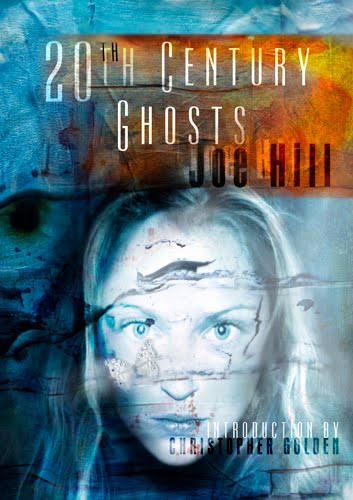
20th Century Ghosts by Joe Hill


Recently, the AV Club did an article about whether or not we are living in a golden age of movies and pop culture entertainment. While I couldn't hack my way through - AV articles can be really pretentious and boring - it did get me to thinking about the way I view genre history. I tend to wax nostalgic about a mythical yesteryear when movies weren't all about the stupid jump scare, when everything didn't feel watered down and played out. The thing is, maybe that's true of any age. Maybe the stuff that is actually worth remembering is always surrounded by mediocrity. Maybe it's the process of casting the wide net through the sea of bullshit and Platinum Dunes remakes that leads us to the things that are genuinely good.

Or, to put it mildly, I think Joe Hill is the real deal.

Maybe I'm such a big Joe Hill fanboy because the characters and subjects he writes about resonates with my own life experience, in the same way melodramatic angsty music resonates with a moody teenager. Maybe I'm trying to apply an objective standard of "good" to highly subjective things. Whatever. I've gone through three of his books and he ain't let me down.

20th Century Ghosts is an anthology of horror-themed stories. Though there are ghosts and monsters aplenty, the stories tend to be about the spectres of memory and loss. Hill does something I wish more authors would do; he tells stories that use horror tropes as a grounding for tales of people rather than drag us through the same rusty haunted house doors. He's got a great command of characters, he uses language beautifully, he doesn't think endless swearing makes a story more tough and authentic (not that I have a problem with swearing. I swear like a sailor. But bad writers often rely on it to make a story more "edgy", like 10 year olds cussing out their parent's earshot. Mine cussed around me, so it was all good) and, unlike certain other major horror writers, he can actually end a story.

Anyway, that's enough of lighting incense at his feet. When I review anthologies I like going through the stories. It's a pattern that has worked well in the past and I don't see a reason not to try to duplicate success. Without further ado:


Best New Horror: I had this idea once. I really, really did. But I chickened out because I didn't think I could pull it off. Honestly, I was probably right, but Hill definitely did a hell of a job on it.

BNH is one of the most dead-on depictions of horror fandom and the fatigue that often comes with it. You love this stuff with a primal ferocity and then one day you realize that most everything out there is either a rip-off of something better or it thinks you're a fool. The protagonist, a burned out anthology editor, comes across a genuinely original and scary work and it shocks him out of his ennui. He recalls the first time he ever felt the joy of the horror genre after watching The Haunting as a small boy:

When the lights finally came up, his nerve endings were ringing, as if he had for a moment grabbed a copper wire with live current in it. It was a sensation for which he had developed a compulsion.

Boom. Nailed it.

It turns out that the guy who wrote the story is a bit messed up and BNH quickly degenerates into a nasty backwoods stalker story. But the story takes it's most celebratory tone when things are at their worst. The protagonist has finally gotten the purest jolt he'd been searching for his entire life. This story should be compulsory reading for the hardcore horror devotee.

20th Century Ghost: A lot of horror writers tell stories about haunted movie theaters, whether it's Clive Barker's seminal Son Of Celluloid or Joe R. Lansdale's trippy Drive-In novels. Most of us horror fanatics developed our taste of the genre in darkened movie palaces and it's natural that haunted movie theaters are just as much a trope of the genre as spooky castles, abandoned graveyards, and eerie summer camps.

Despite the story's scary elements- and the ghost of poor Imogene Gilchrist is genuinely unnerving- the story is really a love story. It's strangely nostalgic and sentimental, maybe a little adorably schmaltzy, but I loved it. It's one of the two stories that I remember most fondly in the collection.

Pop Art: I'm not sure if I'd mentioned this before, but Joe R. Lansdale is one of my heroes as a writer. I read his stuff at a key point in my development and his unique combination of Southern dry wit, machismo, and absolutely insane subject matter got me hooked. I have a natural inclination toward literary pretentiousness and whenever I start writing to impress people rather than writing for the sheer joy of it, I crack open a Lansdale book and marvel at the almost childlike imagination and enthusiasm of it.

Pop Art felt like a Joe R. Lansdale story.

The story is about a boy made out of inflatable plastic and the troubled, angry kid he befriends. It reminded me of a Lansdale piece about an inflatable sex doll that yearns to be free, but Pop Art has its own thing going. The inflatable boy is serene and almost Christlike in the way he views the world and the difficulties of his condition. His positivity and his unconditional love go a long way to healing the narrator.

I read a lot and, God help me, I read a tremendous amount of genre fiction. In most genre fiction, the first person narrative almost always sounds the same: cynical, detached, tough, and cold. Speaking as a long-time roleplayer, I know when someone's creating an avatar for the way they either perceive themselves or the way they want to be and most first person narratives sound vaguely like wish fulfillment. Both this story and the tales "Voluntary Committal" and "Better Than Home" deal with a narrator with emotional problems. They're not dry, detached reporters of events surrounding them, but instead they perceive the tales through the lenses of their own world view. The kid in Pop Art is angry and defensive and the inflatable boy's presence in his life does him a world of good. It's ultimately not a happy story, but it's one of the most emotionally engaging in the book.


You Will Hear The Locust Sing: This really odd mash up of Lansdale-style weirdness, fifties sci-fi big bug horror and Kafka's Metamorphosis is just...odd. I can't quite tell if it's a story that didn't so well for me or if it's doing something I'd need an English degree to figure out, but ultimately it didn't rock my cage too much. It ultimately confined me to an experience I wasn't all that interested with in the first place. Not that it was bad. It's like Korean food; it's really well made for what it is, but it's never gonna be the first thing I want to order on the menu.

Abraham's Boys: Oh, did I love this story.

I'm so sick and goddamn tired of the Dracula story. It's interesting up until we leave his bitchin' castle, then all the movies/stories/whatever degenerate into the characters wringing their hands and watching Lucy die. Even when people screw with the narrative like they did with Hammer's Horror of Dracula, it all still seems too familiar. While I still basically like vampires and I still adore the character of Dracula, stories based around the actual novel don't really do anything for me. I gave up hope on anything interesting being done with Jonathan Harker, Mina, Van Helsing, Lucy, and the rest of the gang. Boy was I wrong.

Abraham's Boys is a vampire story without any vampires in it. Van Helsing has immigrated to America, where he's been cast out of academia for his crackpot beliefs in vampires. He now lives in isolation with his two terrified boys, whom he rules with physical abuse and tales of supernatural forces set against them. We discover that Van Helsing married Mina, who died under terrible circumstances, and the boys begin to doubt their father's sanity.

This interpretation of Van Helsing, while significantly less heroic, totally works. He's a scary, paranoid, cold father figure and there's a real chance that he may simply be crazy. We feel bad for the boys, and their slow rebellion has horrible consequences, but it's the best Dracula story I've read in a long time.

Better Than Home: Probably the best character study in the book, this completely non-horror tale is told from the point of view of a special needs child and his relationship to his baseball coach father.

It's really hard to pull off a narrator with severe mental issues, especially when that narrator is a kid. The best example I've ever seen is The Curious Incident of the Dog in the Night-Time, but author Mark Haddon had worked extensively with autistic children before writing the book. Most writers either slip into that cynical outsider perspective or, to use the distasteful terminology of Tropic Thunder, go "full retard" and make the story unreadable. Hill leaned toward the former and the narrator is a little too on-the-ball for how severe his disability is, but the relationship he has with his wonderfully patient father is one of the strongest emotional moments in the anthology.

The Black Phone: This story felt like a throwback to all those trapped-by-a-serial-killer stories I used to read in Cemetery Dance after Silence of the Lambs blew up. The protagonist is a kid (and I'm just starting to realize, what's up with all these kids and teens in Hill's work?) who gets captured by a grotesquely obese sexual predator and kept in a basement. While he's trying to figure out a way out of his predicament, a black plastic phone starts ringing. On the other end of the line are the voices of the man's previous victims.

Spooooooooky....

I really liked this story. The lead kid was tremendously scrappy, proactive, and resourceful and you were rooting for him through the whole thing. It's a very direct sort of story: stuff happens, followed by other stuff, then boom! done, but it's got creepy ghosts, dank murder holes, and gross hatchet wielding, fratricidal killers. Win.


In The Rundown: Hill has an amazing ability to make completely angry, unsympathetic characters redeemable, and his gifts really shine in this story. The lead character is a nasty jerk who gets fired from working in a video store after making threatening comments to a coworker. On his way home, he comes across a grisly scene of a crazed mom trying to kill her kids and rises to the moment.

I liked this piece because of the way it shifts our perspective on the lead. He's an absolutely mean-spirited shit but he comes through in the end. The scenes with the crazed mother is genuinely chilling because it unspools so slowly. We only get information on what's going on in small pieces, so we're as off-balance and disoriented as the protagonist. It's a great effect. In The Rundown is less of a whole story than the portrayal of a single moment, so we don't quite know how things worked out, but it's a great little horror tale.

The Cape: I grew up on Ray Bradbury. When I was a kid, I loved his imagination, his nostalgia, and the poetic way he told his stories. Though he's since disowned it, The October Game is still one of the most terrifying and grisly stories in all horror fiction. As I've gotten older and ornerier, I've had a hard time connecting to his sentimental, syrupy stuff, but the Ray Bradbury story has become like 80s video game music to me: even if I haven't heard it for a long time, just a few notes brings back a tidal wave of memories and emotions.

The Cape starts out feeling exactly like a Ray Bradbury story. It's about a couple of brothers who spent their childhood tying fake capes around their necks and pretending to be superheroes. As the story begins, one of the brothers is starting to outgrow the game, but his sibling tries to get him to play one more time. He climbs up the tree, taunting the brother, and discovers that his cape gives him the ability to fly.

At that point, I expected the story to turn into a nostalgic childhood tale of whimsey and magic but shit rapidly goes downhill. Stuff happens, people become awful, and lives don't turn out exactly the way the characters want them to before someone goes and does something horrible. It was kinda hard to really like the story because there aren't really any sympathetic or likable characters, but it does play to one of Hill's strengths, which is an honest depiction of the small ways that people and families disintegrate. It's a well-told tale and it showcases some of the things I really love about Hill's work, but it's not something I'm going to be rushing back to any time soon.

Last Breath: The other stand out horror tale in this anthology, Last Breath is a tale about a very polite, very creepy doctor who collects the final exhalations of people at the moment of their death. He bottles them up and displays them in a museum, where people can listen to the sounds with a device called a deathoscope. A family of three visits the museum. The father and child are enraptured by the exhibit, but the mother becomes more and more uncomfortable. Things happen.

I loved the creepy but kindly Dr. Alinger. As a guy who is fascinated by tale spinners and crypt keepers, I love weirdo morbid eccentrics. The way he describes his collection is chilling and evocative. The little tales he tells with each death are amazing and eerie. I think I want to be this guy. It's a fairly straightforward EC comics sort of tale, but it's one of my favorites.

Dead-Wood: A one-page poetical rumination on the ghosts of trees, Dead-Wood...is good. Look, just read the fucking thing. It's a page.

The Widow's Breakfast: Another really good non-horror story, The Widow's Breakfast is a Depression-era story of a drifter who shares a meal with a recently-widowed young woman. It's a great character piece, kinda sad and kinda touching.

We meet the drifter right after his more intelligent friend is killed and he's feeling vulnerable and lonely. I like that he keeps comparing the way he does things to the way his friend did them. He probably wasn't the brains of the outfit, but he's also trapped in tremendous insecurity, which makes him more sweet. Everyone is so sad and lonely and goddamn likable.

It also has the most chilling final line I've ever read in a non-horror story.

Bobby Conroy Comes Back From The Dead: This tale was featured in The Living Dead, an anthology I reviewed awhile back. It's cropped up in pretty much every zombie anthology I've seen since then. My original notes still stand.

My Father's Mask: This is a damn weird story. It's somewhat Alice In Wonderland, somewhat straight horror and all weird. Stories with kids who have weird parents are a dime a dozen, but these cats were really, really weird, especially the sexy mom. It was a very cool piece, though. I think the point was that adult problems go straight over children's head and all they can do is get knocked around in the ripple effect. Still, the mom is pretty damn hot.

Voluntary Committal: The novella that closes the anthology, Voluntary Committal tells the story of a young man whose idiot savant brother creates elaborate forts in the basement of the family house with sheets and cardboard boxes. The forts become more frighteningly elaborate until people go in and never come out...

This story could have been a lot shorter. There's a certain kind of horror author that would have fixated on the creepy shit going on in the basement, but Voluntary Committal, like Better Than Home is mostly about the effect disabled kids have on a family. The family is brilliantly realized and I especially liked the fact that the narrator's mother recognized the mean streak in her healthier son and did her best to suppress it. I liked that the "evil" friend of the narrator wasn't really one of those generic effed-up generic horror sociopath. Instead, he had all the squirrelly, needy defense mechanisms of a kid from an abusive home. I actually felt a little bad for him when his fate came down, and I felt especially bad for the sad, insecure girl he left behind.

As for the horror, it's a pretty Lovecraftian piece, all weird angles and plateaus of Leng. I love that stuff. Voluntary Committal is ultimately a compelling family drama with just enough nastiness thrown in.


20th Century Ghosts sticks to a lot of repeating themes in Hill's work; screwed-up families, emotionally troubled narrators, and horror as a lens to view the troubles of real life. It's a very good anthology with a broad range of styles and subjects, and a couple of stories are among the best I've read. Go check it out.

Wednesday, October 21, 2009

Trick Or Treat


Wow. Christmas came early for me this year.

I really, really loved Trick or Treat. I've been hearing about this movie for years through the interwebs. Like Midnight Meat Train there was a whole bunch of drama around its distribution and it's been sitting on a shelf for a long time. It's chillingly effective on the small screen and I really wish it had a chance to shine in theaters. Still, it's too good not to develop a following.


Trick or Treat is a Tales from the Crypt-style anthology film. All the tales take place over the course of a small town Halloween night. The tales are linked by "Sam", a creepy little boy in a burlap-sack mask who threads through the stories, sometimes as an observer and sometimes as a participant. As an embodiment of the nastiness at the heart of the holiday and he could easily become another horror icon.

The stories run the gamut from psychos to supernatural menaces, from deadly vampires to revenge from beyond the grave. The stories all employ familiar EC-style tropes but all the stories have little twists and turns that caught me by surprise. I didn't predict the ending to Anna Paquin's tale, which I'd originally written off as uninspiring and cliche. I did figure out the nasty little secret Brian Cox's curmudgeonly old Scrooge was toting around, but that didn't stop me from getting a big gleeful kick out of it.


It's not perfect. During one scene in the movie Sam appears in a traditional slasher role. It turned the character from a creepy watcher to an almost laughable Chucky-esque stalker. In addition, Sam gets unmasked during the fight. The face underneath the mask is decidedly unimpressive and laughable.

That's pretty much all I got for the negatives. There's too much stuff to like in this movie. I'm giving this my full and hearty recommendation, as opposed to my lukewarm meh-it's-mediocre-but-it's-horror-and-I-have-no-ability-to-be-discerning recommendation. Have fun with this one.

I may have to get a Sam tattoo.

Saturday, May 30, 2009

Fear [s] Of The Dark


I really liked this movie.

Fear[s] Of The Dark
is an animated anthology of horror tales from the most well-known graphic novelists and animators in Europe. It's gotten a lot of buzz in the film festival circuit, and it's all well deserved. FotD is a gorgeous film, absolute eye candy, and the film's minimalist take on the genre is really cool.

Sure, there's a bunch of weird arty stuff in here. The wraparound narrative is a woman listing her fears, both large and small, as asymmetric black and white patterns dance across the screen. It's actually pretty cool, but it's not going to appeal to people who like their horror performed in a straightforward manner.

The stories themselves are all familiar to the long-time horror fan: madness, possession, ghosts, the knife in the dark. The stories are sparse and are more of a showcase for seeing what the artists can do with old tropes. It works well. Even the weakest narrative, a story of a man recalling his childhood among a rural area full of monsters, is still a pleasure to watch.

The best segment, far and away, is the tale of the man stumbling around in the dark house as something sinister stalks him. The story is told completely without dialogue and the play of darkness and silence makes this easily one of the creepiest horror stories I've ever seen. Get a little taste of it here:


So, yeah, go check this one out. It's something new, something different, and it's lovely.

Saturday, April 11, 2009

The Twilight Zone Movie


When I was a kid, the Twilight Zone scared the crap out of me.

Aside from being masters of the chilling final line/image, there was something sinister about the notion that you could be going along, living your buttoned-down fifties life, and suddenly the Dark Gods of Narrative decide to hit you upside the head with the irony stick. Plus, considering the climate and the technology, they were forced to rely on actual storytelling and imagination instead of gore and cliches. Good stuff.

Anyway, I thought I'd give the Twilight Zone movie a spin. It's been awhile, y'know? Time to go visit an old friend.


I liked the really cool back-and-forth patter in the opening story between the driver and his demonic passenger. The doomed driver and his mysterious passenger are clearly old friends, and their exchange feels very natural as it descends into very creepy territory.


As to the first full tale, the sad saga of a racist confronted with oppression through history, made notorious by the death of actor Vic Morrow and two children in an on-set accident, it's pretty good but there's something missing. There's always been a strong moralistic thread running through The Twilight Zone. Characters are supposed to start ignorant and come to wisdom, usually at a horrible cost. I never got the sense that Vic Morrow's frustrated salesman actually grew as a person. He got jerked around a bunch, then he got dragged off to the concentration camp. Still, it's well shot and has that classic episode feel.


The second one, by Steven Spielberg, bugged the living crap out of me. Yeah, I know,
Twilight Zone isn't all gloom and doom and the Dark Gods of Narrative can sometimes turn a kind hand, but this was really too much. It's pretty much every horrible saccharine thing Spielberg is known for, all awkward Hallmark-card sentimentality wrapped up in goofy morals and fluttery wind instruments. The only time the story affected me was when the grumpy old coot who refused to join the others begged to be set free. That was pretty good. Everything else, meh.


Story three, about the kid with the freaky cartoon powers, is probably the best original story in the movie. It's been copied and parodied a thousand times since, but the original still holds a lot of freak-the-shit-outta-me, from the creepy forced cheer of the family to the mouthless girl alone in the room to the horrible cartoon images the kid conjures up. It's a really, really good piece of horror filmmaking. My only quibble is with the ending, which takes a much happier tone than situation would logically warrant. Anthony has clearly used his powers kill before, and the notion that he was just waiting for someone to teach him is a bit absurd. Sure, he rides off into the sunrise with his new teacher but the second she crosses Anthony, he's going to feed him to a cartoon werewolf.


The last story...oooh. I hate flying. I don't like being up high, turbulence terrifies me, and every time I get near an airport I have a minor panic attack. Some people think John Lithgow is overacting to the point of comedy, but I am totally on board with the level of claustrophobic panic Lithgow displays. Plus, I like the way they shot the creature. It's a vague shape, the wind and storms buffeting it around as it goes about it's gruesome work. Yeah. Good stuff.

Anyway, there ya go. Good stuff on this one. If you see one anthology horror/sci-fi movie based on a TV show from the early sixties, make it this one.

Saturday, January 24, 2009

The Living Dead


Zombies are the new hotness.

Or, perhaps I should say, were the new hotness. After Resident Evil and 28 Days Later got them back in people's perception, the shit blew up. Comic series, video games, movie after movie after movie all came out, feeding people's need for more apocalyptic survival horror action. It's tapered off somewhat lately and what remains was either really cheap to produce or really, really good.

Everyone and their mother has their theory on what the whole zombie thing MEANS, what strange shared psychosis in our culture responds so strongly to the image of hordes of cannibalistic undead coming for us. Generally they tend to fall on the dark-reflection-of-our-consumerist-fixation side, the perverse-need-to-eradicate-all-social-structures-and-leave-survival-as-life's-primary-purpose side, or the let's-load-up-and-blow-shit-up-common-man-with-a-gun side. I think these all have their validity and I got three of my own:

1) Horror is often dependent on the Other invading the Normal. People are living their lives, introducing themselves to the reader/viewer and agonizing about their Unresolved Conflict, when Victor the Vampire or Winston the Werewolf or Yukiko the Yurei shows up and causes some mischief. Some people get bumped off, some chick wanders around a dark place looking Scared but Determined, the Other is killed and the status quo returns to Normal.

Zombies invert that formula. In a zombie tale, the Normal is the first thing to go. Suddenly the world isn't threatened; the world has fundamentally changed. The narrative doesn't take you to a different place and demand that you play by their rules like science fiction or fantasy does. The world is still ours and it's falling apart. It's incredibly jarring and adapting to that disorientation is part of the fun.

2) The rules are elegantly simple. The dead are walking around. If they get you, and they probably will, you will die horribly. If you get bit, you will die. They can be stopped with a shot to the head. Sometimes fire scares them, sometimes it doesn't. Within that framework you can build stories spanning the range from early Ingmar Bergman-style wallows in existential despair to macho gun-heavy survivor stories.

The zombie world presents a strong appeal for mental role-playing. Most people I know who have any degree of affinity for zombie stuff love making contingency plans. What would they do when a zombie shows up? Where would they go? How would they prepare themselves? Who would they save? What would they value? What would they do when their backs are absolutely against the wall? It seems to be a simple frame work for people to play around with their worst case scenarios.

3) The nature of the stories, and the fact that despair is just as much a threat as the zombie hordes, mean that zombie stories tend to spend more time with characterization than other horror tales. Unlike many horror movies, especially slasher movies that make perverse anti-heroes out of their killers, we're squarely on the human's side in zombie flicks. We need to be beside them, we need to feel their fear, and we need to share their strain for the stories to really work. The original Night of the Living Dead still works remarkably well because of the way we watch these confused and frightened human beings fall apart as they bicker among each other and get themselves killed.

So, that's my pet theory on the appeal of the zombie genre. Now let's apply that to The Living Dead, a recently released anthology of zombie tales edited by John Joseph Adams.

I really liked this book. Anthologies are often a hard sell for me. It takes me some time to become emotionally engaged in a narrative and I find the effect of having to constantly switch between characters and writing styles disorienting, but the stories were well-written and compelling. The editor didn't take chances with a lot of new names and most of the authors are well-known names in genre fiction. While this didn't expose me to a lot of new talent, it did give me a chance to see some of my favorite writers at work in a familiar sub-genre.

The one complaint I did have with the book is that it's definitely not geared to the long-time genre reader. Most of the stories can be found in other, older anthologies and I found myself coming back to tales I read a long time ago. Still, at fifteen bucks, it's kind of a can't-go-wrong.

Anyway, my breakdown of the tales;

This Year's Class Picture by Dan Simmons: A very straightforward, very cool zombie tale that fits us squarely in the mind of a teacher trying to reach her zombie pupils. It's one of those ideas that could have been tremendously trite and stupid, but Simmons pulls it off. It also has one of the most sweet, least hokey endings I ever read in genre work.

Some Zombie Contingency Plans by Kelly Link: This one isn't really about zombies per se, but it does some nifty characterization tricks, has one of the most compelling leads in the book, and has one of the best back-and-forth conversations I've read in awhile. I'm not entirely sure what's going on in Soap's head, but he's not in a good place and it's a sick joy to read.

Death and Suffrage by Dale Bailey: I was a little wary, getting into the book. While I agree with the politics of the story, having the dead vote the way I would made me worry the story would be some hackneyed soapbox diatribe. I liked the lead character and as the story moved on and the emphasis moved away from the presidential fight and toward the mysteries of his past I found myself drawn in. There's some good character stuff and some strong dialogue set pieces, and I'm kind of curious to see the Masters of Horror episode they did off this story.

Ghost Dance by Sherman Alexie: Sherman Alexie is one of my favorite writers, though he's definitely not someone I'd ever expect to be contributing to a genre anthology. His tale of unburied past and violent vengeance hit my liberal buttons, but the story felt a little disjointed, a little hollow. Sure, it's good. It's really good. But it's not really Sherman Alexie good.

Blossom by David J. Schow: I am gonna have to part company with the horror orthodoxy but I've never been a big fan of David Schow's work. His stuff rubs me the way a lot of the big name splatterpunk does: too much shock, not enough substance. In the story's introduction he talks about the image that inspired the piece and the story he built around it didn't really do anything for me. Someone has kinky sex. Some weird stuff happens. Someone dies violently. Splatterpunk. Done. Next?

The Third Dead Body by Nina Kiriki Hoffman: I had high hopes for this story. There wasn't much in the book mixing zombies with serial killers and the story has a killer opening line. I had a hard time connecting with the rest of it. The character's arc was poorly laid out and I didn't care in the end.

The Dead by Michael Swanwick: Yuppies treating the reanimated as a business resource is an obvious sort of idea, but I liked the enthusiastic sleaze of the story and the capitalistic implications of the author's ideas about zombies.

The Dead Kid by Darrell Schweitzer: As a big-city kid, I'm a sucker for small-town adolescent nostalgia horror tales. Bradbury got the taste under my skin and King, Lansdale, and Partridge kept the addiction going. This story is one of those narratives, and it's a real treat. I like how the zombie is the victim and not the danger, I like the way Schweitzer's lead alternates between conformity and his sense of ethics. The ending feels a little too bright for the tale, but after all the gloom and doom that tends to hover around the zombie genre it's nice to have a happy ending.

Malthusian's Zombie by Jeffrey Ford: I loved this story. The title character was a neat, strange little academic and the clever trick he plays on the narrator got me at the end. The story puts together a little world, plays fairly by it's own rules, and pleasantly surprises the reader at the end.

Beautiful Stuff by Susan Palwick: Beautiful Stuff was the story I feared Death and Suffrage was gonna be. The liberal outrage is painfully obvious and the big moral at the end was cringe worthy. The story is well-written and enjoyable on a craft level, but it's too obvious and pleased with itself.

Sex, Death, and Starshine by Clive Barker: I've got a lot of things to say about Clive Barker that I'll save for another time. Suffice to say, it's an old story and it's still really, really good. I'd give this one to my theater-working friends if any of them were actually literate.

Stockholm Syndrome by David Tallerman: It's a very straightforward survival horror story. Perhaps too straightforward, but it had a strong personality guiding the narrative.

Bobby Conroy Comes Back From The Dead by Joe Hill: A non-horror story about love rekindling on the set of George Romero's Dawn of the Dead, this bittersweet little tale is a nice love letter to genre fans.

Those Who Seek Forgiveness by Laurell K. Hamilton: I'm usually inclined to roll my eyes at Laurell K. Hamilton as she tends be be associated with that whole supernatural romance subgenre running around these days. In truth, I never gave her a chance and I gotta say that this is a pretty good story. It's very linear and without many surprises, but it has that fun, punchy feeling of those goofy old theme anthologies I used to read in high school.

In Beauty, Like the Night by Norman Partridge: There's a lot more stuff going on in the story than is given space to work with. As a result, it feels like a longer work chopped down and it suffers for the editing. Still love ya, buddy. Would like to see more with this.

Prairie by Brian Evenson: One of my favorite pieces in the book, this weird little story is written like a sea captain's log as they travel some very grim seas. The matter-of-fact depiction of ghastly imagery and clinical, cold speech shouldn't work, but it does.

Everything Is Better With Zombies by Hannah Wolf Bowen: Wow. Seriously. Wow. The stuff going on here is subtle and painful and terribly cool. Another story where zombies are more a metaphor than a threat, the heartbreaking stuff going on unspoken between the characters absolutely works.

Home Delivery by Stephen King: I've got a lot to say about Stephen King, too. Like Clive Barker, it's gotta wait for a more focused article. Suffice to say, you've probably encountered this story in a dozen places before. It's still a tidy little story with incredible characterization. The zombie apocalypse barely affects the small island community and the characters have a unique dialogue style and point of view. I'd liked to have seen something new, but this one still works.

Less Than Zombie by Douglas E. Winter: This was the first fictional work I've read, having mostly known him from his non-fiction biographies of various genre authors. His insight makes this pastiche of Bret Easton Ellis's Less Than Zero work with a certain sleazy charm, capturing the cold disconnect between Ellis's characters and the way they bang off each other amidst the undead. This story isn't a pleasant tale but it portrays yuppie nihilism effectively and remains engaging and clever.

Sparks Fly Upwards by Lisa Morton: This one is tricky to put my finger on. A political tale about abortion and religious fervor, this one contains a lot of raw emotion. I tend to be leery of stories that put their themes front and center in the narrative, but this one more-or-less stays readable, despite the painfully earnest final paragraph.

Meathouse Man by George R.R. Martin: One of the more unusual contributors to the anthology, George R.R. Martin writes in the fantasy genre, which I rarely dip my toe in. I dug this little ditty, though. Set in the far future, this story of zombie slave labor, necrophilia, and love gone sour was apparently inspired by some bad times in the author's life and Meathouse Man comes out very raw and wounded. At times the writer's pain is a little too naked and the story seems to have been constructed as an elaborate Rube Goldberg torture device to batter the innocent protagonist by mean old love, but I enjoyed it.

Deadman's Road by Joe R. Lansdale: I'm a big Joe R. Lansdale fan but I've never actually read Dead In The West, the old Western zombie story where disillusioned priest and monster hunter Rev. Jebidiah Rains makes his first appearance. He's one of the only action movie style heroes in this book and Deadman's Road is a fun little tale for him to run around in. It's very direct and cinematic, without a whole lot of fat on the bone: bad shit happens, preacher man stops it. It is, if anything, a little too free of surprises but I wouldn't kick it out of bed.

The Skull-Faced Boy by David Barr Kirtley: Great title. Okay story.

The Age of Sorrow by Nancy Kilpatrick: The low point in the anthology, it presented the fundamental danger of last-person-left-alive scenarios; if we have to follow one person around, they'd better be interesting. I did get to learn about the characters ovulation cycle, which was, y'know, different.

Bitter Grounds by Neil Gaiman: Oh, dear. I was dreading this one. I really like Neil Gaiman and I think that when he's on his game he's one of the best popular fantasists of our time, but after reading and rereading this story, after staring at walls and contemplating the Meaning Of It All, I still can't tell whether this is a deep, complex, and rich tale of death and emptiness or one of those stories where a writer is being deliberately, maddeningly vague in order to seem more clever than the story actually is (the Donnie Darko effect.)

She's Taking Her Tits To The Grave by Catherine Cheek: A gimmicky title, which tends to be a turn-off, but a cute little yarn about a vacant L.A. woman who doesn't deal with her death and subsequent resurrection well.

Dead Like Me by Adam-Troy Castro: OMG! BFF on this story! A vicious little handbook for survivors who want to stay alive by acting like zombies, this one fits squarely in the Romero world and is one of the best tales I've ever read about losing your humanity to the zombie hordes. Seriously, go read this now.

Zora And The Zombie by Andy Duncan: One of the stories in the book that uses the old Voodoo zombie mythos, this one follows Zora Neale Hurston as she meets an institutionalized zombie in a Caribbean asylum. This one builds a strong atmosphere and has an exotic sensuality to the tone. Kudos.

Calcutta, Lord Of Nerves by Poppy Z. Brite: Man, I haven't been back to Poppy Z. Brite in years. During my adolescent Goth phase, her early work was mandatory reading. Coming back to this story after ten years was a treat. This tale is less a story and more of a travelogue of zombie-infested Calcutta, but she does a fantastic job of bringing the city to life. You pick up the heat, the sounds, the smells, you learn the lingo, and you come to believe that Calcutta would be the one place in the world where the dead could rise and no one would notice.

Followed by Will McIntosh: Another political zombie tale, this one is one of my favorites. A non-violent story about people's lifestyles catching up with them in the form of dead bodies who follow you around in silent judgement, this one fits very will with my San Francisco Organic Co-Op mentality.

The Song The Zombie Sang by Harlan Ellison (r) and Robert Silverberg: Given the pedigree of the authors, of course this tale was gonna work. After an anthology filled mostly with familiar zombie archetypes, they cooked up a good story about art and the passion of the living.

Passion Play by Nancy Holder: I didn't realize until I got to this story how few of the tales in this anthology dealt with the religious implications of the zombie apocalypse. This one, in which a Bavarian town reenacts the Passions of Christ with zombie actors as part of a covenant with God, was a welcome change of pace. It tends to sprint when it should jog, but it pulled off what it set out to accomplish.

Almost The Last Story By Almost The Last Man by Scott Edelman: Oh, man. I never really expected to discover anyone new but this was one of the big pleasures of this collection. A multi-layered tale of a writer desperately telling stories in the middle of Romero's apocalypse, the narrator succeeds in drawing us into his desperation. It covers every type of story you could imagine Romero devotees telling and does an amazing job engaging us with the narrator as he goes to his doom.

How The Day Runs Down by John Langen: A fantastic tale to close the anthology with, HTDRD is a monologue piece, written as a stage play, where a mysterious stage manager narrates the apocalypse, pulling in characters into his story and having them share their experiences with us. It's homespun and folksy and very, very dark.

Anyway, that's the collection. I really enjoyed this book and I'm probably gonna pick up Wastelands: Stories of the Apocalypse at some point in the near future. Again, there's probably a bunch of stuff you've seen before, but it's a good little mix tape of monster madness.