Monday, October 25, 2010

Soultaker by Bryan Smith


Soultaker fascinated me.

It didn't fascinate me due to it's quality. It can be politely described as formulaic but fun, something to pass the idle hours on the commuter train. There are about five or six horror writers I regularly come back to when I want something lurid and sensationalistic and fun. They wear their genre bonafides on their sleeve and their stories are almost interchangeable: corruption and anarchy hits a maddeningly suburban town, the protagonist is always some Sunset Strip hair metal type, the violence splashes gleefully across the page, and the woman are always cartoonishly sexually aggressive. The tea sipping elitist in me is mortified that I enjoy this stuff, but my inner five year old devours it.

Soultaker plays pretty close to form. A female sexual demon known as a Lamia comes to a shitty little suburb and begins corrupting the populace by taking the form of a surly goth teenager and fucking the local hot shot jock. The jock's alcoholic writer brother comes to town to help him out and is unwittingly forced to fight against evil and blah blah blah. It's not particularly inventive or challenging but it's competently put together and I enjoyed my time reading it. The reason it stuck with me after I put it down because the more I think about it, the more I feel it's a story about male fear of female sexuality.

I've gone on rants before about how I believe horror is often a satire of our fears. Some of them are cultural fears, some of them are fears specific to an era in our history, and some are universal. It's no secret that human cultures have spent generations trying to control what a woman does with her body and Soultaker feels like a sort of extreme satire about what could happen if women had complete control of her own sexuality.

Lamia is an unequivocably female threat. While her goal is to perform some sort of mass sacrifice for another hundred years of life, she achieves it by seducing and destroying anyone who gets in her way. Her acolytes are all women and they use an almost comically exaggerated sexuality to get what they want. They're not bashful or subdued; they want to fuck and come and push bondaries all the way through to graphic murder. The men who they take over become simpering submissive slaves bent to their evil will. The heroes eventually become drawn into an Invasion of the Body Snatchers-style web where they can no longer trust that their friends or families aren't acolytes or slaves of Lamia. All the heroes are male with the one exception of a lesbian who happens to be Lamia's daughter and uses the same sexuality in an attempt to destroy her mother.

I absolutely don't want to suggest that I think Bryan Smith is a misogynist. While the subjects he's tackling can be incredibly challenging, I don't really sense any particular malice from his work. To be honest, I'm probably overinterpreting the intent behind his book. For all I know he just wanted a little raunchy sex, a little gruesome violence, and a bunch of fun scares. Besides, I'm currently reading the collected horror stories of Robert E. Howard and his virulent racism makes Smith seems like the copywriter for the ACLU.

I don't know if I would actually recommend this book to people. It's crudely written and the subject matter might turn off people with sensitive constitutions or people whose socially conscious dial is set too high. I don't know how much of the stuff I'm drawing from the story is from my notorious penchant for over-interpretation and how much of it was deliberately laid down by Smith, but the gender politics of the book kept me fascinated.

Also, it was a good way to kill five or six hours on my commute.

Monday, August 9, 2010

Horror Commercials


The fine folks over at Bloody-Disgusting recently posted an article about horror-themed advertisements. If you're like me, you remember the Freddy phone one from the halcyon days of youth. Or maybe you just like watching Vincent Price shill stuff. Anyway, enjoy!

Saturday, July 24, 2010

The Addams Family Musical


Let me tell you a little story.

I came out to New York City around the end of January. Like most first-timers, I immediately gravitated to all the touristy shit, which included several awe-struck walkthroughs in Times Square. One of my very first trips led me to a theater that was proudly announcing a new musical based on the Addams Family.

I completely plotzed. It should probably come as no surprise that I am a huge fan of Charles Addams' macabre little creation and, like many San Franciscans, I'm a sucker for musical theater. Unfortunately the show wouldn't even begin its run until after I left. I decided to stick around this town and I'd go to the theater from time to time but Broadway shows are prohibitively expensive. This past week a relative came to visit and he offered to take me to the show. I was elated.

Now, I'd heard rumors floating around that the musical wasn't actually all that good. I'm generally of the mind that where there's smoke there's fire but New Yorkers are also a cynical lot. I went to the play last night with as open a mind as possible.

I wasn't disappointed.


Okay, maybe I was a little. The first act was much, much weaker than the first one. I'm told most Broadway shows lead with their best stuff, but Addams Family saves their best numbers for the second act. Also, perhaps it's because I've been spoiled by the fantastic Marc Shaiman score for the films, but I felt like the music didn't really fit the Addams spirit. For a macabre, ghoulish family the first act's music and lyrics were a bit too peppy and upbeat.

Therein lies my fundamental problem with the musical: I felt that their interpretation of the family didn't jibe with what I understood the Addams to be. The play centers around Wednesday, who falls in love with a sensitive poet type and discovers an affinity for smiles and sunshine and icky yellow dresses. Addams Family Values had a similar conceit with Wednesday's summer camp romance to the hypochondriac, but it was clear that she was still a vile little psychopath. Here, she goes all squishy and stays that way.

That's pretty much all I have to rag on it about. Let's get to the positives.


For all the songs in the first act that didn't feel like good fits for the Addams Family, the second act contained some really strong tunes that fit the family's romantically morbid streak, in particular the sexy "Teach Me How to Tango", the touching "Happy/Sad" and the chilling "Move Toward The Darkness", which laid out the family's philosophy nicely. While I bag on the opening act, the intro song "Clandango" was a catchy tune and a great way to introduce new audiences to the joys of the Addams Family. Finally, there's a substory about creepy Uncle Fester's infatuation with the moon and all his songs are probably the best in the show. They're peppy little ballads sung by a weirdo and infused with his goofy charm.

Second, you have to see Nathan Lane perform comedy live. When I think of Gomez Addams I tend to be fixated on Raul Julia's performance, with all his suave Latin charm, bad puns, and flair for romance. Lane's performance is more flamboyant and energetic but he really plays up Gomez's punny humor to great effect. The man knows how to deliver a line and his unique inflection is absolutely hilarious. If you're even slightly a fan of the Addams clan, you have to see Nathan Lane in the role.

The rest of the family is equally stellar. Lurch lurches, Gramma cackled (and they finally address whose mother she is), and Pugsley gets up to all sorts of near-fatal mischief. Bebe Neuwirth plays Morticia, the matriarch of the Addams clan. I always thought that Morticia would be the hardest Addams character to nail down because you have to walk a fine line between imperiousness and romance and she does a beautiful job of it. Morticia is put through a sort of midlife crisis that shakes her normally unassailable confidence, and it makes for one of the more interest story threads in the piece. Uncle Fester, the family's lovable weirdo uncle, has all the best songs and Kevin Chamberlin does an awesome job.

Finally, let's talk about Krysta Rodriguez, the young thespian who portrays Wednesday Addams. I already griped that the play too out her fangs, but....aw hell, she's hot. Not the most insightful commentary, but cut me some slack. I'm not Ben Brantley.


Man, I really suck at writing conclusions.

There's a lot of stuff to like about The Addams Family Musical: it captures the family's charm, Nathan Lane is brilliant as Gomez, and there's a lot of really good songs sprinkled through it. Not everything works, Wednesday gets the short end of the stick, and there's some stuff that falls flat, but the Addams Family has a Pavlovian effect on my psyche. I'm probably gonna go see it again with a Morticia of my own...

Saturday, July 17, 2010

Last House On The Left 2009 Liveblogging


I'm liveblogging Last House On The Left because I can't bring myself to leave my apartment.

I'm having a rough go of it today. The stress of being always broke and lonely is hitting me like a punch in the heart. Today was the gay pride parade in NYC and I really wanted to go, but inertia hit me and I made the mistake of looking at my bank balance. So I've managed to completely freak myself out and all my roommates are gone so I don't have to pretend to be a nice guy and I can watch this sleazy, big budget remake of a sleazy low budget Wes Craven film.

LHOTL was one of the first horror movies I ever watched. I was slowly going through the big name slasher flicks and everyone said that LHOTL was one of the most intense things Wes Craven ever did. I remember watching it on my tiny little TV/VCR set-up in my bedroom in the apartment my mom rented after the divorce (tween years+intense family strife+innate love of the macabre=horror fandom).

I was disappointed.

There was hardly any gore, which was what I'd come to expect, and the rape stuff didn't really affect me one way or another. I was 12 years old, stupid, and emotionally immature. I've never watched it since. I've grown up and I find that, while I like a lot of really crappy movies, I really can't deal with sexualized violence. It's ugly and uncomfortable and it's a big reason why I never bothered with I Spit On Your Grave. When someone is killed in a movie, it's usually relatively quick. The gun goes off, the machete comes down, AAGH! BOOM! SPLAT! done. When someone is raped or tortured on film, it goes on forever and they're screaming and I squirm because I tend to get wrapped up in my fictions and I always feel weirdly complicit when I watch those movies, which is why I tend to avoid torture porn, too.

Anyway, this is all stream-of-consciousness. I'm alone in my apartment, working on my 20th Century Ghosts review and I decided to pop in my library copy of LHOTL and give it a whirl. I missed it in theaters, but I'd always been curious about it. It looked really slick and I wondered how a flashy remake of a godawful exploitation flick would turn out.

I'm exactly nineteen minutes into the movie and I decided to pause it and to a liveblog review of it.

I read flickfilosopher's review on it and it was about what I expected: she called it sleazy, amoral, and cruel. I've been paying attention to the movie and I felt the same emotions I felt during Funny Games: I don't want anything bad to happen and I absolutely dread what's gonna happen next. The girls have gone back to the hotel room with the sketchy teenager and shit is about to get a whole lot more socially awkward. If I watch this, I'm going to want to write a review of it, but I'm not going to want to spend days chewing it over and writing my typical bullshit dissertation. I'm gonna go with an off-the-cuff thing. So, in the spirit of the inimitable Final Girl, I'm writing my liveblog review of LHOTL.

On the stuff I've already watched: First, the director reeeeeaaaally likes ogling the lead teenager. There's a bit where she comes out of the shower and the camera lingers on her dripping skin, her virginal white undies, the mournful look in her eyes, and all that stuff. It's a little weird.

Second, family strife! The family has already lost one kid to mysterious circumstances and everyone is mooning around in the house full of mementos. If this is your vacation home and you come to relax, wouldn't you remove all the photos of the smiling child looking back at you?

Third, the bad guys are really, really big bastards.

Forth, everyone in this is a really good actor. The direction is also skilled. Aren't these movies meant to be made by amateurs with no taste and no sense of restraint? Isn't it weird when you're getting sleaze from real grown-ups?

Okay, on with the show!

20:47: This movie seems to be a cautionary tale about what happens when you step off the beaten track and don't listen to your parents. Apparently, if you break curfew, you'll be raped and murdered.

22:31: Somewhere in this movie there's a legitimate tale of teenage woe and heartache. The three teenagers have an actual rapport. It's charming. Also, the whole grainy footage, handheld camera thing is a little too planned.

23:46: BEWBS! PSYCHO BEWBS!! Also, the crazies showed up and things are already uncomfortable and terrible. Also, all the psychos are way too pretty. They look too clean and poised, not all sketchy and weird.

26:16: It would have been creepier if the psycho family played nice at first and lulled them into a false sense of security. Instead, they all but announce their intention for violence right out the gate.

26:33: Aaaaaand here comes the knives.

27:10: "I'm sorry ladies, we just can't risk it."

28:41: The kid who lured them in the situation has an iota more humanity than the rest. Not that it's gonna do any good in the end.

29:52: The psychos are clearly meant to be as much a family as the vanilla and sunshine family. I assume the father plans on having his son kill the two girls as a lesson in sociopathy.

31:59: Dude loves his close-ups.

32:46: Why is the Mari girl giving them directions? Is she gonna try to swim the lake.

33:51: Cigarette lighter in the face! FUCK YEAH!

36:00: Well, guess the torture is about to begin. How do actors do this sort of thing? How do you go to the dark places these sorts of roles require?

40:19: Flickfilosopher is right, these movies rely on a tremendous amount of sexualized violence. At what point does it become a problem?

40:36: Roommate just walked in. They are nice people and they don't need to be subjected to this stuff.

40:40: Yep. Lessons in sociopathy. The father is telling his son to rape one of the girls. Guess here's where the rape part of the rape revenge happens.

42:10: Oh good god. Now there's stabbing. Highly sexualized stabbing. The camera lens leers like it did after the shower scene.

43:20: Okay, I just saw the sickest shit ever. The guy who stabbed the girl is telling her friend to offer fake reassurances. As far as sheer, heartless sadism goes, that about takes the cake. This guy's got one over on Jigsaw.

44:11: We've just gotten to the rape. Why is the psycho's girlfriend goading this on? Is it a way to counter charges of male sexist viciousness "Oh the girlfriend was involved, so it's not like it was just an act of male on female sexualized violence." Also, do you you suppose people were expecting to be doing this stuff when they majored in drama? Also, god help me for saying this, it could have been a lot worse and more pornographic. As bad as this is, they could have made it a lot more graphic.

45:55: Still going. Christ, was it this long in the original?

46:34: Hopefully done. There's a weird moment of....I dunno, hyperawareness? Serenity?

48:01: HIT HIM IN THE HEAD WITH A FUCKING ROCK!!! I really like this girl. She's got more fire than I have. I'd have been dead long ago.

49:39: Y'know, I guess I expected Mari to live. Not that kind of movie, I suppose. Also, what's up with the psycho girl? Does she regret what she is? Why is she crying over Mari's corpse?

51:51: There's absolutely no time between the rape/murder and the killers showing up at Mari's family's house. It's like the movie is rushing to be over. DUDE!

54:34: There's an HOUR left on this thing? Are we gonna spend the next hour playing bullshit cat-and-mouse games with these assholes.


57:00: Y'know, I feel kinda bad for Justin, Krug's slightly more moral kid. He's really a lot better than his family. I predict he's gonna die a horrible death.

59:09: Guess Mari survived. That kid is made of steel. I couldn't swim across a lake with a bullet in my back.

1:02:54: I like the quiet moment by the fireplace where the two families are communicating before all the shit starts.

1:05:11: Okay, I call foul. The bad guys aren't...weird enough. They positively leaked menace every other time they were on screen, yet suddenly they have the etiquette skills of a courtier at high tea? No, nuh-uh, people this badly effed up drop more hints on their insanity.

1:07:09: They just found their daughter. Shit's about to get real.

1:09:01: Nothing like sealing a bullet wound closed with a knife to make a movie seem like Rambo.

1:12:34: The parents just realized exactly what happened to their daughter. There is something to be said about having real actors do these roles. There is a lot of really good storytelling potential in these roles and having some campy asshole do these parts would really sap the seriousness of the narrative.

1:14:44: Does Justin want to kill his old man? He is staring longingly at the gun. Maaaaybe he's redeemable, but I'm not holding my breath.

1:19:15: See, you can pretend to be a classy thriller, but once a hero starts looking longingly at power tools, then you know it's gonna be something else.

1:20:15: They aren't gonna do the castration scene, are they?

1:20:52: Don't choose the heavy wrench. Come on, you have hacksaws! Either be a thriller or be an exploitation film. Can't have your cake and eat it too.

1:22:21: Nope, They didn't do the castration scene. Just a plain old knifey knifey.

1:23:11: Guess the doctor ain't much for the Hippocratic oath if he's rebreaking a guy's nose. Also, these guys are surprisingly adept at murder. They're both drowning the fuck out that evil bastard. No, wait, now they stuck his hand in a garbage disposal. Aaaaand a claw hammer in the skull.

1:27:13: Justin is weeeeiiirrrdd....

1:28:50: Again, it's not really a thriller if Crazy Bitch is fighting topless and covered in blood.

(At this point, my roommate came in and took the laptop. The rest of my observations are transcribed from my pretentious writerly moleskine.)

1:30:58: A bullet in the eye is too good for Crazy Bitch.

1:33:01: Um. What is Justin's angle?

1:36:11: Nothing like a chatty sociopath.

1:38:32: Krug is a pretty hardcore monster as far as vicious spree killer sociopaths go.

1:41:01: Yep. Turns out Justin is a hero and he gets to die for it.

1:42:07: Come on. He's down, finish him off. Don't bullshit us with a final jump scare.

1:46:11: He microwaved that guy's head off!!

***************************

Afterwards.

It's two days later. My freak out has passed and I've had a couple days to let the movie simmer in my brain. I don't think liveblogging was entirely a success. The thoughts are too random and disjointed. Rereading what I wrote feels frustratingly incoherent, like trying to read a twitter feed.

Here's what I really thought: LHotL wasn't really what I was expecting. It's not actually bad. If you are looking for a movie where a girl gets raped and her parents get revenge, then this film is for you. There's no much else to it, the movie doesn't stray too much its very linear narrative path.

One weird thing about the movie is that the sleaziness of the subject matter doesn't really jibe with the way it's presented. The original had a gritty handheld camera style and "naturalistic" actors. The remake has very attractive people and confident camera work. It's sort of weird how professional the whole thing is. Exploitation films are supposed to feel cheap and amateurish. When professionals make an exploitation film, it becomes something else. It's too gruesome to be a thriller, especially since the bad girl spends a significant amount of time topless. But it's still all too slick.

One thing I will say is that the rape scene wasn't nearly as bad as I expected it to be. I was expecting something much worse after reading Flick Filosopher's review on the film, but I never felt particularly titillated. Indeed, the rape is pretty horrific. I really liked the way that we're forced into the victim's point of view and the hyperfocus she has on things around her as the act is happening. The filmmakers don't show anything too explicit and keep the focus on the victim's pain throughout it. I can't really make the argument that the scene was meant to titillate the viewer.

I guess I can recommend it. It's not a pretty story, but it has teeth. It's not really a thriller or an exploitation film or a horror flick but it's definitely worth seeing. Check it out.

Thursday, June 24, 2010

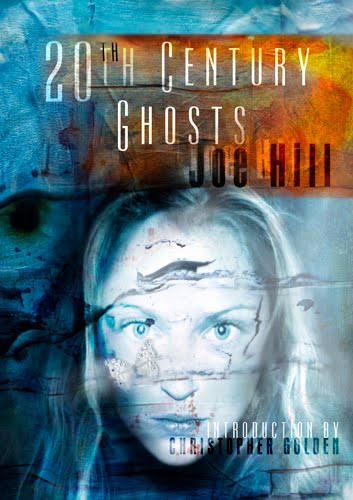
20th Century Ghosts by Joe Hill


Recently, the AV Club did an article about whether or not we are living in a golden age of movies and pop culture entertainment. While I couldn't hack my way through - AV articles can be really pretentious and boring - it did get me to thinking about the way I view genre history. I tend to wax nostalgic about a mythical yesteryear when movies weren't all about the stupid jump scare, when everything didn't feel watered down and played out. The thing is, maybe that's true of any age. Maybe the stuff that is actually worth remembering is always surrounded by mediocrity. Maybe it's the process of casting the wide net through the sea of bullshit and Platinum Dunes remakes that leads us to the things that are genuinely good.

Or, to put it mildly, I think Joe Hill is the real deal.

Maybe I'm such a big Joe Hill fanboy because the characters and subjects he writes about resonates with my own life experience, in the same way melodramatic angsty music resonates with a moody teenager. Maybe I'm trying to apply an objective standard of "good" to highly subjective things. Whatever. I've gone through three of his books and he ain't let me down.

20th Century Ghosts is an anthology of horror-themed stories. Though there are ghosts and monsters aplenty, the stories tend to be about the spectres of memory and loss. Hill does something I wish more authors would do; he tells stories that use horror tropes as a grounding for tales of people rather than drag us through the same rusty haunted house doors. He's got a great command of characters, he uses language beautifully, he doesn't think endless swearing makes a story more tough and authentic (not that I have a problem with swearing. I swear like a sailor. But bad writers often rely on it to make a story more "edgy", like 10 year olds cussing out their parent's earshot. Mine cussed around me, so it was all good) and, unlike certain other major horror writers, he can actually end a story.

Anyway, that's enough of lighting incense at his feet. When I review anthologies I like going through the stories. It's a pattern that has worked well in the past and I don't see a reason not to try to duplicate success. Without further ado:


Best New Horror: I had this idea once. I really, really did. But I chickened out because I didn't think I could pull it off. Honestly, I was probably right, but Hill definitely did a hell of a job on it.

BNH is one of the most dead-on depictions of horror fandom and the fatigue that often comes with it. You love this stuff with a primal ferocity and then one day you realize that most everything out there is either a rip-off of something better or it thinks you're a fool. The protagonist, a burned out anthology editor, comes across a genuinely original and scary work and it shocks him out of his ennui. He recalls the first time he ever felt the joy of the horror genre after watching The Haunting as a small boy:

When the lights finally came up, his nerve endings were ringing, as if he had for a moment grabbed a copper wire with live current in it. It was a sensation for which he had developed a compulsion.

Boom. Nailed it.

It turns out that the guy who wrote the story is a bit messed up and BNH quickly degenerates into a nasty backwoods stalker story. But the story takes it's most celebratory tone when things are at their worst. The protagonist has finally gotten the purest jolt he'd been searching for his entire life. This story should be compulsory reading for the hardcore horror devotee.

20th Century Ghost: A lot of horror writers tell stories about haunted movie theaters, whether it's Clive Barker's seminal Son Of Celluloid or Joe R. Lansdale's trippy Drive-In novels. Most of us horror fanatics developed our taste of the genre in darkened movie palaces and it's natural that haunted movie theaters are just as much a trope of the genre as spooky castles, abandoned graveyards, and eerie summer camps.

Despite the story's scary elements- and the ghost of poor Imogene Gilchrist is genuinely unnerving- the story is really a love story. It's strangely nostalgic and sentimental, maybe a little adorably schmaltzy, but I loved it. It's one of the two stories that I remember most fondly in the collection.

Pop Art: I'm not sure if I'd mentioned this before, but Joe R. Lansdale is one of my heroes as a writer. I read his stuff at a key point in my development and his unique combination of Southern dry wit, machismo, and absolutely insane subject matter got me hooked. I have a natural inclination toward literary pretentiousness and whenever I start writing to impress people rather than writing for the sheer joy of it, I crack open a Lansdale book and marvel at the almost childlike imagination and enthusiasm of it.

Pop Art felt like a Joe R. Lansdale story.

The story is about a boy made out of inflatable plastic and the troubled, angry kid he befriends. It reminded me of a Lansdale piece about an inflatable sex doll that yearns to be free, but Pop Art has its own thing going. The inflatable boy is serene and almost Christlike in the way he views the world and the difficulties of his condition. His positivity and his unconditional love go a long way to healing the narrator.

I read a lot and, God help me, I read a tremendous amount of genre fiction. In most genre fiction, the first person narrative almost always sounds the same: cynical, detached, tough, and cold. Speaking as a long-time roleplayer, I know when someone's creating an avatar for the way they either perceive themselves or the way they want to be and most first person narratives sound vaguely like wish fulfillment. Both this story and the tales "Voluntary Committal" and "Better Than Home" deal with a narrator with emotional problems. They're not dry, detached reporters of events surrounding them, but instead they perceive the tales through the lenses of their own world view. The kid in Pop Art is angry and defensive and the inflatable boy's presence in his life does him a world of good. It's ultimately not a happy story, but it's one of the most emotionally engaging in the book.


You Will Hear The Locust Sing: This really odd mash up of Lansdale-style weirdness, fifties sci-fi big bug horror and Kafka's Metamorphosis is just...odd. I can't quite tell if it's a story that didn't so well for me or if it's doing something I'd need an English degree to figure out, but ultimately it didn't rock my cage too much. It ultimately confined me to an experience I wasn't all that interested with in the first place. Not that it was bad. It's like Korean food; it's really well made for what it is, but it's never gonna be the first thing I want to order on the menu.

Abraham's Boys: Oh, did I love this story.

I'm so sick and goddamn tired of the Dracula story. It's interesting up until we leave his bitchin' castle, then all the movies/stories/whatever degenerate into the characters wringing their hands and watching Lucy die. Even when people screw with the narrative like they did with Hammer's Horror of Dracula, it all still seems too familiar. While I still basically like vampires and I still adore the character of Dracula, stories based around the actual novel don't really do anything for me. I gave up hope on anything interesting being done with Jonathan Harker, Mina, Van Helsing, Lucy, and the rest of the gang. Boy was I wrong.

Abraham's Boys is a vampire story without any vampires in it. Van Helsing has immigrated to America, where he's been cast out of academia for his crackpot beliefs in vampires. He now lives in isolation with his two terrified boys, whom he rules with physical abuse and tales of supernatural forces set against them. We discover that Van Helsing married Mina, who died under terrible circumstances, and the boys begin to doubt their father's sanity.

This interpretation of Van Helsing, while significantly less heroic, totally works. He's a scary, paranoid, cold father figure and there's a real chance that he may simply be crazy. We feel bad for the boys, and their slow rebellion has horrible consequences, but it's the best Dracula story I've read in a long time.

Better Than Home: Probably the best character study in the book, this completely non-horror tale is told from the point of view of a special needs child and his relationship to his baseball coach father.

It's really hard to pull off a narrator with severe mental issues, especially when that narrator is a kid. The best example I've ever seen is The Curious Incident of the Dog in the Night-Time, but author Mark Haddon had worked extensively with autistic children before writing the book. Most writers either slip into that cynical outsider perspective or, to use the distasteful terminology of Tropic Thunder, go "full retard" and make the story unreadable. Hill leaned toward the former and the narrator is a little too on-the-ball for how severe his disability is, but the relationship he has with his wonderfully patient father is one of the strongest emotional moments in the anthology.

The Black Phone: This story felt like a throwback to all those trapped-by-a-serial-killer stories I used to read in Cemetery Dance after Silence of the Lambs blew up. The protagonist is a kid (and I'm just starting to realize, what's up with all these kids and teens in Hill's work?) who gets captured by a grotesquely obese sexual predator and kept in a basement. While he's trying to figure out a way out of his predicament, a black plastic phone starts ringing. On the other end of the line are the voices of the man's previous victims.

Spooooooooky....

I really liked this story. The lead kid was tremendously scrappy, proactive, and resourceful and you were rooting for him through the whole thing. It's a very direct sort of story: stuff happens, followed by other stuff, then boom! done, but it's got creepy ghosts, dank murder holes, and gross hatchet wielding, fratricidal killers. Win.


In The Rundown: Hill has an amazing ability to make completely angry, unsympathetic characters redeemable, and his gifts really shine in this story. The lead character is a nasty jerk who gets fired from working in a video store after making threatening comments to a coworker. On his way home, he comes across a grisly scene of a crazed mom trying to kill her kids and rises to the moment.

I liked this piece because of the way it shifts our perspective on the lead. He's an absolutely mean-spirited shit but he comes through in the end. The scenes with the crazed mother is genuinely chilling because it unspools so slowly. We only get information on what's going on in small pieces, so we're as off-balance and disoriented as the protagonist. It's a great effect. In The Rundown is less of a whole story than the portrayal of a single moment, so we don't quite know how things worked out, but it's a great little horror tale.

The Cape: I grew up on Ray Bradbury. When I was a kid, I loved his imagination, his nostalgia, and the poetic way he told his stories. Though he's since disowned it, The October Game is still one of the most terrifying and grisly stories in all horror fiction. As I've gotten older and ornerier, I've had a hard time connecting to his sentimental, syrupy stuff, but the Ray Bradbury story has become like 80s video game music to me: even if I haven't heard it for a long time, just a few notes brings back a tidal wave of memories and emotions.

The Cape starts out feeling exactly like a Ray Bradbury story. It's about a couple of brothers who spent their childhood tying fake capes around their necks and pretending to be superheroes. As the story begins, one of the brothers is starting to outgrow the game, but his sibling tries to get him to play one more time. He climbs up the tree, taunting the brother, and discovers that his cape gives him the ability to fly.

At that point, I expected the story to turn into a nostalgic childhood tale of whimsey and magic but shit rapidly goes downhill. Stuff happens, people become awful, and lives don't turn out exactly the way the characters want them to before someone goes and does something horrible. It was kinda hard to really like the story because there aren't really any sympathetic or likable characters, but it does play to one of Hill's strengths, which is an honest depiction of the small ways that people and families disintegrate. It's a well-told tale and it showcases some of the things I really love about Hill's work, but it's not something I'm going to be rushing back to any time soon.

Last Breath: The other stand out horror tale in this anthology, Last Breath is a tale about a very polite, very creepy doctor who collects the final exhalations of people at the moment of their death. He bottles them up and displays them in a museum, where people can listen to the sounds with a device called a deathoscope. A family of three visits the museum. The father and child are enraptured by the exhibit, but the mother becomes more and more uncomfortable. Things happen.

I loved the creepy but kindly Dr. Alinger. As a guy who is fascinated by tale spinners and crypt keepers, I love weirdo morbid eccentrics. The way he describes his collection is chilling and evocative. The little tales he tells with each death are amazing and eerie. I think I want to be this guy. It's a fairly straightforward EC comics sort of tale, but it's one of my favorites.

Dead-Wood: A one-page poetical rumination on the ghosts of trees, Dead-Wood...is good. Look, just read the fucking thing. It's a page.

The Widow's Breakfast: Another really good non-horror story, The Widow's Breakfast is a Depression-era story of a drifter who shares a meal with a recently-widowed young woman. It's a great character piece, kinda sad and kinda touching.

We meet the drifter right after his more intelligent friend is killed and he's feeling vulnerable and lonely. I like that he keeps comparing the way he does things to the way his friend did them. He probably wasn't the brains of the outfit, but he's also trapped in tremendous insecurity, which makes him more sweet. Everyone is so sad and lonely and goddamn likable.

It also has the most chilling final line I've ever read in a non-horror story.

Bobby Conroy Comes Back From The Dead: This tale was featured in The Living Dead, an anthology I reviewed awhile back. It's cropped up in pretty much every zombie anthology I've seen since then. My original notes still stand.

My Father's Mask: This is a damn weird story. It's somewhat Alice In Wonderland, somewhat straight horror and all weird. Stories with kids who have weird parents are a dime a dozen, but these cats were really, really weird, especially the sexy mom. It was a very cool piece, though. I think the point was that adult problems go straight over children's head and all they can do is get knocked around in the ripple effect. Still, the mom is pretty damn hot.

Voluntary Committal: The novella that closes the anthology, Voluntary Committal tells the story of a young man whose idiot savant brother creates elaborate forts in the basement of the family house with sheets and cardboard boxes. The forts become more frighteningly elaborate until people go in and never come out...

This story could have been a lot shorter. There's a certain kind of horror author that would have fixated on the creepy shit going on in the basement, but Voluntary Committal, like Better Than Home is mostly about the effect disabled kids have on a family. The family is brilliantly realized and I especially liked the fact that the narrator's mother recognized the mean streak in her healthier son and did her best to suppress it. I liked that the "evil" friend of the narrator wasn't really one of those generic effed-up generic horror sociopath. Instead, he had all the squirrelly, needy defense mechanisms of a kid from an abusive home. I actually felt a little bad for him when his fate came down, and I felt especially bad for the sad, insecure girl he left behind.

As for the horror, it's a pretty Lovecraftian piece, all weird angles and plateaus of Leng. I love that stuff. Voluntary Committal is ultimately a compelling family drama with just enough nastiness thrown in.


20th Century Ghosts sticks to a lot of repeating themes in Hill's work; screwed-up families, emotionally troubled narrators, and horror as a lens to view the troubles of real life. It's a very good anthology with a broad range of styles and subjects, and a couple of stories are among the best I've read. Go check it out.

Wednesday, June 23, 2010

Pontypool


I dunno how I feel about Pontypool.

For a guy who bitches about how zombies are played out, I'm a little bummed out that I didn't love Pontypool more. It's definitely a unique take on the whole zombie invasion thing. It gets points for originality, talent, and effort. I just don't quite know how how to process the ambivalence I feel towards the movie.

Pontypool centers around Grant Mazzy, a former big name shock jock radio personality banished to small-town Canada after an unnamed scandal. While on-shift one lonesome winter morning with his producer and techie he starts getting reports of mysterious riots popping up around town. Things proceed from bad to worse and....well, you know, shit happens.


Watching Pontypool, I learned that I tend to prefer stories that take place in the beginning of a zombie uprising. Once the zombies have taken over the world, you've basically degenerated into the same old post-apocalyptic nonsense. Zombies are most scary right at the beginning, when panic sets in and people don't have any good information on the mysterious plague. Pontypool is ultimately a really good movie and the best scenes by far are the moments when the isolated radio station hears the first chilling eyewitness reports of zombie attacks from panicky observers.

I really dug the notion of a virus spread through corrupted words in the English language. It reminded me of the crazy language virus from Neal Stephenson's cyberpunk novel Snow Crash, but its an idea that needed more space to explore than a short movie centered in a small environment. At times the information came so quickly that it felt forced, but the scene where he figures out how to talk his producer down from the infection was really cool. Unfortunately, while it's normally de rigueur to leave the zombie plague's source a mystery, the unique nature of the Pontypool zombies made me really want to learn what was going on. The attacks start when the zombies besiege a doctor's office and the doctor later turns up in the studio. Even though he seems to know a fair amount about the virus, we never learn much from him before he disappears again.

I guess that my big problem with Pontypool is that they did such a good job creating one of the most unique lead characters in all of zombie fiction, then they stick him in the middle of an outbreak centered around language. Suddenly a fascinating speaker isn't allowed to say anything. Because Grant is so clearly based on politically-charged shock jocks like Don Imus and the underlying metaphor is clearly about the danger of spewing unrestrained ignorance out into the air, having the character remains silent misses a lot of good opportunities for the story. Plus, honestly, Grant Mazzy doesn't seem like a bad guy. Sure, he's cocky, but it's not like he ever makes any of the insane, mean-spirited statements that most crackpot radio hosts really make. He's got a fantastic voice and a lot more personality than his job really requires, but if they wanted to show the dangers of communication, they could have made Grant a lot worse.


I've been writing this review over the course of a few days and I keep wanting to say that I really liked Pontypool. It's got brains and skill and talent going for it. The notion of being trapped in a studio and hearing the first panicked reports is genuinely terrifying and, at it's best, Pontypool takes that idea and runs with it. There's a lot of stuff I should have loved, but I'm ultimately so fucking sick of zombies that I couldn't really get into the movie. I'm tired of people saying "what's going on?" I'm tired of people desperately trying to learn anything they can from static-y reports. I'm tired of zombies beating their hands against flimsy glass, trying to get to besieged survivors. I'm tired of watching someone slowly turn. I'm tired of the grim final images.

Please don't take what I said as a shot against Pontypool. It really is a good movie and it really tried to give me something new. I've just subjected myself to waaaaaaaay too many of these things.

Tuesday, June 22, 2010

Cropsey


I haven't had much of a chance to see a horror flick in awhile.

Money has been very tight and nothing super-appealing has come out. I'm not all that into sci-fi/horror hybrids and Splice didn't excite me all that much. As for The Human Centipede, I can't say I'm really excited about it. The only way it's ever been sold to me is that it's about a maniac doctor who sews people's mouths to another person's asshole so the person is forced to ingest the other person's shit for sustenance. That's not a story; that's an idea. And it's a particularly juvenile and scat fetishist idea, too. Horror doesn't necessarily mean gross, but that's apparently a minority opinion.

So, when walking down the streets of my Williamsburg home, I happened upon a movie poster for a film called Cropsey. The poster showed an old abandoned building out in the middle of some dead woods. The sun hits the trees and the collapsing brickwork in a way that turns everything the color of old blood. The tag line reads "The Truth is Terrifying" and a blurb from Roger Ebert calls it a "chilling horror documentary." I was excited. I stole the poster and hung it up in my apartment and I planned to see the movie.

Unfortunately, I live in a perpetual state of Broke so I haven't had the money to see the movie. In the mean time, I joined the NYC Horror meetup group and met other fans at a rooftop party. I mentioned that I was really excited about Cropsey and all the locals started telling their own Cropsey tales, heard at summer camps and slumber parties all along the Eastern seaboard. Apparently, they were the inspiration for the murderer from the 1981 Tom Savini effort The Burning.


Someone else at the party warned me that the movie isn't quite what the trailer makes it out to be. They were right. It wasn't quite the spooooooky monster show the trailer makes it out to be but instead it was an interesting documentary about urban legends, scapegoats, and the secrets of small towns.

Staten Island, as presented in the movie, is presented as both a bucolic little small town just a stone's throw away from the chaos of New York City and as a dumping ground for all the city's dirty little secrets. Most of the urban legend centers around the Willowbrook state school, a horrific sanitarium that was the subject of an expose by Geraldo Rivera in the seventies. After the school closed down, stories began to circulate about a former patient who lived in the maze of the former building and who kidnapped kids off the street.

The legend became much more horrible when kids really start disappearing. After a frantic search involving the entire community, the cops picked up and convicted a sketchy drifter who used to work at the sanitarium and seemed to fit the legend perfectly. Though he was convicted on what amounts to circumstantial evidence and the film portrays him as a little bit of a scapegoat to the city's hysteria (though, to be fair, the dude was very sketchy) his capture only fuels the legend. Pretty soon Staten Island is alive with paranoid talk of Satanic cults and underground societies of former mental patients and dark suspicions of the drifter's motive. It is, in short, pretty much every horror movie you've ever seen.

I really liked the movie. It has it's slow parts and there were times when I was drumming my fingers on my theater seat, but the film makers tell a great tale of a community in panic, of dark secrets and lunacy. Part of me got into the ghoulish aspects of the tale while part of me was genuinely horrified that it all happened.

I'm always a bit conflicted about horror derived from actual crimes. While I think a certain morbid curiosity is central to horror fandom, but I do want to restrain myself from taking too much pornographic joy in the suffering of real human beings. I think a certain degree of empathy is essential for a healthy mature mind and I always get a little skeeved out by how much joy some of my fellow fans get from real human suffering. On the other hand, I used to work in a job that exposed me to actual factual human suffering in a very real and direct way, and I know that it's a million miles away from anything we can fake. Maybe I'm overthinking this stuff, I dunno. Anyway, rant over.

Cropsey is not a movie that has a resolution. The mysteries don't get a tidy answer, questions on the drifter's guilt linger long after the trial ends, and the Staten Island-born filmmakers do a great job of exploring a creepy urban legend where the truth was just as strange as the fiction.