Tuesday, September 20, 2011

Ghost Story by Peter Straub


Because I am a little shit, and because I have a tendency to soak up and project hyperliberal dogmas of oppression and subjugation, my first thought after completing Peter Straub's seminal Ghost Story was "another goddamned horror novel about poor helpless men besieged by an eeeeevil woman."

On a very surface level, it's an accurate observation. The only two women to get any real screen time are the shapeshifter antagonist in her various guises and the wife of one of the protagonists, who is a cheatin' ice queen with a heart like shards of cold broken glass. The shapeshifter is a seductress kinda monster who uses her wiles to send men to their destruction. Her acolytes speak of her in reverent tones. She's eeeeevil because she makes men love her too much, but refuses to be subjugated by that love.

This is ultimately a boy's story about the one that got away, about impotent men cowering in the face of a female power. It's also pretty damned good.


I fully intend to be in the Chowder Society when I grow old.

One of the most popular tweets I ever...uh...tweeted (JoeAverageSF, if you're interested) was "I can't wait to be old. I want to be an old theatrically morbid man like Vincent Price." Well, I want to be like the Chowder Society, the four old men who get together and tell ghost stories, starting each one with the same eerie introduction, "What's the worst thing you've ever done?," followed by the response, "I won't tell you that, but I'll tell you the worst thing that ever happened to me...the most dreadful thing..."

Eeeeeee! Creepy!

The old men in the story are really likable and engaging, the setting is genteel, and the tales they tell are genuinely eerie. This book plays toward my taste in quiet, evocative horror and the evil that descends on the gentle old professionals is slow and spooky and delightful.


As much as I enjoyed the book, and I really did, there are a couple things that bug me. It has the feeling of being improvised as the author went along. Antagonists that start out as distant and ghostly suddenly become little chatterboxes as they're encountered later. Behavior, motivations, and patterns shift, and people get a case of the stupids later in the book. There's also a certain aimless passivity to the heroes. They spend most of the book waiting to get got, rather than being proactive in any meaningful sense. The most dynamic step they take is to bring in the nephew of one of their murdered contemporaries, who appears to be haunted by the same spirit.

Speaking of the spirit, one of the big questions that bugged me about the book is the antagonist's motivations. She's an immortal shapeshifter who is clearly contemptuous of humanity, yet she wastes decades of her existence hassling four random chumps in an isolated small town? Really? Is her evil that banal and unimaginative? The story would have made more sense if she were an actual ghost haunting them because ghosts tend to fixate on a subject. The creature at the center of Ghost Story ultimately came off as petty.


I do want to make mention of something that I found sort of appealing, which was the relationship between Stella and Ricky Hawthorne.

I think we're living in an age where people are becoming more skeptical about the idea of monogamy. Maybe it's the fact that I'm safely ensconced in a bubble of Brooklyn dating, where being "friends with benefits" is too much commitment, and I'm a Dan Savage devotee who read Sex at Dawn a couple times, but my view of human relationships tends to be a little more...progressive than the mainstream.

Horror, as I've often said, is a fundamentally conservative genre. It's all about the status quo and it's often written by people who hold fairly traditionalist views. That attitude is often an asset, as horror is usually about drawing firm black-and-white lines between good and evil, but it tends to falter around deviations in human behavior.

Somehow, Ricky and Stella work. She cheats, he knows about it, and all seems well. On paper, it appears that she can't help herself and he loves her enough to tolerate it. I suppose to some people that would appear to be a catastrophic state of being, but they seem happy. It works for them, and I liked their dynamic, even if I felt she was a throwaway character.
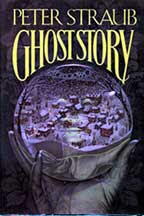


One of the weird things I took away from reading Ghost Story was the fact that it was less effective as it became a more traditional horror novel.

As a tale of four old men, haunted by a tragedy, who find cathartic release by telling ghost stories to one another, it was a great, evocative book. Once they're knife-fighting developmentally disabled werewolf boys in movie theaters, the book became garish and kinda goofy. Still, the book works. I like the characters, I like their world, I liked the pacing (which was eerie, but not foot-draggingly slow), and I liked the little moments of creepy terror. The dreams, the visits from dead friends, the moments of isolation and menace were all wonderfully done.

I have a litmus test when I read horror fiction. First I look at the non-horror elements. Do they hang together? Are the characters compelling? Do I give a shit about who they are and how they interact and collide against each other? Basically, could they hold up in a book without the horror elements? I absolutely felt that Ghost Story passed this test. There are a lot of challenging, engaging characters and they were all richly detailed and fascinating.

The second part of my litmus test is studying the horror elements. Are they original, or at least engaging? Do they improve the human drama or do they just get in the way? Do they make sense? Are they scary? For me Ghost Story mostly passed the test. When the threat was more ephemeral, when the demon facing the the Chowder Society was more vaguely defined, it was an effective horror story. Once we got to know Eva Galli, she became more of an annoyance than anything else.


I was actually a little bit spooked as I read the book because many of the elements of the novel are very similar, and probably better done, to elements of the novel I'm writing for my MFA.

Old friends tied by strange social rituals and a violent crime. An ethereal menace that lurks in the shadows and begins a campaign of psychological warfare before striking with sudden, decisive violence. A strongly defined setting that the characters play off of and experience in their own unique ways.

Screw it. Straub can call a good tune. I will dance to it.

Overall, I give this book my bump. I enjoyed reading it and I think it's a solid introduction to Straub's key work. It's recommended for fans of more subdued, quiet horror.

Also, the movie is pretty good, too.

Saturday, September 3, 2011

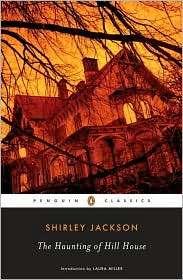
The Haunting of Hill House

One of the unique things about my academic program is that it forces me to revisit my beloved genre with fresh eyes. Most horror fans are voracious devourers of their medium and many of the books and movies I'm assigned to read are works I've already visited in the past. There is a world of difference between being passively engaged in a book and being actively engaged in trying to autopsying the great works of horror and laying their guts open for the world to see.

Or, in less bullshitty falutin' terms, Shirley Jackson's The Haunting of Hill House kicked my ass.


I'm writing a haunted house novel and it sucks because every time I read the prologue of Hill House, I say to myself "That's it. There's no point in writing another haunted house story. How the hell do you write an introduction that sets a mood of eerie, evocative dread that holds a candle to the subtle, imaginative menace of '....and whatever walked there, walked alone.'"

That shit is creeeeepy. We don't meet a specific, sentient menace. We don't have the dusty bones of Hugh Crain greeting the reader, announcing to us that he will be battering at the sanity of poor, doomed Eleanor. Hill House itself is not sane. The size, the vast interiors and the unnatural angles of the home reminded me of a Lovecraftian influence. I tend to hate stories where things have obvious origins and solutions. I feel horror works best with ambiguity, otherwise it becomes puzzle boxes you can open, selfish entities you can strike petty deals with.


I first read The Haunting of Hill House in my early teens, after Stephen King lavished great praise on it in Danse Macabre. People talked about its intense terror and the lurid and shocking underpinnings of lesbianism in the narrative, which attracted 14-year-old me like a pubescent fly to honey. I finished it, but it was a slog. I had gotten used to books with raised lettering and gory pictures on the cover. Hill House by comparison is understated and elegant. It depends on a person sitting alone in a parlor somewhere allowing the book to seduce them.

There were no decapitations by lion statue. There were no hot lesbian make out sessions between Eleanor and Theo. There was none of the lurid, juicy good stuff I loved in my other books. There was just a strange old house and the poor sucker who may or may not have deluded herself into taking her own life. It's all very gracious and subtle, strangely gentile, and I feel Hill House is the template that modern haunted house stories almost ceaselessly follow.


One of the more interesting things that struck me while I was rereading Hill House is how much Eleanor reminded me of Wendy Torrance in Stanley Kubrick's interpretation of The Shining. I never quite bought that the novel's version of the character would have stayed with the self-loathing bully of a husband she found herself with, but the movie's version gave Wendy a strong sense of beaten-down passivity. She exists in a state of perpetual subservience to her husband's whims and makes excuses for his monstrous behavior.

Eleanor Vance struck me as someone desperately waiting for life to give her permission to being. People love harping on Theo's lesbianism, but I think the character appealed more to Eleanor because she was everything that Eleanor wasn't; free, independent, worldly, and confident. Eleanor pushed away from her dickish family in a fairly petty act of independence and her taste of freedom opened the door to a horrible seduction that lead to her doom.

Sure, the ending is an unhappy ending. I guess. Jack Torrance freezing in the snow is an unhappy ending. But ultimately both characters didn't belong in the world. One was too meek, the other too angry. Maybe it's a happy ending. Maybe they were both always ghosts, waiting for a real house to haunt.


Funny story about reading Hill House.

Unlike many horror fans, I'm a big old chicken. Always have been, always will be. I have a much higher tolerance for scares than a casual fan due to sheer overwhelming exposure, but it's not that hard to freak me out to the point where I'm awake at 4AM, staring up at the ceiling, trying not to over-imagine the causes of the noises in my nasty Brooklyn apartment. Because of this, I tend not to take my horror in optimal conditions. I read horror books on trains, watch horror movies at party events, and I get plenty drunk right before I stagger my way through haunted house theme parks (I once puked in a Leatherface set piece in a haunted house attraction in Los Angeles, but that's a story for another time.)

Anyway, I decided to change that up with Hill House. My only memories of it were the memories of a tasteless and stupid boy and I knew there was nothing particularly freaky or scary about it. So I decided to read the book on it's own terms. I kept a copy on my bed stand next to my nightlight and I read twenty pages or so a night before bed. Sitting in the dark, reading a quiet little book in a quiet little space, the story started getting to me.

I live in a party apartment in Brooklyn and we have drunk hipster loudmouths coming and going at all hours of the night. About a week ago, when I was finishing the book, I was laying down to sleep and my roommate's FWB started BANGING on the door. I immediately flashed back to the poor mousy Eleanor and I just about shot out of bed in sheer delightful terror.

The point of this story, aside from the fact that Williamsburg American Apparel zombies should stay away from cocaine and my front door, is that it's tremendously important to take horror stories in the correct context. If I simply read it every day on the subway I would have developed an intellectual appreciation for the craftsmanship of Shirley Jackson's writing, but the emotional impact of it would have been lost to me. Horror is meant for the dark. Keep it there.

Monday, August 1, 2011

Hell House by Richard Matheson


While I was reading Hell House by Richard Matheson, I kept thinking to myself "Thank god I was born and raised in San Francisco after the sexual revolution."

Sex plays a HUGE part of this novel but it's the kind of sex horror writers from that era love to write about; 70 percent Penthouse Forum, 30 percent hand-wringing WASP-y sensibilities. Sexual repression runs rampant through the character's psyches and the evil spirits residing in the haunted house torment them with pornographic images, scenes of debauched orgies, and....gasp and shock and awe....a chapel with a crucifix equipped with a large erect penis. A woman has sex with a corpse (sorta) and is forced into having a lesbian encounter with the repressed young wife of the arrogant, impotent professor. The ghosts come from the Rob Zombie/Pazuzu dialogue school of Saying Really Foul Shit To Shock Conservative Sensibilities. I'm sure it was all terribly cage rattling to the sensibilities of some people, but to me the whole thing seemed juvenile.

I'm not scared of sex.


Okay, I'm scared of some of the real, practical stuff around sexuality that everyone is afraid of. Will I ever get laid again? Will I by any good at it? Will the person I get naked with take one look at my fat naked ass and laugh? But the novel seems to be written to rattle the cage of someone with a much more reserved outlook than my own. While I'm not the Marquis de Sade by any stretch of the imagination, I'm not rattled by most of the stuff on the page. I read my Dan Savage, I've lived in slutty cosmopolitan cities my whole life, I had my wild days, and I've walked through the Folsom Street Fair and "seen" (cough) more debauched shit than the book covers.

And all that stuff is done by normal people. Public sex, group sex, gay sex, all that stuff isn't done by depraved monsters rutting in the mud at the expense of their humanity. It's done by people. Ever notice how the most wild sex acts in horror fiction are always accompanied murder, as if the two things run hand in hand and it's a narrow line between murder and fucking? It's like the message is that really wild sex is always one-sided, predatory, and possessive, and there's little distinction between consensual wild rutting and cutting your partner's throat mid-coitus.

But, yeah, I'm not that repressed. I don't find sex particularly shocking or taboo-breaking, so when I read a description of a bunch of psychos fucking, all I can think is that the writer has issues and he assumes that I do too.

But then, that's just me.

Not to dog overmuch on Richard Matheson. I am a big fan. I've read a lot of his major work and a bunch of his stories and it's clear the debt that Stephen King owes to him. He's a great writer, Hell House was a very interesting and engaging book, but the view of sexuality at the core of the book didn't work for me. If the engine behind your horror story are taboos that the average slutty modern person doesn't share, you're gonna run out of steam early.

Reading the book, I couldn't help but think back to Clive Barker's work, particularly The Hellbound Heart. Barker has said that his work is meant to titillate as much as terrify and his stories are full of wild sexuality. But Barker doesn't approach the material the way most horror writers deal with sex. It's a part of his characters' experiences, not something to draw anxiety from. It feels more mature and in line with my sensibilities.


Oh, wait, in all this hot nonsense, I didn't actually synopsize the story.

Hell House tells the story of four paranormal investigators hired by a rich man to investigate the Belasco house, a haunted house of such dreadful malevolence that several previous investigative attempts have ended in tragedy. The noble group includes a beautiful clairvoyant with a new-agey take on Christian ideals, a polio-addled scientist and his significantly younger wife, and a previous survivor of one of the doomed earlier investigations. Each of them brings their own interpretation of the hauntings in the house and their safety and sanity is tested by the vicious spirit at the center of the house, a hedonistic deviant with a messianic complex.

It's impossible to ignore the obvious debt that this story owes to Shirley Jackson's The Haunting of Hill House, which also has a group of deeply conflicted individuals trying to puzzle out a rational explanation to the supernatural events that surround them, but Matheson did a great job drawing out these characters. It's a hoary old truism that the best haunted house stories feature characters whose internal traumas power and fuel the hauntings, but the characters in Hell House are really engaging.

Florence, the former actress turned spiritual leader, is usually the sort of character I have a difficult time getting behind. She's essentially, in her own compassionate and gentle way, a religious fanatic of sorts. There's something slightly arrogant about her demeanor; she knows exactly what's going on in the house and the best way to combat it, and her unwillingness to critically examine her surroundings leads to her destruction. She's essentially the house's patsy and she completely buys the con game the house sells her. Yet despite all my complaints about her gullibility, I found myself admiring her courage and selflessness. She enters the house and reaches out to the spirits because she actually wants to help them, and she risks herself time and again to reach out to the "spirit" of the house's owner's son. For all her good intentions, her story ends in the most harsh way imaginable. Her eventual fate genuinely squicked me out, particularly due to the sexualized elements of it, but I got behind her and I found her heroic.

On the polar opposite end of the spectrum, representing the calm rational world of science is Dr. Lionel Barrett. Unlike many science characters in these sorts of tales, he's not there to scoff rudely at evidence of the supernatural. He's a parapsychologist, but he's view of the source of the energy is refreshingly interesting. I liked his take on the occult and his fancy machine, which he believed would dissipate the energy in Hell House. I also liked his relationship with his wife. It was tender and affectionate, if sexless. One of my complaints on the story is that I felt Matheson doesn't set up the Barrett's bedroom woes early enough, but they work as an engaging and supportive couple. It's got a weird father/daughter dynamic going on and Edith is probably a big ol' confused closet case, but I felt they were portrayed realistically.

The other two characters, Ben Fischer and Edith Barrett, are well-defined and engaging. The shell-shocked man who survived a previous attack on the house and the neurotic wife of the doctor are heroic when needed, weak when called to be, and keep the tale humming along. They're good. Go read the book if you want to learn more.

One of my favorite aspect of the book is how well flushed-out the spirit haunting the house is. Most haunting stories are amorphous entities with ill-defined abilities and agendas. They exist to provide the creak in the floor, the rattling chains, and the whispered threat. Matheson paints Belasco in very specific strokes, with a very specific endgame and weaknesses to be exploited. He's very much a character in the story, at once powerful and ruined by his own egotism. In general, I like ambiguity and mystery, but I liked that Hell House represented a very clear antagonist with a very specific goal in messing with the heroes.


Hell House is a classic of horror literature. It's built like a Swiss pocket watch in its taut precision and was engaging on a craft and characterization level alone. The primary tools of horror the book used to rattle my cage leaned too much toward a melodramatic sexuality, which felt childish. Still, the book was definitely interesting and engaging. I'd recommend it to people who like solid haunted house stories.

Friday, June 17, 2011

Super 8


I wasn't all that excited about Super 8.

Don't get me wrong, I'm a Spielberg softie as much as the next guy. And I do like a heartfelt tale of scrappy kids and monsters. But I'm not a big J.J. Abrams fan and the ad campaign seemed like it was trying to recapture the mojo from Cloverfield. We know there's something terrible in the train, we know there are going to be a bunch of jump scares, but we're left in the dark beyond that. The marketing campaign worked for Cloverfield because it was new and novel and we knew it was a creature feature, but the same tricks didn't work for Super 8. Watching the trailer was more annoying than enticing.

I've seen Super 8 a couple of times now and it's pretty much what you'd expect it to be. There are some kids and a monster and it's trying real hard to be Spielberg. It's perfectly engaging and interesting and charming and all, but...I dunno. I simply don't care any more beyond that. The kid's tragedy was suitably tragic, the weird kids looked and acted perfectly weird, and the monster was monstrous. Don't get me wrong, the movie gets the job done and I didn't leave feeling ripped off. I left without feeling anything. It's weird to bitch about a movie that hits all the right notes, but I just didn't quite emotionally connect to it.

Thursday, June 16, 2011

Rob Zombie's Commercial for Woolite


That's right folks. The good people at Woolite tapped Rob Zombie to do a torture porn commercial for fabric softener.

Huh.

AV Club Presents: The Texas Chainsaw Massacre House


Austin: The Texas Chain Saw... family restaurant?

So apparently the house they filmed the original Texas Chainsaw Massacre in is now a family diner.

Huh.

Tuesday, May 3, 2011

I've Got Blood On My Name

Blood On My Name from Whitestone Motion Pictures on Vimeo.


I'm a big fan of westerns.

I'm a big fan of musicals.

I'm a big fan of horror.

I loved this.

Reposted from Io9.