Monday, August 27, 2012

Psycho by Robert Bloch


So does Norman Bates work better as an effeminate, boyishly handsome young man or as a baby faced, portly, forgettable mama's boy?

That's the big difference, innit? The storyline is basically the same. The structure is a bit different, too. Instead of starting with poor doomed Marion Crane and her lover, we crawl right into Norman Bates' life. Reading it, I kinda wonder how many of the original readers figured out what the big twist ending was. You can do a lot of tricks with visuals that you can't do with the written word and it's pretty obvious that Norman is shadowboxing in empty rooms.

Then again, I came to Psycho, both the film and the novel, knowing all the twists and turns. It feels like a fairy tale someone told me when I was really young and remained imprinted on my psyche. Reading it was still very rewarding. When you watch the movie version of a story, it's like you're observing it in real life. You can see the visuals, pick up the non-verbal cues, and interact with a story as a passive observer in the characters' lives. Reading the book lets you climb into people's heads. What you lose in "objective" visual clarity, you gain in intimacy.


Having climbed directly into Norman Bates' head, I gotta say it's a pretty fucked up place.

It's hard to feel sympathy for him, in that mama's boys seldom elicit sympathy in this culture. I feel a bit of pity for him, though it's easier to pity Anthony Perkins' version than the novel's version, if for no other reason than the superficial. The Norman I imagine from the book is shlubby and unappealing. People who encounter him seem to think he's harmless, but the way he carries himself and the stuff he says would set off my creeper alarm. Maybe the late fifties/early sixties were a more innocent charms, but I buy the version of Marion Crane from the movie, sitting in the parlor with Norman and being frightened by the things he tells her.

Blah blah Ed Gein blah blah Texas Chainsaw Massacre blah blah.


The big thing I took away from this book is the idea that no one really understands themselves or the people around them. Norman Bates really believes that he's covering up for his demented mother, Sam Loomis is shocked that the woman he was considering marrying could have stolen $40,000, and Lila Crane has to come to terms with a sister she barely knew. It's an idea that has some resonance with me these days.


I don't really have much to say beyond the fact that Norman Bates is the ur-psycho of pop culture. His weakness, his vulnerability, his dementia, and his mother issues have become what people think of whenever people use the word "psycho." No other madman has captured the public imagination the way that Bates has.

At least not until Hannibal Lecter came along.    

Thursday, April 5, 2012

Relic by Douglas Preston and Lincoln Child


You ever met a person on a date and there was nothing really wrong with them but the conversation never really sparked? Like, the conversation was pleasant and they were attractive and they laughed at your jokes, but a day or so later you look at your cell phone, consider texting them, and go "meh"?

That was my relationship with Relic.


I don't get along well with science.

I really wish I did. I champion reason and logic over superstition and servitude, I love when Neil deGrasse Tyson shows up on The Daily Show, and I have worked in the tech industry for years. You'd think I'd be better at this stuff but when anyone tries to explain anything math or science-y my brain takes a little ADHD journey to the magical land of unicorns and rainbows, where my poet's soul traipses through fields of gilly flowers and there are no scaaaaaary numbers.

Oh hell, I might as well post the whole damned Patton Oswalt bit.


So I wasn't really ready for the whole techno-thriller explosion of the 90s. I did read and love Jurassic Park but that novel had dinosaurs. DINOSAURS! Otherwise, all the books pretty much read the same. There are pages and pages of some expert explaining shit to me, a bunch of non-characters reinforcing whatever the expert explained, some one-off chapters of a dumb ass security guard getting slaughtered, and a bunch of interesting but over-explained action scenes at the end of the novel.

People I know who love science stuff love this book. One of them recommended it to me when we were teenagers (hi, Erica) and I really liked it then, but I couldn't quite seem to get back into it. If it's the sort of book that's right for you, have at it. It's not really my scene.

I did like the bit in the Amazon with all the adventure-scientist cliches. And I loved how ridiculous Agent Pendergast was. He's goddamned clown shoes. I kept forgetting that he was from the Deep South and probably talks like Andy Bernard doing a Southern Accent, because with his highly mannered turn of phrase and unflappability it read like he was one of those stick-in-the-butt British detectives. "I daresay, a lizardman is eating my brain! What a sticky wicket!" Also, he's a goddamned ex-Green Beret! EVERY HERO IN BOOKS IS GODDAMNED SPECIAL FORCES! Is the only career options for former special forces soldiers to star in trashy novels? Romance novels get Navy SEALS and thrillers get Rambo. What ever happened to the poor, unloved infantry? Don't they get cool stories? Or in the wonderful world of fiction everyone who joins the military become forced to take a turn sniping Somali pirates from the back of a Navy ship?

I say this with love. Pendergast and his sidekick D'Agosta were the best parts of the book. They defied authority, strove to protect people, and were fun to watch bumble around failing to find anything.


For all the science in the book, the logic ultimately falls short.

There's a killer in your museum and you continue with the opening? No.

You hire a guy to write a book and you get anal about the very, very minor indiscretions he finds? No.

I'm getting better at spotting the mechanics behind constructing a story and I know when roadblocks are artificially laid down to add conflict to the story. The amount of hostility that the characters encountered from their superiors seemed inflated and artificial. I get that careers are in jeopardy, but there's something in the museum eating people's brains. Come on!


Good story, not my thing.

Also, kothoga is a better name for the monster and Mbwun is a better name for the tribe.

Sunday, April 1, 2012

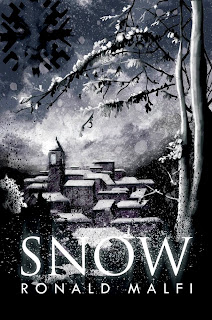
Snow by Ronald Malfi


Before we get started, a couple quick rants.

When a character in a book starts ranting about how bad ass and shocking and not politically correct they are, like Kate Jansen does in her first scene, I get turned off. "Politically correct" is to conservatives what "dive bar" is to hipsters: a meaningless buzzword denoting...I dunno, authenticity? How cool you are?

Whatever, son. My people don't even say that shit anymore. Besides, Kate Jansen is a terrible character. She's one of those female characters that male horror writers constantly create: boorish, abrasive, overly pleased with herself, and probably into obnoxious 80s hair metal. She's set up to be the love interest because...I guess every story needs one? but I can't really say I was rooting for her to make it out of Woodson alive. And, of course, there's a scene where the male characters are trying to convince her to listen to them even as she tries to assert herself. One of 'em says something to the effect of "We'll worry about women's lib later. This is about survival!"

First off, who in this day and age says women's lib? Second, ugh, get over yourself. I have a feeling that, if I were to meet Ronald Malfi, we wouldn't get along. Which is a shame. He's got more game than most genre writers.

Anyway, on to the show.


So, snow, huh? Ever get the feeling that horror is running out of ideas?


Maybe that's harsh. I mean, there's meat on them bones. Part of the reason The Thing is so effective is that snow isolates and entraps. You can't move around easily, cars break down and get buried, and between the howling wind and the whirling snow you can't see a damned thing. I once hiked through a freak snowstorm heading for a date and it was like walking through an empty apocalyptic world.

So, snow can be scary. And there's some really scary stuff at the beginning of the book. The poor doomed quartet pick up a wandering man lost in the snow. He's out of his head, distant and babbling about his missing daughter. As they're driving along and the man's behavior becomes more erratic, the others begin to doubt there is a daughter at all, until the protagonist sees her in passing only to discover she has no face...

Woo! That's some good stuff! I was really excited about this book until it turned into another damn zombie novel.


That's right. It's another damned zombie novel.

More to the point, it's a story that feels like someone wanted to write a zombie story but knew they were played out. It's still a siege story where people struggle to get what they need while hordes of dead people try to eat their flesh. There's guns a'blazin' and people a'dyin' and all you need to do is switch the travelers for homesteaders and the skin-suits for Apaches and you have the original siege western.

American paperback horror novels read more or less the same. It's like a recipe. Insert:
1) Monster or killer with a strong visual description. Check. Snow flurries with lights at their core, scythes for hands, and the broken meat puppets the control.
2) A bunch of people who might as well have "future victim" tattooed on their heads? Check. Nan, Fred, the poor doomed Shawna.
3) Religious weirdo screaming like a schizophrenic Baptist and who is likely more dangerous than the monsters? Check. The fat kid in the church whose name currently escapes me.
4) Guns, guns, guns! Plus the ability to pick up a firearm without any training and instantly shoot like Chow Yun Fat in The Killer? Check. They raid a gun store, grab pistols, and the rest of the book turns into runny runny, shooty shooty.
5) A big fucking explosion at the end? Check. The last remaining sheriff's deputy, who I kept picturing as looking like a bald Henry Rollins, takes out a bunch of the monsters by opening up a gas tank and shooting a flamethrower into it. This ain't no gothic horror, people! This is 'murrican horror! With guitars and people who swear and explosions and cannibals! Fuck yeah!
6)Characters in the middle of a crisis taking a moment to flash back to their personal issues? Check. Kate pauses the story to talk about her non-engagement and Todd talks about the time he had a problem with gambling but was able to pay the guy, who beat him up anyway, which makes good business sense for a loanshark.


A friend of mine who happens to be a proper southern lady (hi Lauren) has a theory about women: they're either ladies or broads.

I think stories are the same way. Stories can be divided roughly into high-falutin' tales and roughneck blue-collar yarns. It's sometimes tricky to separate the two. I'd argue that Joe R. Lansdale's work is tales disguised as yarns and The Yattering and Jack is a yarn told by a guy who usually tells tales.

Snow is definitely a yarn. It is definitely better than most, but it's still a type. You can quantify it, dissect it, and tune it. I've read a bunch of novels very similar to this one and it's sorta like comfort food. I try to keep to my healthy diet and big-city pretensions, but sometimes homeboy just wants a bacon cheeseburger.

I would definitely come back to Malfi. I think he's a good writer. Every now and again he'd come up with a simile or description that took my breath away. The dude has a bit of a poet to him and I respect poets.

I think he's a good writer. I'm betting this isn't his best book.

Also, I have a bad habit of writing fanfic and as I was going through the novel, I kept thinking "this could be improved with Jedi."

Saturday, March 24, 2012

Human Remains by Clive Barker


Human Remains taps into some hot button issues with me.

I'm obsessed with physical beauty. There's an argument to be made that I am deeply shallow. I do believe that people who are beautiful lead better lives, which makes me deeply jealous of them. I do also believe that people who are beautiful become commodities to other people. They can never be entirely invisible and they stop entirely belonging to themselves. It's one of the themes in Natsuo Kirino's novel Grotesque, which is a source of heavy inspiration to me.

Gavin, the amoral hustler from Human Remains, is defined by his beauty. He's aware of it, he revels in it, and he is terrified of letting it slip away. There's a lot of fear of aging going on underneath the skin of the story. The people I know who are the most afraid of aging are athletes and the beautiful; the athletic fear losing their abilities and the beautiful fear losing their identities. In the back of my brain, where all my nasty ideas live, I like to think that all aging does is even out the playing field.


This is a doppelganger story that starts out about fucking and ends with identity.

It's not sex. In the immortal words of Dear Coke Talk, the difference between fucking and making love is Hallmark. There's something incredibly narcissistic about the way Gavin approaches his work. Most prostitution stories in the horror genre paint prostitutes as victims, but Gavin isn't really about sex. He commodifies his beauty, and looks down on the people he deigns to share himself with. He's not even particularly straight or gay or bi. He's just an object to be desired.

So, of course, he picks up a man outside an art house cinema. There's something off about the man. He's nervous and the nervousness never lets up even on safe ground. He doesn't give the usual tells. While he's admiring the beautiful but odd collection of antiquities, the mark gets attacked by something. Gavin investigates the bathroom rather stupidly and discovers a statue in a bathtub. Things go pretty wrong for him after that.

The rest of the tale is a fairly simple doppelganger tale, but with one twist. There's not a lot of active malevolence between Gavin and his shadow. He almost embraces the idea of having something else deal with all the sloppy work of presenting his face to the world. He becomes hollowed out, turns to junk, and watches as his twin become a better version of him than he could ever be. Barker has a real gift for creating fine lines between enmity and love, and this story blows me away every time. It's more rich and emotionally complex than the two other stories we've read this semester.

In an interview on his work, Barker echoes a lot of views I have about the horror genre. It's very conservative. It's obsessed with the status quo. It's about destroying the monster. People who've delved deeper into the genre (I'm looking at you, Chris) are there any other writers who successfully celebrate the supernatural with the same intelligence and beauty as Barker?

Sunday, March 11, 2012

The Wolfman by Jonathan Maberry


Oh my god I am so friggin' pretentious.

I do most of my course reading on the M-train commute to work. I live in Bushwick and pass through Williamsburg, heart of the Brooklyn hipster universe. Every morning I see the same familiar flannel shirt-tight jeans-ironic facial hair crowd reading Murakami and listening to Animal Collective or Das Racist or whatever. They're a pretty literate bunch, too. There are all sorts of tiny rituals involved in riding the subways and one of them involves sizing up what people are reading. When I first came to NYC, everyone was reading the Dragon Tattoo series. These days it's mostly the Game of Throne books.

Nobody's reading a novelization of a failed horror flick.

I'd see people give my book the once-over and I could almost hear that checkout counter this-does-not-compute WONK sound. For the first few rides I just wanted to plead with people: "No, you don't understand! Maberry is a really good writer! And I have to read this cuz the madman I'm taking the class from assigned this to us!"

Eventually I took to covering the cover with my bookmark while I read. It was just easier.


I really, really didn't get this assignment.

I saw the movie back in the day and I can't remember any of the plot. It was one of those 'meh' films, instantly forgotten immediately after consumption. I remember that Benicio Del Toro was miscast, Anthony Hopkins was in high camp mode, and the movie's attempt to recapture the feel of classic Universal Horror was crushed under the curdling weight of studio mediocrity.

I had zero interest in reading this book and, frankly, I thought you were nuts to assign it.

Turns out the novelization was a zillion times better.


I like werewolves okay. They make a strong metaphor for our unchained animalistic desires and they fit in extraordinarily well in straight-laced, repressive Victorian England. During the residency, I pushed forward the theory that monsters are ultimately about our polarizing desires between freedom and conformity. There's a part of us that wants to be free, even if it is completely damaging to the world around us, and there's a part of us that wants to be safe and cheers when the free thing is destroyed. I found the chapters of the wolf's rampages exhilarating. In the really-real world, I'd hate to be responsible for the violent death of dozens of people, but there's something primal in my psyche that had a lot of fun with the wolfman's gory exultation.

I like gothic stories. I like crumbing old manors full of mysteries, crazy children, mysterious deaths, and dark secrets slowly unfurling in the foggy moors.

I like stories where the werewolves are barely-disguised Oedipal complex figures battling it out to have sex with their in-law. It's so squicky!

I like the whole Goddess of the Hunt thing. It's a clever way for the characters to conceptualize the full moon.

I like decadent actors. They made living in Astoria fun. They break out into song in the middle of Two Boots, they're flirts because they're needy and they're pretty because it's part of the job. I like the world Lawrence inhabits, even if he is kind of a wet blanket.


I recently chewed apart Breeding Ground for its lack of ambition and I kind of feel like a hypocrite for not attacking The Wolfman in the same way. The difference is, I feel, style and missed opportunity. Every aspect of Breeding Ground lead me to believe it was going to say something deeper and more interesting about gender products. Even ignoring the shaky plotting, too many opportunities were missed.

The Wolfman set out to tell a gothic werewolf story and Maberry told it well. It ain't perfect, it didn't change my perspective of werewolves the way Alan Moore did with "The Curse" or the way the film Ginger Snaps did, but I liked the story. Werewolf stories are often ultimately terminal disease stories and I felt sad to see Talbot go.

It was, of course, better than the movie.

Monday, February 27, 2012

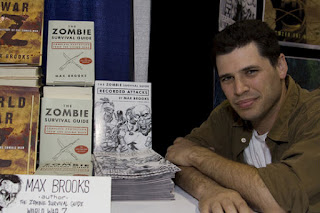
World War Z by Max Brooks


Awright. I think we've hit the high point of the whole zombie apocalypse thing. Time to pack it up and move on, because it ain't gonna get much better than this and everything else is either a poor imitation or just wasting our time.


This article has been stewing in the cooker for a long time, but I never had the guts to write it. Aside from the fact that I really like this book and its predecessor The Zombie Survival Guide, I feel that this takes the Romero zombie as far as it can possibly go. So, talking about this means talking about the whole zombie sub-genre and that's a loooooong conversation.

Deep breath. This is a day for decisive action.

Here we go.

Okay, so everyone calls The Zombie Survival Guide a comedy, but aside from the absurdity inherent in the idea of an Army-style survival guide for a completely absurd apocalypse the material is played straight. I don't know much about wilderness survival or military maneuvers, but the advice seems legit enough. It also appeals directly to the darkly pleasant side of the zombie fantasy: you've survived in a war-torn wasteland. You're hardy and self-sufficient, cool in a crisis and skilled at war. Post apocalyptic stories are one or two steps away from westerns, and to understand the western is to understand America.

It makes sense that the zombie came back into popularity around the same time as new millennium panic kicked off. There's something about our cultural mentality that has a dark fascination with apocalypses. Personally, I think it has something to do with our parents growing up during the A-bomb crisis and the Vietnam war, my generation growing up with 9/11, and the overall crazy Four Horsemen fundie Bible Belt bullshit that sits at the center of our nation.

Plus, at their heart, the zombies are us. They are everywhere we are, they wear our costumes, they suffer our death, and the relentlessly approach us with soulless eyes. And if they catch you, they'll eat you alive.


So zombies do what a good horror critter is supposed to do. It gets under your skin. The rules are simple, the images are grostesque, and death at their hands is ghastly. But there's only so much you can do with them.

The vast majority of zombie stories are siege stories. People are under assault, people barricade themselves in, the stress gets to the survivors, and shit eventually goes wrong. It's a fine story but it's very overdone. There's also an aspect of zombie tales that appeal to a very American Libertarianism sense of self-reliance and individualism. I got my gun, I got my dog, and I can carve a place for myself out of this hostile land.

Some people take that shit really, really seriously. Meet someone who claims to be a zombie nut and ninety nine percent of the time you're meeting with someone who secretly wants a zombie uprising. I have a sneaking suspicion that the vast majority of actual survivors would be in military bases or living in isolated communities. I'm a creature of cities. My ass would be grass.

Anyway, there are only so many stories that you can tell with zombies. People keep trying, and when they don't actually want to do zombies, they do spider critters or creatures made of snow. If the apocalypse has already been tackled on an intimate level, the only way to go is to go bigger. Make it about humanity. How do different people, different cultures, different value systems deal with the rise of the dead?


In a lot of ways, World War Z is pretty much the final word on zombie apocalypses. Rather than focusing on one group of knuckleheads, Brooks tells the story from dozens of different angles. How would celebrities deal with this? How would soldiers? How would pharmaceutical companies try to cash in? What would a major evacuation at the mouth of the Ganges be like? All of these stories could probably make individual novels, but Brooks threads them all together into a Ken Burns-style documentary of the event as survivors tell the story of society trying to rebuild itself.

It's brilliant. It's one of the best horror novels of the last ten years.

The thing that rugged apocalypse stories don't really get is that if the zombies arise, the individual is ultimately meaningless. Some random tough guy asshole may make it through the narrative, but then what? He continues on until he falls off a cliff or his luck fails and he's monster food.

Therefore, the zombie apocalypse tale must be about humanity itself. This is the thing that pulls us together. We got our iphones and our youporn and our netflix and our Republican primaries and all the other crap we use to feather our nests. The cost in human life to scorch the earth would be catastrophic, but what if we rose up afterward and worked together in rebuilding what is hopefully a better world?

Idealistic? Sure. Stupid? Absolutely. But the secret appeal of the post-apocalypse story is that the world is scrubbed clean. To quote the great poet Billy Idol: "and there's nothin' pure in this world. Look for something left in this world...."

"Start again."


Brooks does something I want to do. He takes tropes that are getting pretty ragged and tells a story that isn't about monsters and mayhem, but our shared humanity. It ain't perfect. Too many of his voices sound interchangeable and, while the chapters centered around the hikkikomori in Japan touched my inner weeaboo, the blind woodsman with the sword lopping off heads was a little ridiculous. He mentioned a secret society of zombie hunters in his Survive A Zombie Apocalypse book, but it's something that belongs in a comic book. Still,

Quibbles. This really is one of the best horror books of the last ten years. It's also the final word on the zombie thing. There isn't much left to do with Romero zombies. Hell, Romero can't even do anything with them any more. Brooks nailed it. Time to find something new.

Oh, Brooks wrote a good comic featuring tales of the zombie war. Also, Brad Pitt is doing a movie version of this. Oy.

Tuesday, February 14, 2012

The Yattering and Jack by Clive Barker


I really like this story, but I suspect I would have liked it more if I were British.

It's a really, really funny story, but it's the weird kind of comedy of manners stories that works best from Great Britain. In my gentleman's travels across the globe, I've had the opportunity to watch a lot of television. One of the more common themes that I saw on zany British television is the very polite catastrophe: a series of increasingly vile humiliations happens to a person who strives to remain dignified and unaffected by the chaos surrounding them. Subtextually, it's pretty clear that this is an effort by the British to make fun of the stiff upper lip that won them an empire, but it usually winds up looking like an uptight dude surrounded by naked butts and covered in mud.

Barker's story fits well into that genre of comedy but it has a very sharp twist; if poor Jack acknowledges the humiliation that the demon is subjecting him to, his soul will be lost to Hell. I have always liked the way Barker does Hell. It reminds me of a Bosch painting, all inhuman shapes and bitterness and longing for Heaven. It's also a very hidebound place, full of the kind of fussy little rules that fit in well with a Catholic worldview. It's a great battleground between the will of one man and the malevolence of one increasingly desperate demon.

Also, one of the greatest punchlines of any story I've ever read.


Image by Ashnkatt

Speaking from a writing perspective, the big lesson I'm taking from this is the benefits of shifting POVs within a scene.

Most of the complaints I read in other people's reviews of Rawhead Rex were due to Barker's tendency to switch perspectives mid-scene. The effect doesn't really bother me. I like jumping heads to get different perspectives on a scene without sacrificing immediacy. It's a trick I use to a much more amateurish degree in my own work.

Here, jumping heads quickly enhances the effect in the story. The tale opens from the Yattering's perspective, and chronicles his growing frustration at Jack's complete obliviousness. We assume, like the Yattering, that Jack is completely clueless until a single paragraph, told from Jack's perspective, shows the reader that Jack is not just aware of the Yattering's presence but is playing a very dangerous game with it. From there, the facade of a comedy of good manners conceals a deadly game of wills between the forces of demonic chaos and the forces of English politeness for the soul of an "innocent" man.

It's a great comedy and one of the most intense battle of wills I've ever read.


BONUS LEVEL!

Apparently they did the entire story as an episode of Tales from the Darkside. Enjoy!